


 My blog
  Support me on Tipeee!





Saturday26October
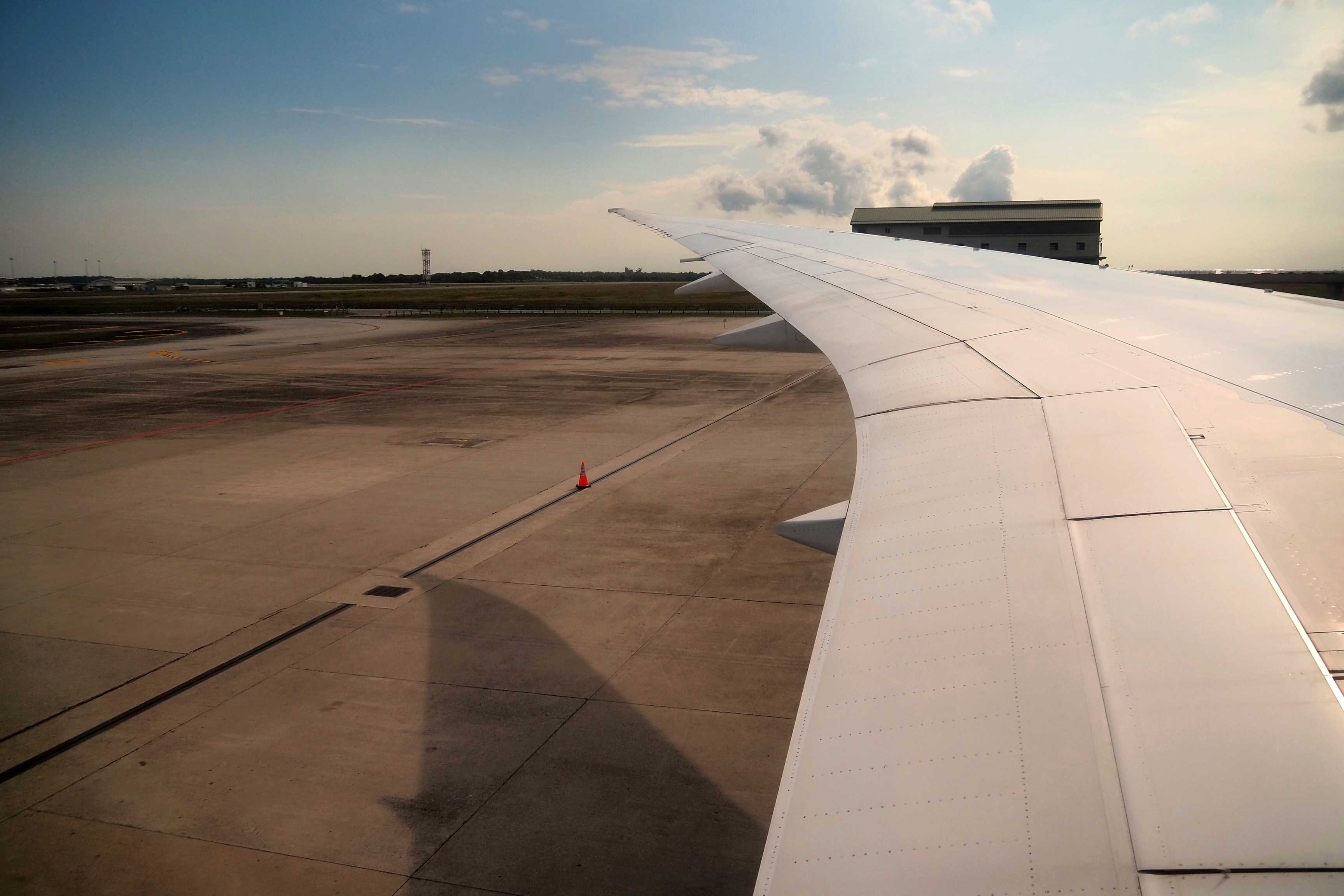
Finally Malaysia here we come! After 2 days of delay, we finally touch Malaysian soil!
Kuala Lumpur
The Airbnb we booked a few weeks ago is still waiting for us at the top of the SOHO Suites KLCC tower on the 32nd floor. 

The view from the living room.

Views from bedroom 1 and from bedroom 2 with a glimpse of the Petronas Towers.


Sunday27October
And off we go for a day of visit before starting our road trip. We had initially planned three days in the capital, so we will have to make up for our delay over the next two weeks to hope to come back here to finish our visits...


Direction the Chinese district, Chinatown.


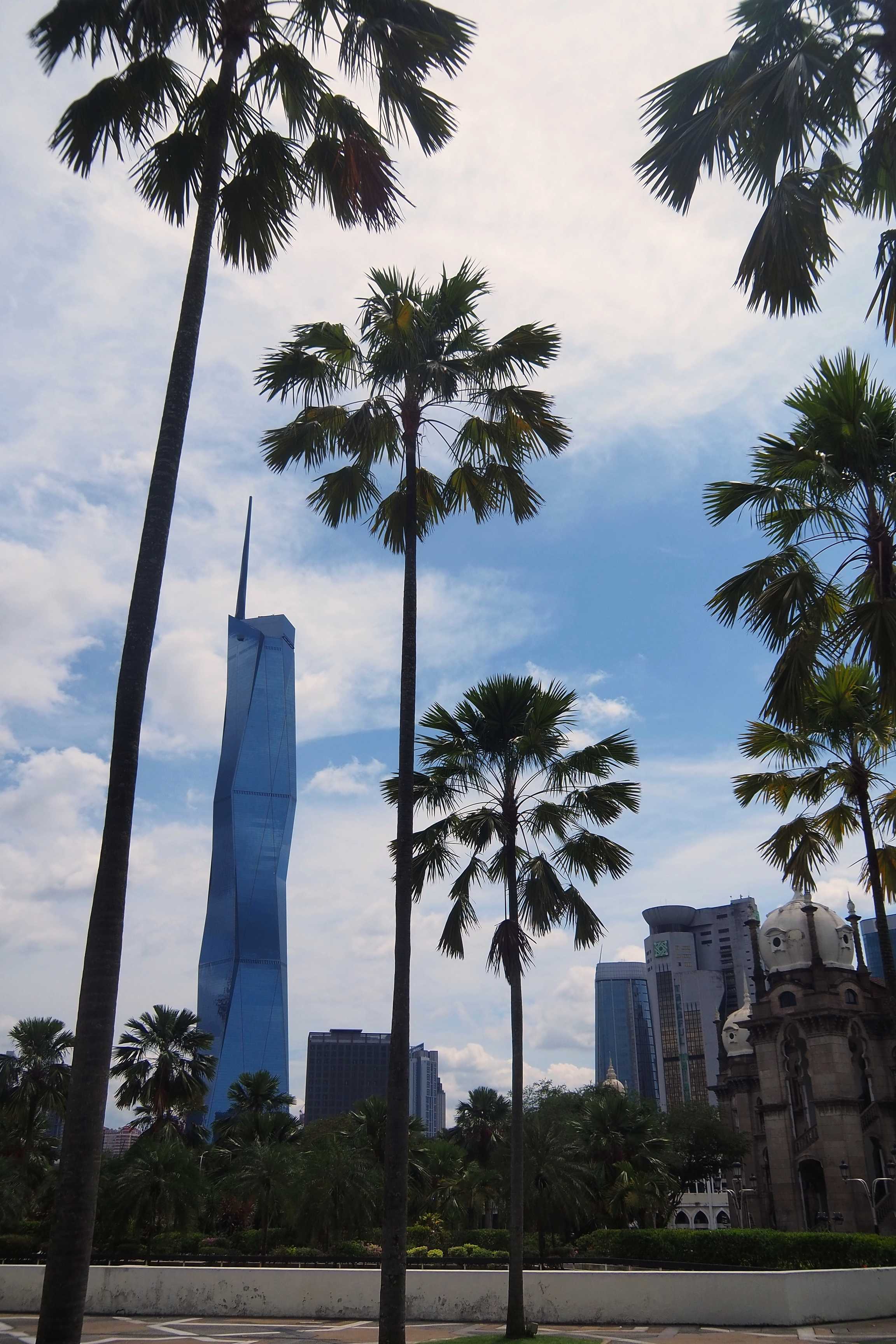
Merdeka 118
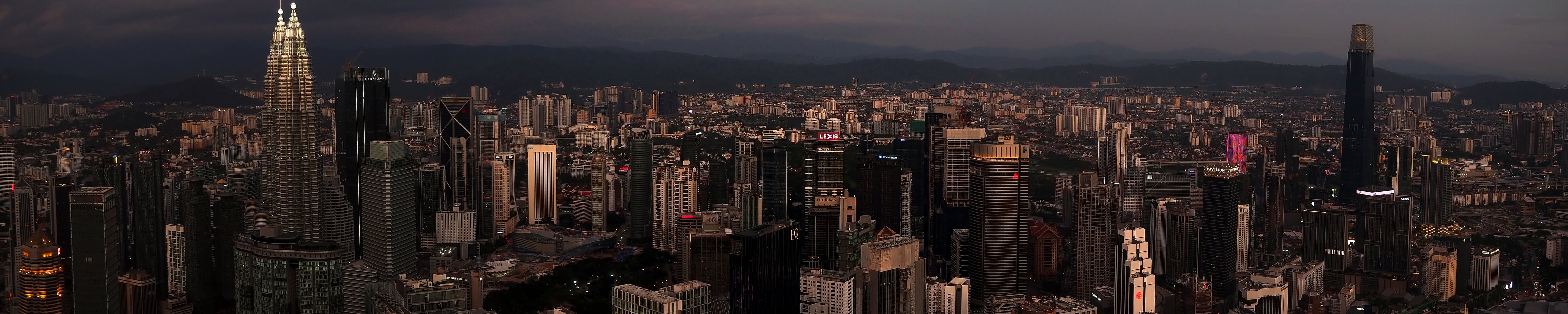
In the distance, the Merdeka 118 tower which dominates the whole city. With its 678.9 meters, it is the second tallest structure in the world. In this month of October 2024, it is still not open to the public although it has already been inaugurated eight months ago. 


Another tower in sight: The Exchange 106.;

Chinatown
And here we are in the heart of Chinatown. We can't be mistaken.

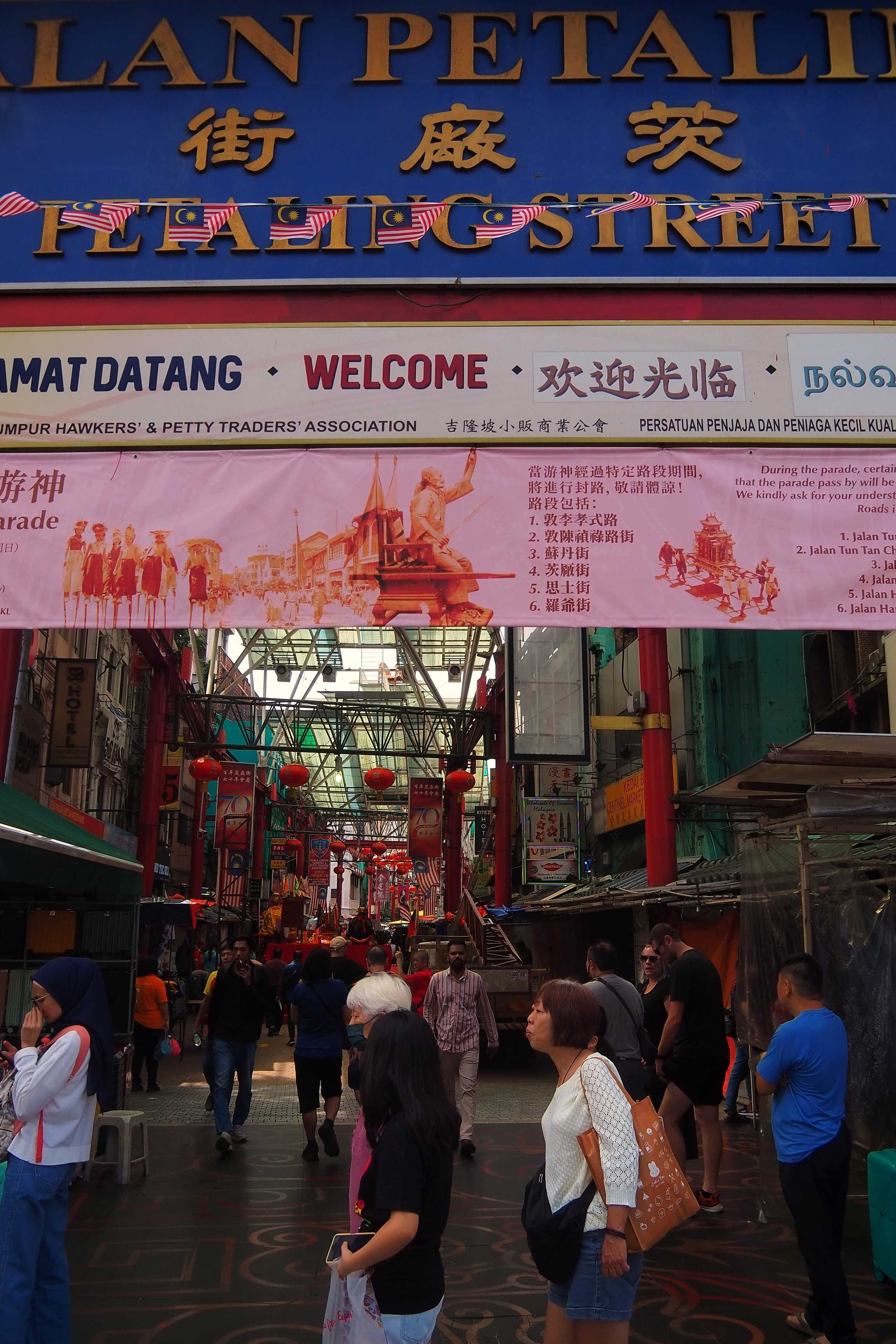


A ceremony seems to be preparing, perhaps in connection with the Sin Sze Si Ya temple (the oldest Taoist temple in Kuala Lumpur) to celebrate its 160th anniversary.

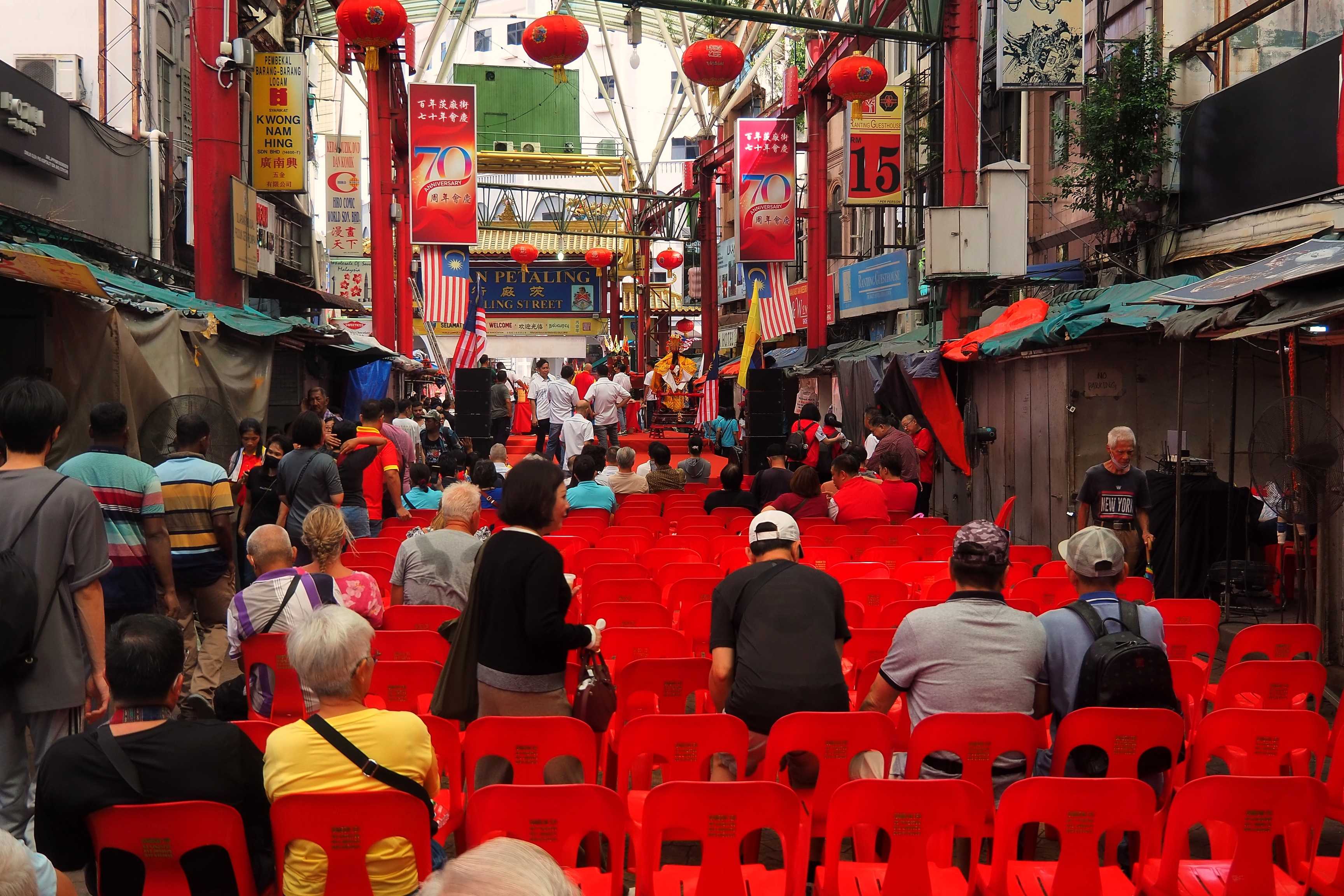


We continue our city hike through various buildings with very varied styles.

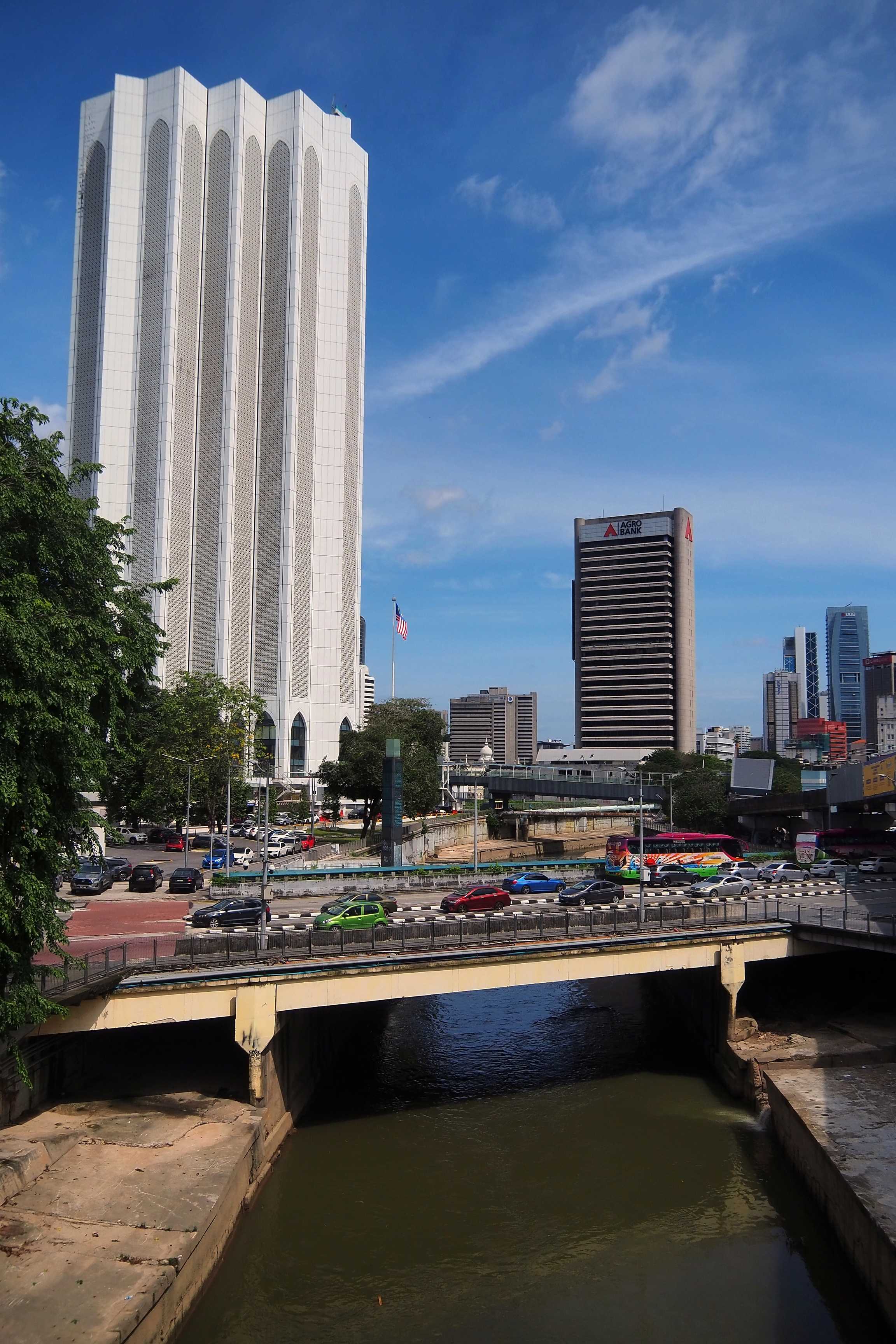


The KL tower, we will be up there tonight!


The Masjid Negara mosque
The walk passes by the Masjid Negara mosque.
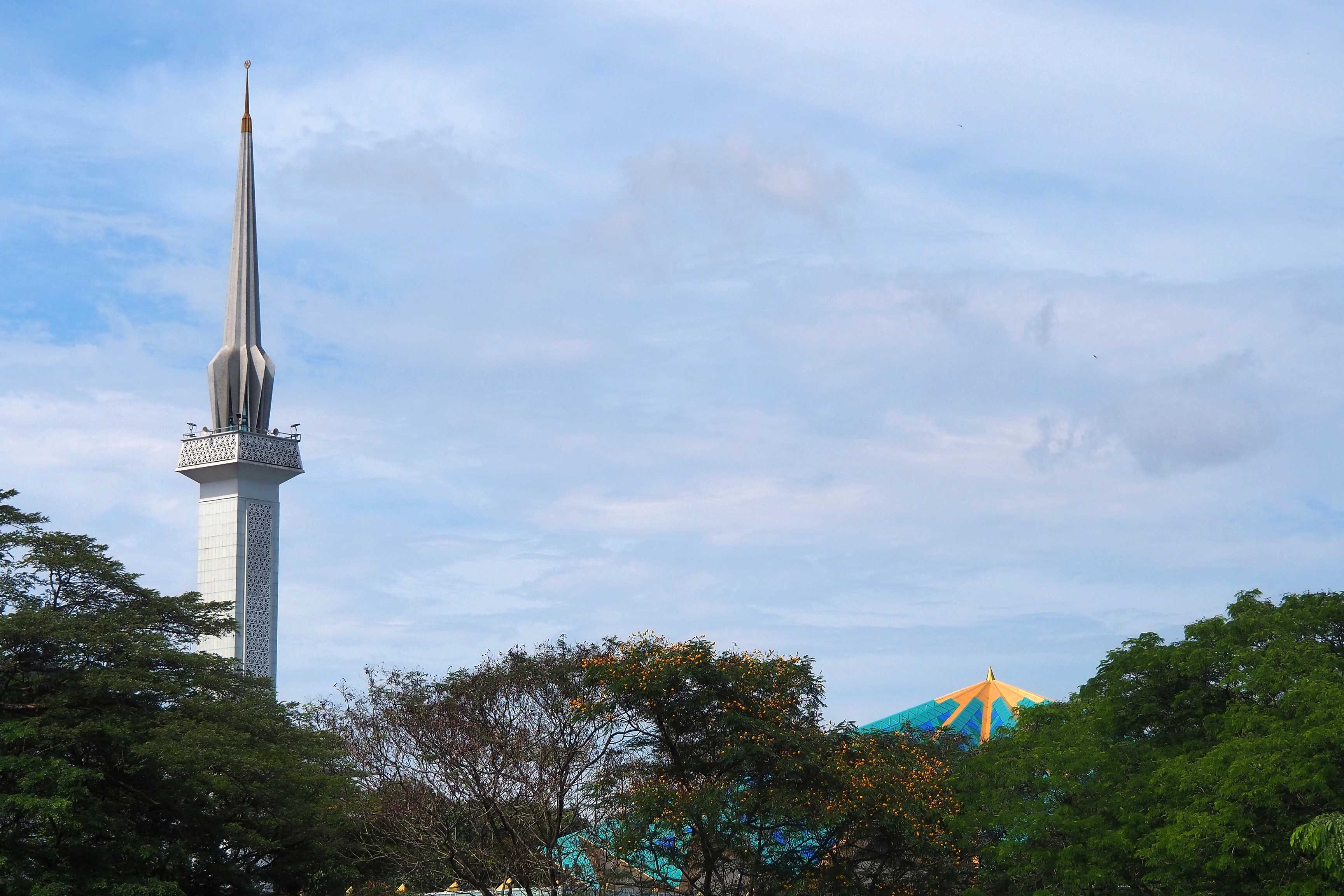
The Masjid Negara, completed in 1965, features a main pleated concrete roof in the shape of a 16-pointed star, symbolizing the 11 States of Malaysia (in 1976) and the five pillars of Islam. Its blue or turquoise color earns it the nickname "Blue Mosque".


The minaret of 73 meters high.


The mosque is surrounded by 13 hectares of gardens.


The Makam Pahlawan, the mausoleum in which are found the graves of former leaders of the country.

One finds notably, Abdul Razak, the second Prime Minister of Malaysia.


The large prayer hall. It is one of the largest prayer halls in Southeast Asia, capable of accommodating up to 15,000 worshippers simultaneously.

We find the vault of the blue roof and its 16 folds.


In the side aisles, the "veranda" extends the mosque by offering a shaded corner to cool off before entering. 154 columns support the reinforced concrete roof.


All pillars have their base and tops covered with gold aluminum.


The openwork wall-windows let air and light through. The Merdeka 118 makes itself present everywhere, even from inside the mosque...


The KL Tower has nothing to be ashamed of either despite being 250 meters lower than its compatriot Merdeka.


And hop, we put our shoes back on and continue the walk.

On the right, the Menara Kerja Raya tower 500 meters lower than the Merdeka...

Perdana Botanical Garden
From concrete and glass towers to Malaysian wildlife, there is only one step. Here we are in the Perdana Botanical Garden, true green lung of Kuala Lumpur. Created at the end of the 19th century, we discover a rich diversity of tropical flora, with sections dedicated to orchids and hibiscus, the national flower of Malaysia. The park also houses attractions like the Bird Park and the Butterfly Park, where you can observe local fauna.


The Sun Conure (Aratinga solstitialis) and the Rose-ringed Parakeet (Psittacula krameri).
The majestic Grey Crowned Crane (Balearica regulorum) easily recognizable by its spectacular crown of golden and rigid feathers. It is not naturally present in Malaysia. It is classified as "endangered" on the IUCN Red List.


The Spotted Wood Owl (Strix seloputo), also known as the spotted owl, and the Barred Eagle-Owl (Bubo sumatranus), also called Noisy Eagle-Owl.


The Buffy Fish Owl (Ketupa ketupu), a fishing owl.

The Indian Peafowl (Pavo cristatus) in its magnificent feathered wheel...


Under a large net with holes  , Painted Storks (Mycteria leucocephala), or Indian Storks, enjoy the small water space.


Its long yellow beak is curved downwards to facilitate stirring the mud in search of fish or crustaceans.


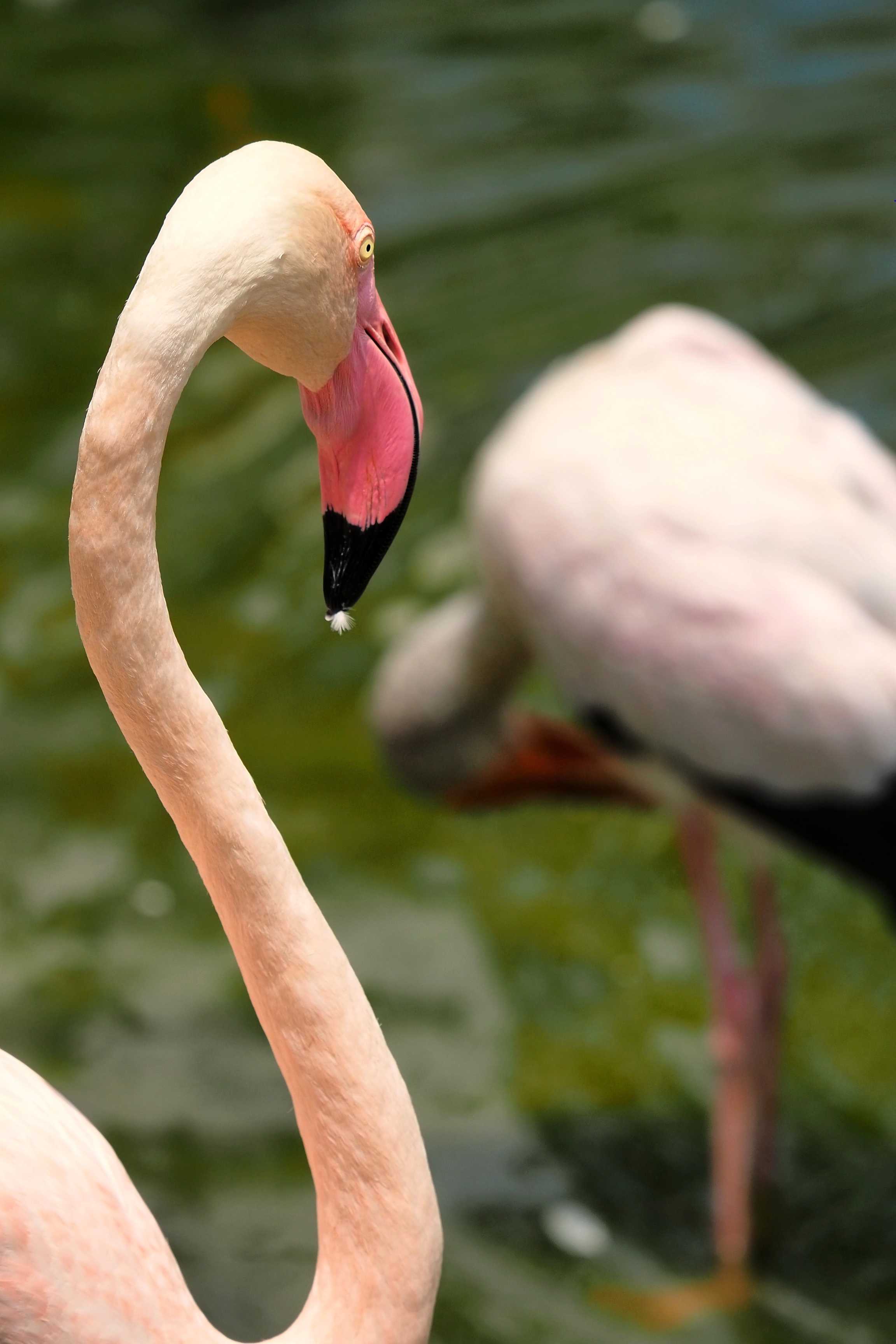
Another wader. The pink flamingo (Phoenicopterus roseus).

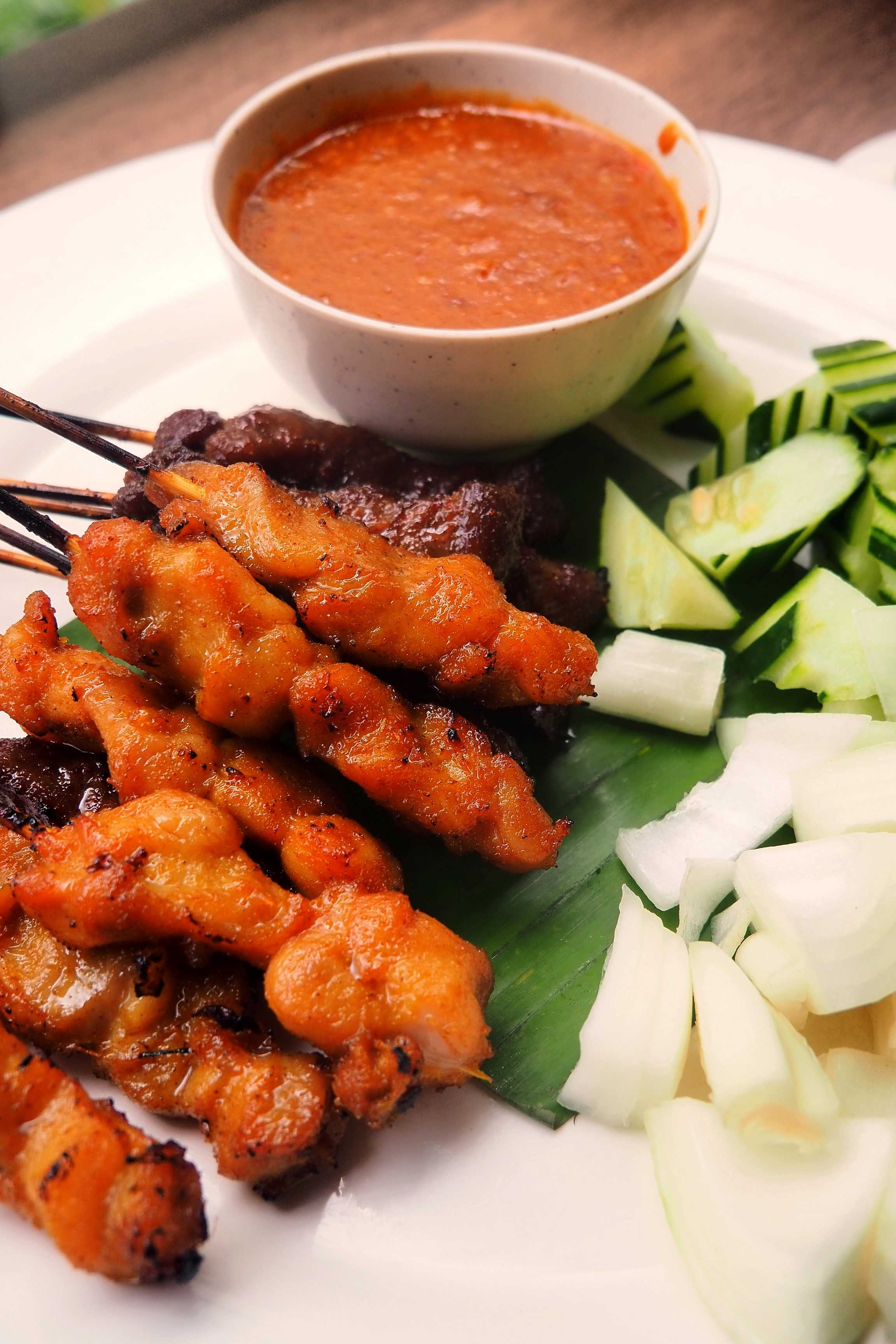
Lunch break inside Taman Burung, at the Hornbill Restaurant


Resumption of the walk in the park.


The Sri Maha Mariamman Temple
500 meters from the Merdeka 118, the Sri Maha Mariamman Temple is the oldest Hindu temple in the city, founded in 1873.

The Gopuram, name given to the emblematic entrance towers very elaborate and richly decorated. These multi-story towers decrease in size as they rise.

Each level is adorned with numerous colorful sculptures representing deities, mythological scenes, sacred animals and floral motifs.

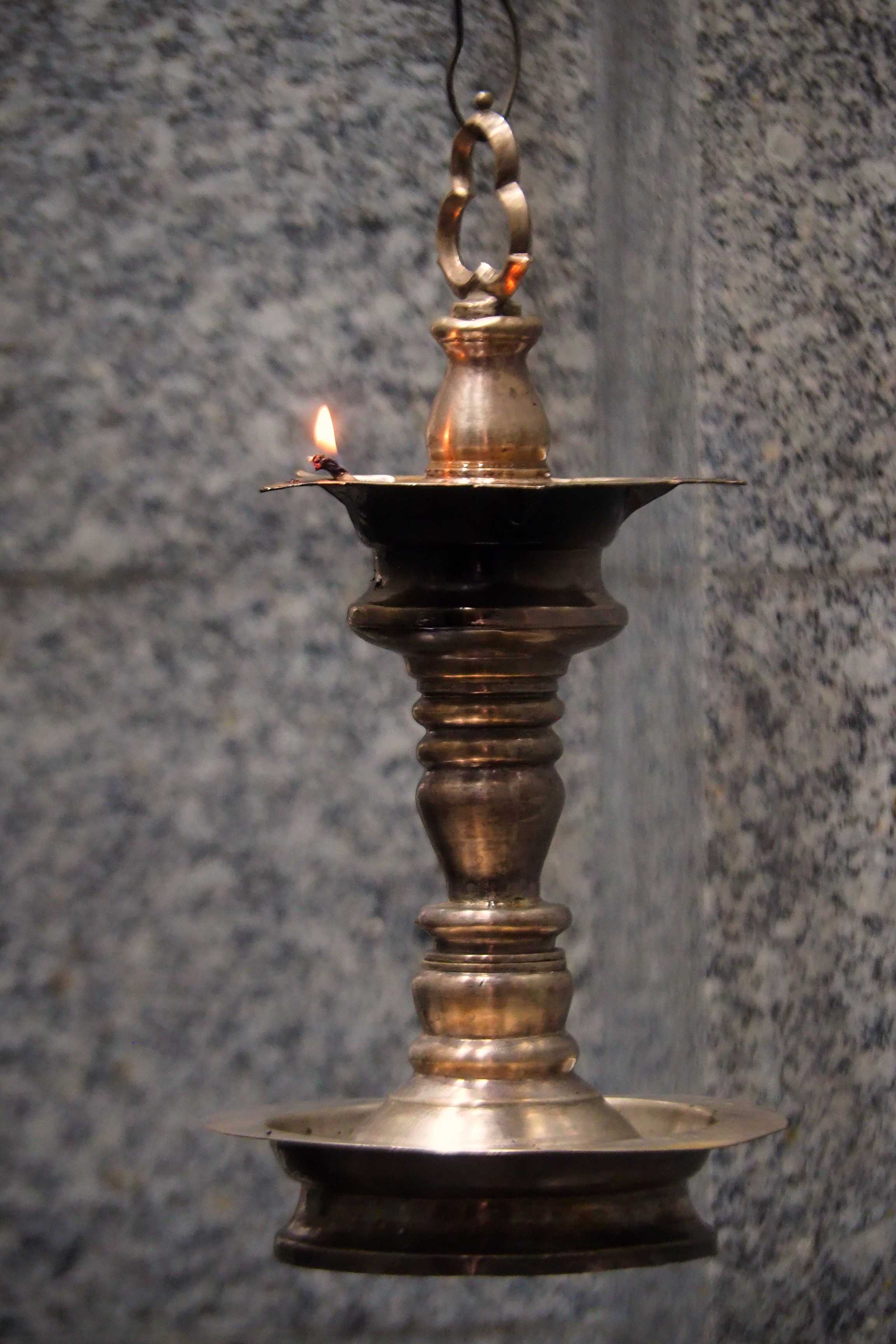
The interior is just as richly decorated.

Hindu mythology is illustrated in relief on the walls.


Shiva, one of the main deities of Hinduism. On his forehead, the third eye and the three horizontal lines of sacred ash are distinctive symbols. The crescent moon (Chandra) and the skull on his headdress, as well as the serpent (Naga) often present on his neck, are other frequent attributes. Shiva is known as the destroyer and transformer, but also as the god of cosmic dance, Nataraja.

Bananas as an offering, or "prasadam" to the deities.


Still very colorful posters representing some deities.

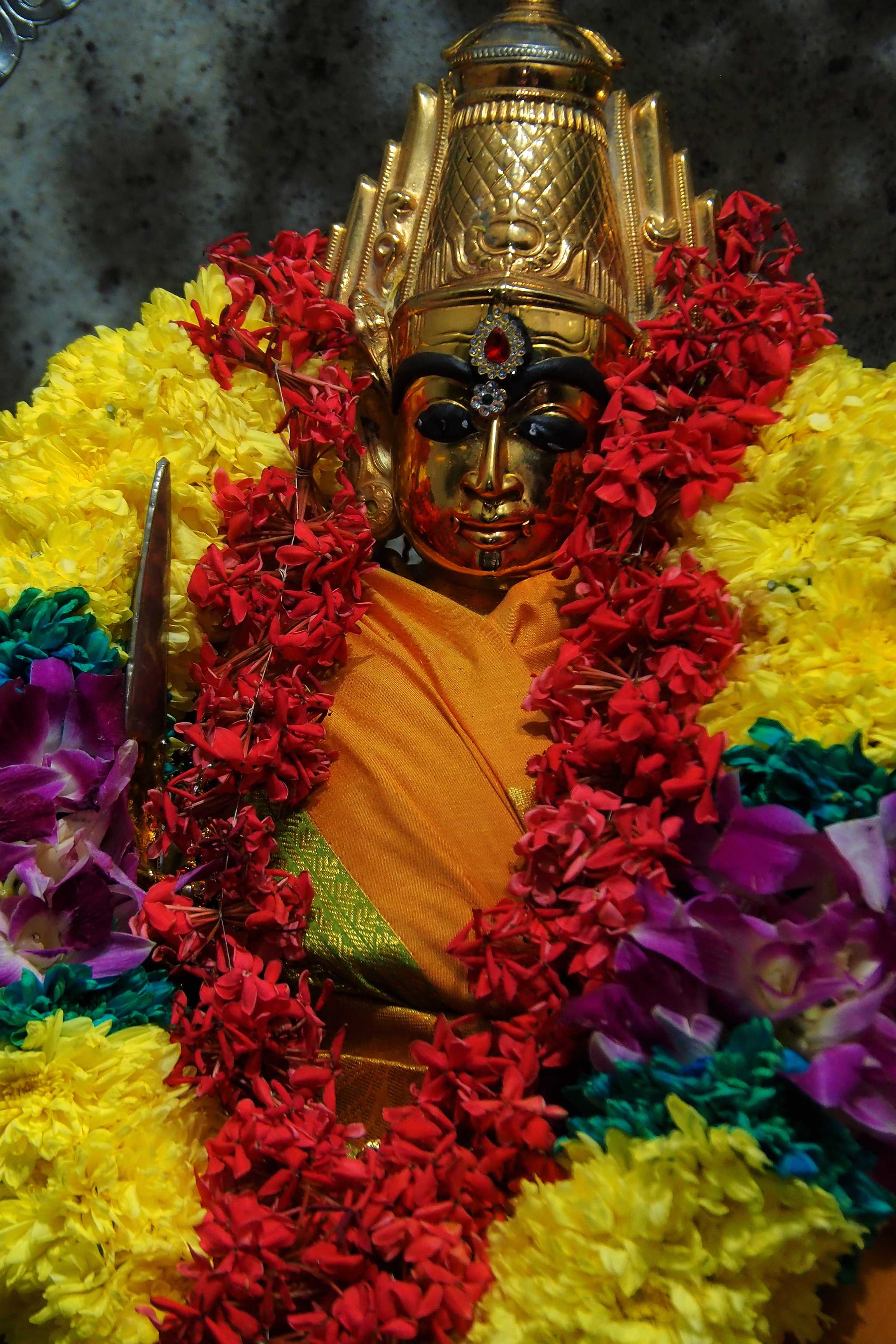
The goddess Mariamman, the main deity worshipped by the temple.

Different representations of Parvati, the wife of Shiva, recognizable by the sugar cane she holds in one of her four hands.


Several secondary shrines are scattered throughout the temple, dedicated to different deities.


Hanuman, the monkey god. Vamana, the fifth avatar of Vishnu. And Rama, often identified by his blue skin color.






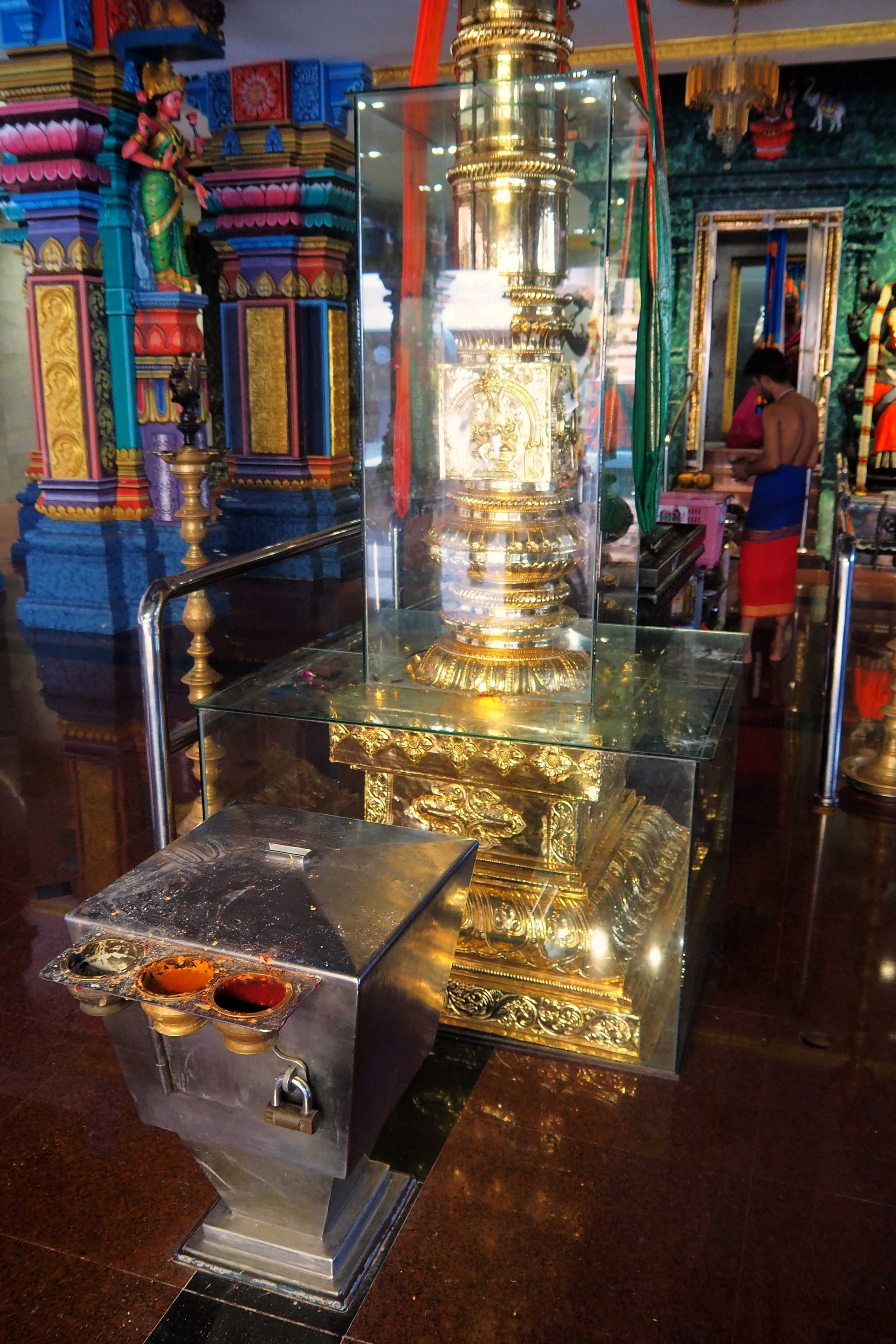
The three containers contain colored powders, sacred substances used during Hindu rituals, notably for the tilak or bindi, with a mark applied to the forehead. These powders are generally:
- Kumkum or Sindoor (red): Made from turmeric and lime, it symbolizes good fortune, prosperity and divine power. Married women often wear it above their forehead.
- Chandana (yellow/ochre) or Sandalwood paste: This paste is made from sandalwood (Santalum album). It is renowned for its cooling and soothing properties, and is used to calm the mind and promote devotion.
- Vibhuti (white/grey): This is sacred ash, often from ritual sacrifice fires. It represents purity, renunciation and the ephemeral nature of existence. It is applied in three horizontal lines.


The colored painting on the sidewalk is a rangoli. It is a form of traditional art created using colored rice powders, flours or rock powders. The patterns are often geometric, floral or inspired by nature. It is supposed to bring happiness and prosperity. For us, it will just bring us to our next stop, the Kuala Lumpur Tower!

Latest comments
On Guatemala 2018
Le 25 Novembre 2024
Significado de este mural
On Chile 2016
Le 15 Septembre 2024
Rrrrrr
On Egypt 2003
Le 1er Avril 2023
Et oui c'est bien nous aux pieds de ce Colosse !
Le 1er Avril 2023
Bien petits aux pieds de ce Colosse !
On Namibia 2014
Le 3 Août 2021
very good indeed