


 My blog
  Support me on Tipeee!


Monday11November
After 2h30 drive from Malacca, here we are, 15 days later, in Kuala Lumpur to finish the visit of the capital that the unexpected stay in Amsterdam had prevented us. We changed Airbnb, we are at the grand hotel "Platinum Suites".


From the heights, the metropolis of Kuala Lumpur pushes the horizon far behind its forest of skyscrapers... 


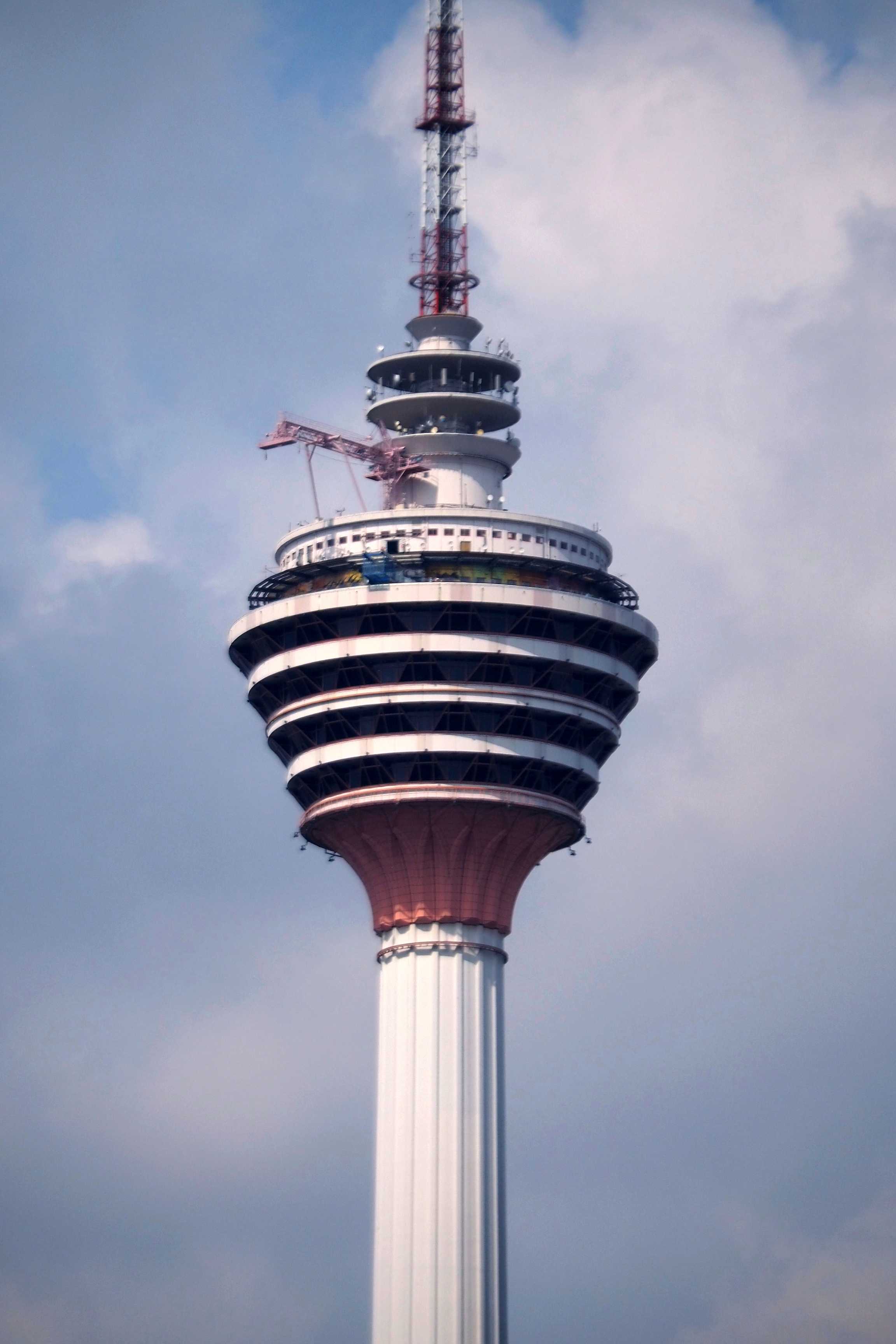
The two generations of emblematic towers of the city, the KL Tower and the Merderka KL 118.


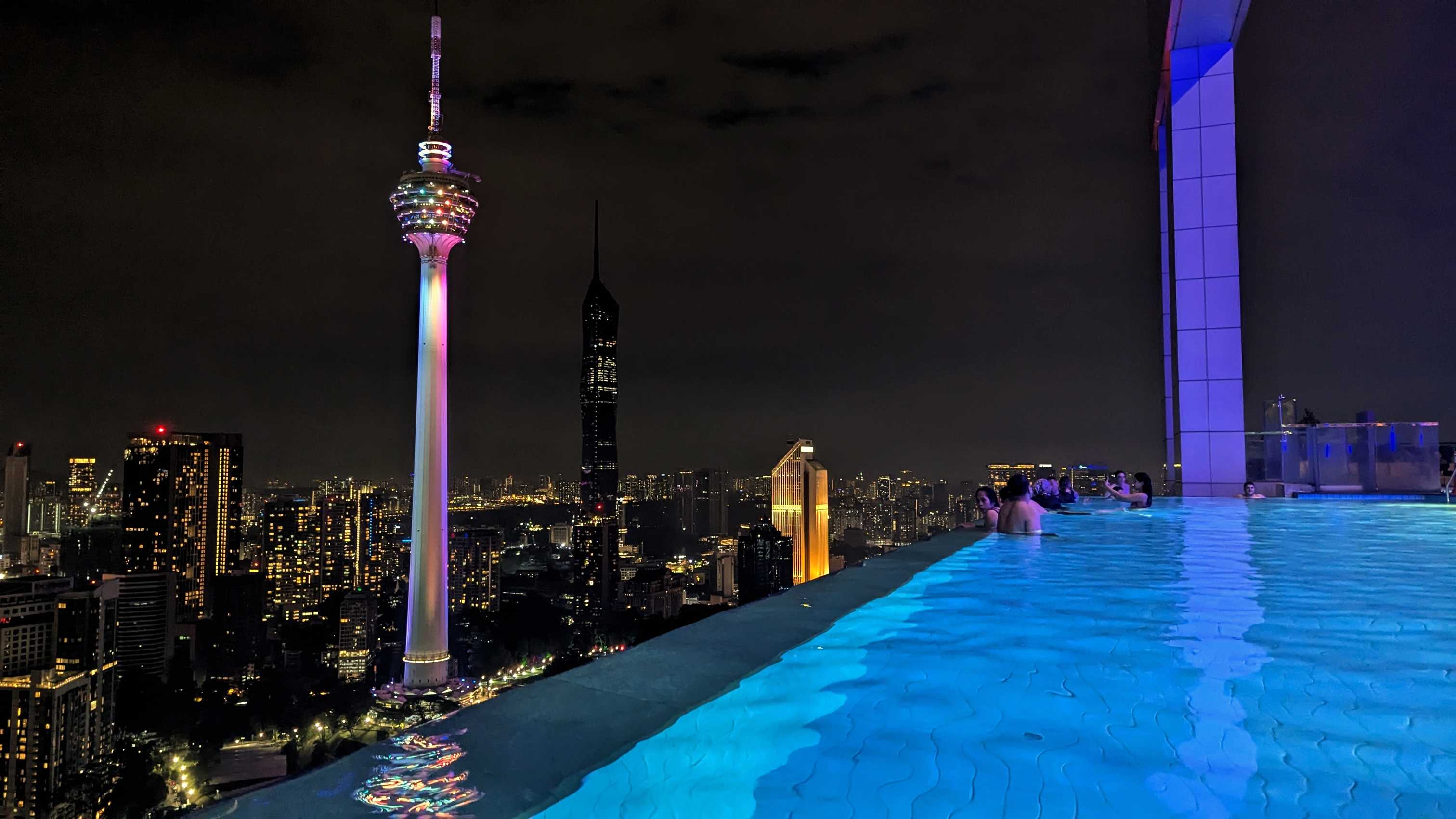
The Platinum Suites offers beautiful views from the apartments but also from its pool... To find the pool of the Platinum Suites, just take the elevator and aim for the moon, or more modestly, the 51st floor. From up there, the large infinity pool offers you a panorama of the Petronas and the KL Tower. Even the Merdeka is there but discreet all lights off.


Here is the pool almost 200 meters above the ground.


The KL Tower constantly changes color thanks to the led lighting projected on it.


Return to the apartment to get ready and go to dinner.


For my part it will be a "chicken Sizzler", a dish that I liked a lot in Nepal. This dish is composed of pieces of chicken marinated in a mixture of spices of Indian inspiration, grilled then presented on a bed of cabbage served on a hot cast iron plate. The dish owes its name to the crackling sound it produces. 


Tuesday12November
This day will be busy because tomorrow morning, we leave the country to join Singapore! The weather is overcast but we will have to deal with it! On the program for the day: the Petronas towers, the Batu Caves and the Merdeka 118! 


The Petronas towers have their heads in the clouds. We will therefore simply buy the tickets to come back at the end of the afternoon hoping that the sky clears up...


Batu Caves
And here we are at the foot of the imposing limestone cliffs of the Batu caves, high place of Hindu pilgrimage located north of Kuala Lumpur 20 minutes from the city center. Twenty minutes which will have been enough for the clouds to take leave, it's good news! 


It is not the most emblematic statue of the site but he also watches over the area. The statue of Hanuman commands respect. Emblematic figure of loyalty and courage in Hinduism, he is the general of the monkey army. His powerful gaze seems to warn visitors, while observing with a disapproving air his distant cousins, the thieving macaques that populate the site... 


Around the Batu Caves sanctuary, ancestral gestures of devotion mingle with modernity. This vendor meticulously prepares offerings of betel leaves (Piper betle). Essential element of Hindu rituals, the betel leaf is presented to deities to mark respect and devotion. It is also traditionally chewed with areca nut and lime for its stimulating properties...

A ceremony has just ended: the ritual of Mundan, fundamental rite of passage in Hinduism. It consists of the first tonsure of a young child, a practice with high symbolic charge. This act aims to purify him of possible negativities of his past lives and to stimulate healthy growth. The family then receives the blessing of a priest to ensure divine protection and a prosperous future for the child.


This tree has become the exclusive perch of a colony of rock pigeons (Columba livia), transforming its foliage into a magnificent avian condominium... 


Ha! Here is the emblematic postcard of Batu Caves! At the entrance to the Batu caves, the colossal golden statue of the god Murugan, 42.7 meters high, watches over the pilgrims.

To reach the main temple, you must undertake the ascent of the 272 steps, whose bright colors form a veritable chromatic cascade on the mountainside.


Once simple karst formations, the Batu caves were consecrated as a Hindu place of worship in the late 19th century. The initiative comes from K. Thamboosamy Pillai, an influential figure in the Tamil community, inspired by the entrance to the main cave which evoked for him the Vel, the sacred spear of the god Murugan. The place has since become a pilgrimage center of global importance, particularly during the Thaipusam festival.


The chromatic palette of the 272 steps is a recent addition, dating from 2018. This transformation was carried out as part of the Kumbhabhishegam, an important temple re-consecration ceremony that takes place every 12 years. The goal was to revitalize the site and make it more attractive to pilgrims and visitors.


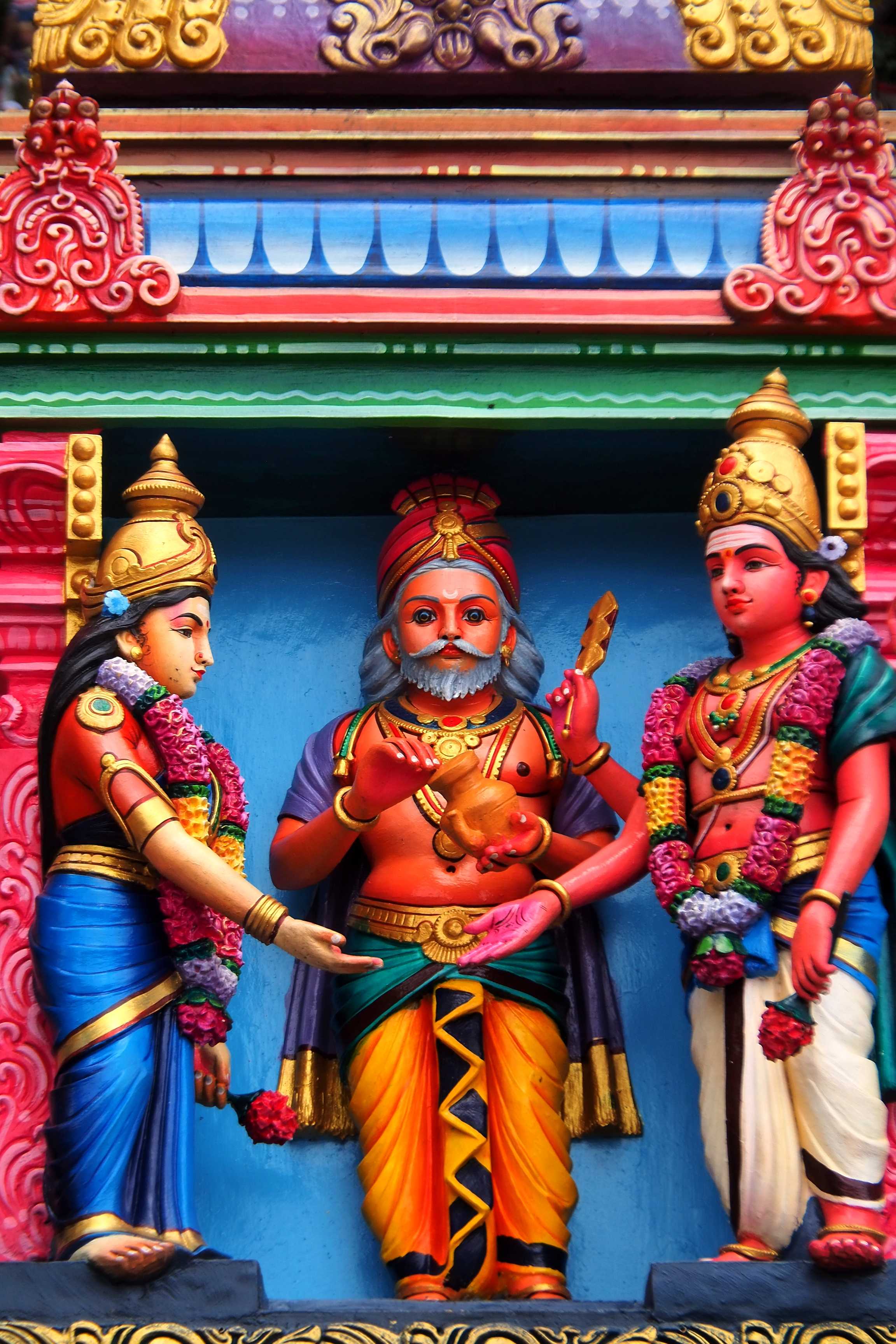
The arch that opens the bottom of the staircase transforms into polychrome scenes, populated by figures of the divine pantheon. One recognizes in particular the sacred family of Shiva, Parvati, and their sons Ganesha and Murugan, recalling the founding narratives.


At the foot of the Batu caves, the facade of the temple displays the full chromatic range. In front of this ornamental exuberance, pilgrims and visitors protect themselves as best they can with their umbrellas. 


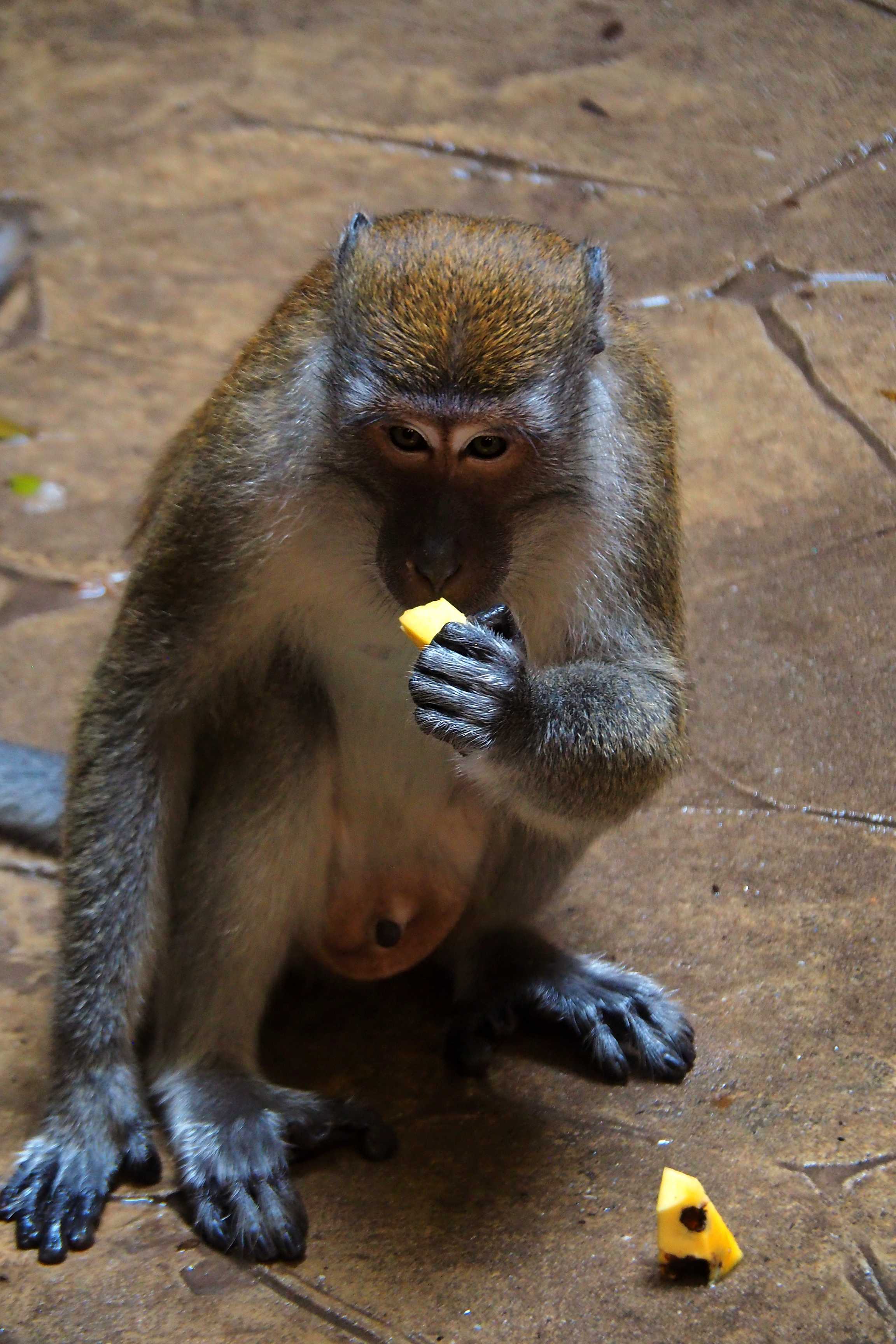
The true masters of the place at Batu Caves are neither pilgrims nor stone deities, but indeed the troops of crab-eating macaques (Macaca fascicularis). Opportunistic and daring, they have developed a science of observation watching for the slightest moment of inattention from visitors... But often, it is the pilgrim-tourist himself who offers without qualms a food offering to the hairy deity...


While the parents plot, baby feeds at his personal pantry, without having to beg from pilgrims.


It is finally time for us to start our ascent.


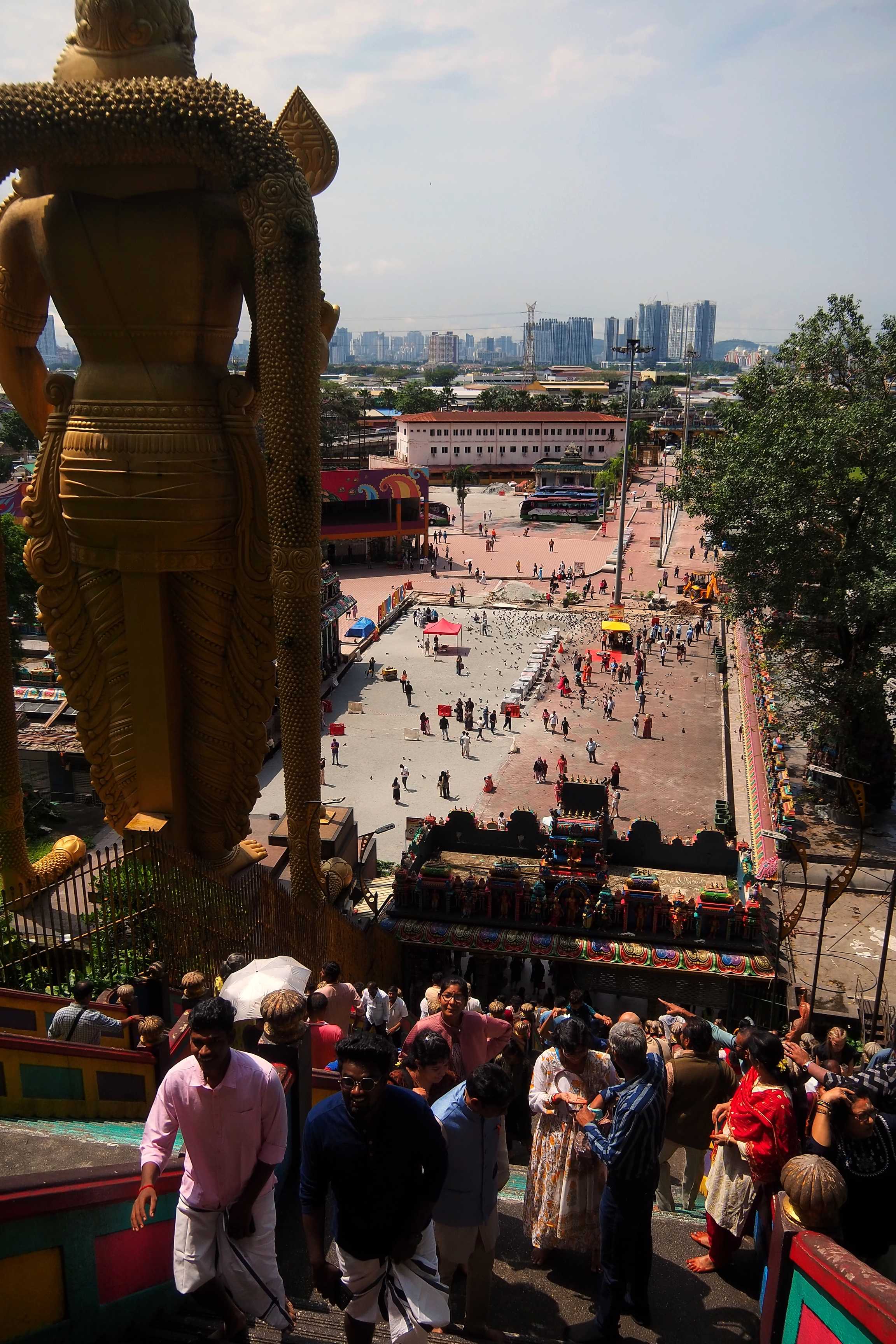
Although its golden shine may suggest precious metal, the monumental statue of Murugan is actually a feat of modern engineering. Its structure erected in 2006 consists of 1550 cubic meters of concrete and 250 tons of steel bars. The illusion is completed by the application of 300 liters of gold paint, which gives it this divine aura facing the metropolis of Kuala Lumpur. 


Which leaves contemplative this macaque surely impressed by the 42 meters of this God of concrete and steel...


The steps are painted only on the vertical face, sufficient for the visual effect. On the top, practically no paint. Anyway, tourists' feet would have quickly stripped all that...

Here we are arrived at the very top, welcomed by another representation, more modest, of Murugan and his peacock. In Hindu mythology, the peacock is the vahana, the divine mount of Murugan.


The Temple Cave is a veritable geological cathedral. The limestone vault, nearly a hundred meters high, lets daylight filter onto the sanctuaries it houses.


Statues of devotees punctuate the underground landscape. A wise ascetic (rishi) seems to guard access to a staircase leading to another replica of Murugan, recognizable by his divine spear (Vel) which he swapped here for a stick.


In the heart of the cave, the Sri Subramaniar Swamy temple raises its richly colored gopuram (tower) contrasting with the mineral sobriety of the cavern. It is here that devotees come to pay homage to Murugan, the tutelary god of the site.


A rooster, very real, tries to compete with the many peacocks inviting the faithful to head towards the temple.


New steps lead us to another temple, open to the sky this one.


The cavern, whose vault is no more, delights the monkeys, come in numbers by the rocky walls in search of fruity offering...


Facing the mischievous little primates, Idumban with his piercing gaze and conquering mustache tries to establish a little authority in the cave. Unsuccessfully, it must be said.


Spiritual life within the sanctuary is punctuated by a precise schedule. This sign informs the faithful of the times of daily rituals, such as prayer (Poosai) and ablution of idols (Abishegam). Pilgrims can also participate in the life of the temple by purchasing various offerings, from coconut to clarified butter lamp, whose rates are displayed in Malaysian ringgits (1 RM = 20 euro cents).


Back in the main room.


The priests, dressed in the traditional veshti and body marked with sacred ashes (vibhuti), serve the temple and the faithful.


And here we go for the descent of the 272 steps.


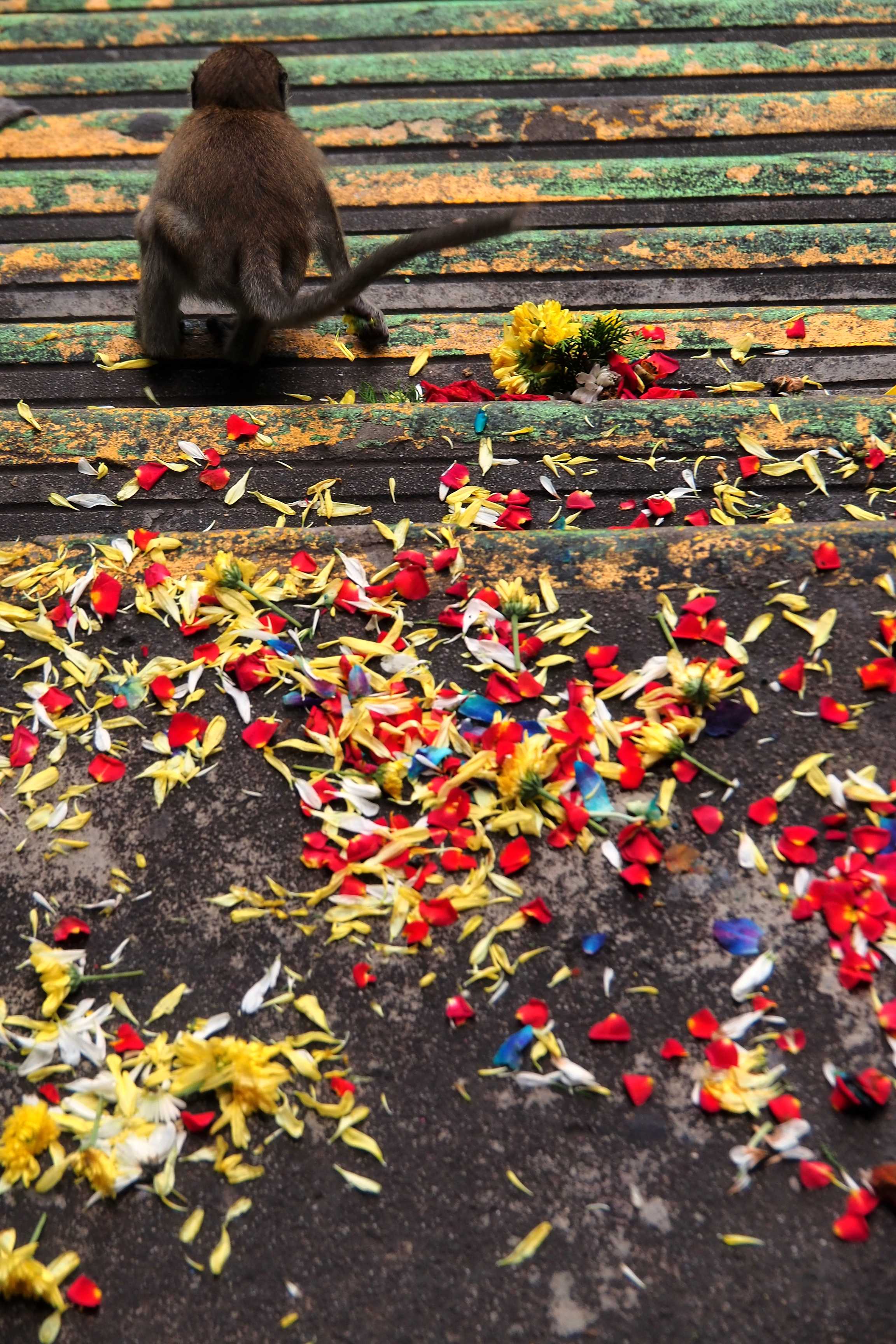
Floral offerings will be a very good snack for our macaque friends...



Let's enter now the temple located at the foot of the steps.


A young pujari officiates the Aarti ritual. The sacred flame, presented on a puja thali, symbolizes divine light and the purification of the souls of the faithful whom the priest blesses by depositing a "pottu" on their forehead.


Back facing the 42.7 meters of Murugan.

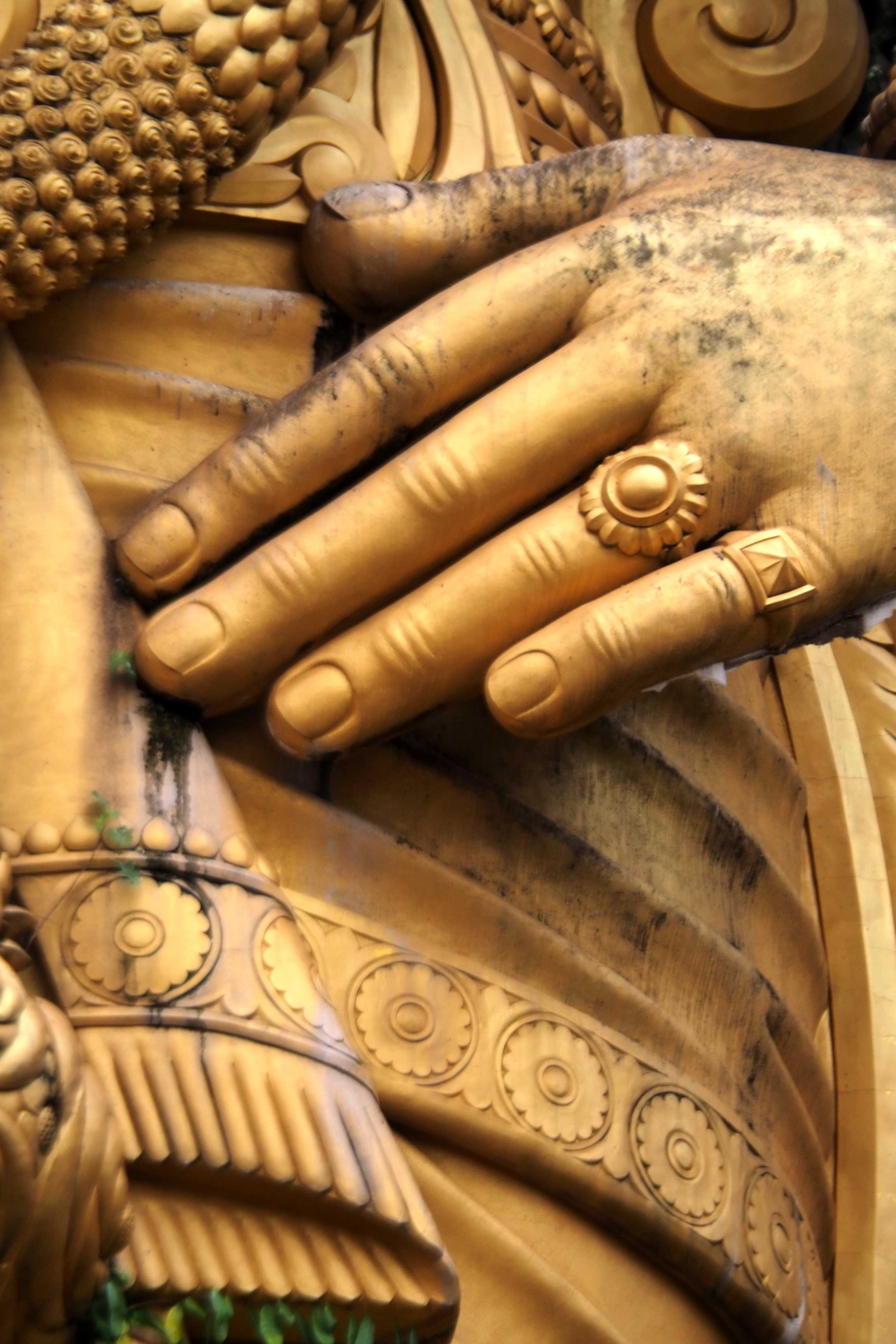
Detail on his 4-meter hands...


Yet another temple.


The meeting of two colossi tangling up and becoming a buffalo-elephant.


A Nandi (Bos indicus), the sacred bull and mount of the god Shiva. And a row of Ganeshas.


And there you go, this will be our last temple in Malaysia, and not the least!

Lunch in the restaurant "Nasi Kandar Hasan Ali’s" where we obviously take a Nasi Kandar.


Merdeka 118
With its 118 floors, the Merdeka tower is considered the second tallest structure in the world. Its architectural design is inspired by the silhouette of Tunku Abdul Rahman, Prime Minister of Malaysia, during the proclamation of independence in 1957. Its very name, 'Merdeka' meaning "heritage of independence".

In the distance, the KL Tower does not fear the big tower. In November 2024, the Merdeka is not yet open to the public. It was officially inaugurated in January 2024.


Rising to 678.9 meters, Merdeka 118 houses or will house residences, offices and hotels, offering panoramic observation decks over the capital. The construction of the Merdeka 118 tower was not without controversy. Its colossal cost, estimated at around 5 billion ringgits, sparked a lively public debate in Malaysia...




Although inaugurated 10 months ago, it is nevertheless unfinished. Works are still in progress.
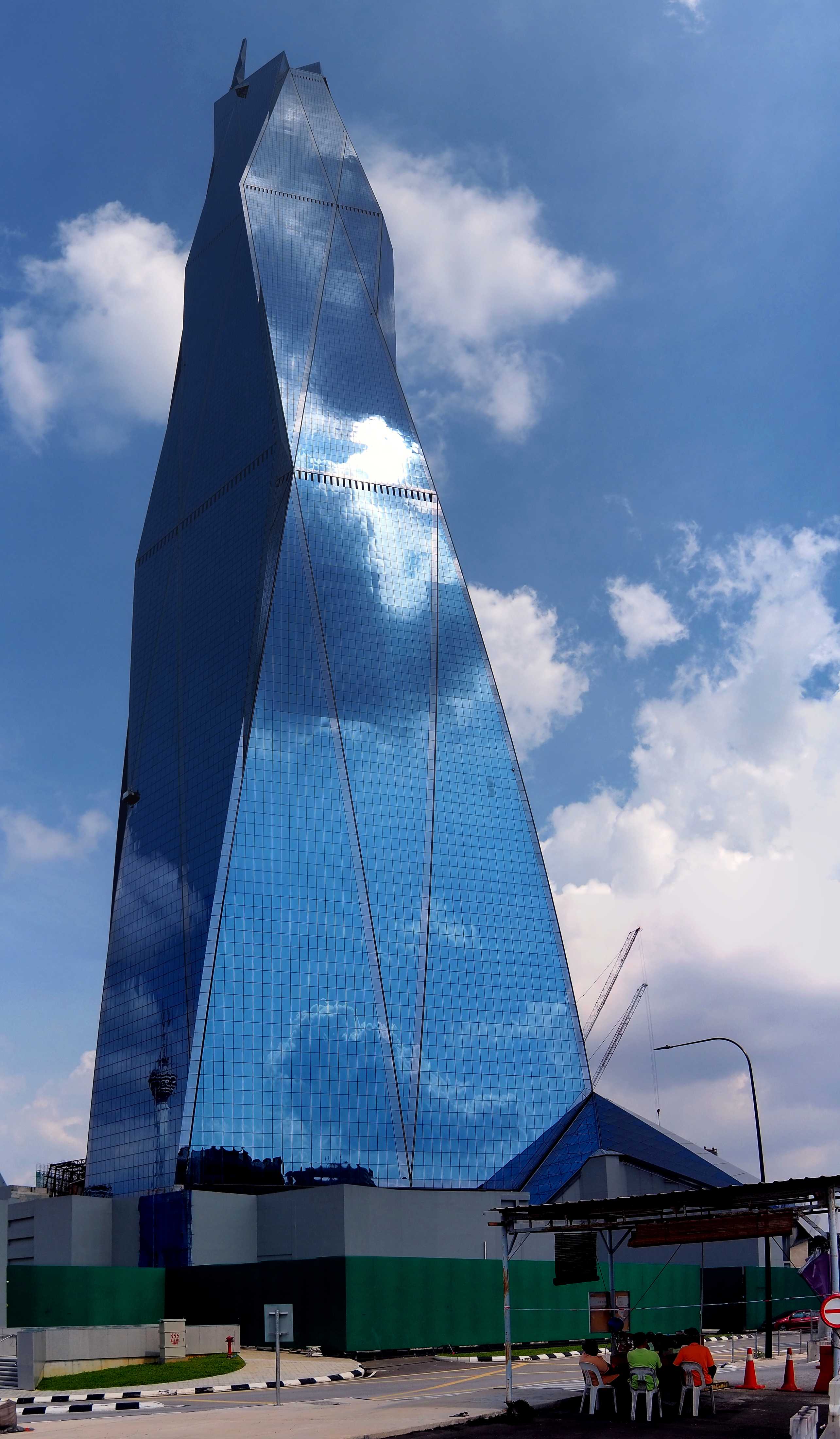


Under one of the entrance halls.


On the right, The Exchange 106 tower which stands in the heart of the new financial district of Kuala Lumpur, the Tun Razak Exchange. Its diamond-faceted cap peaks at over 445 meters.


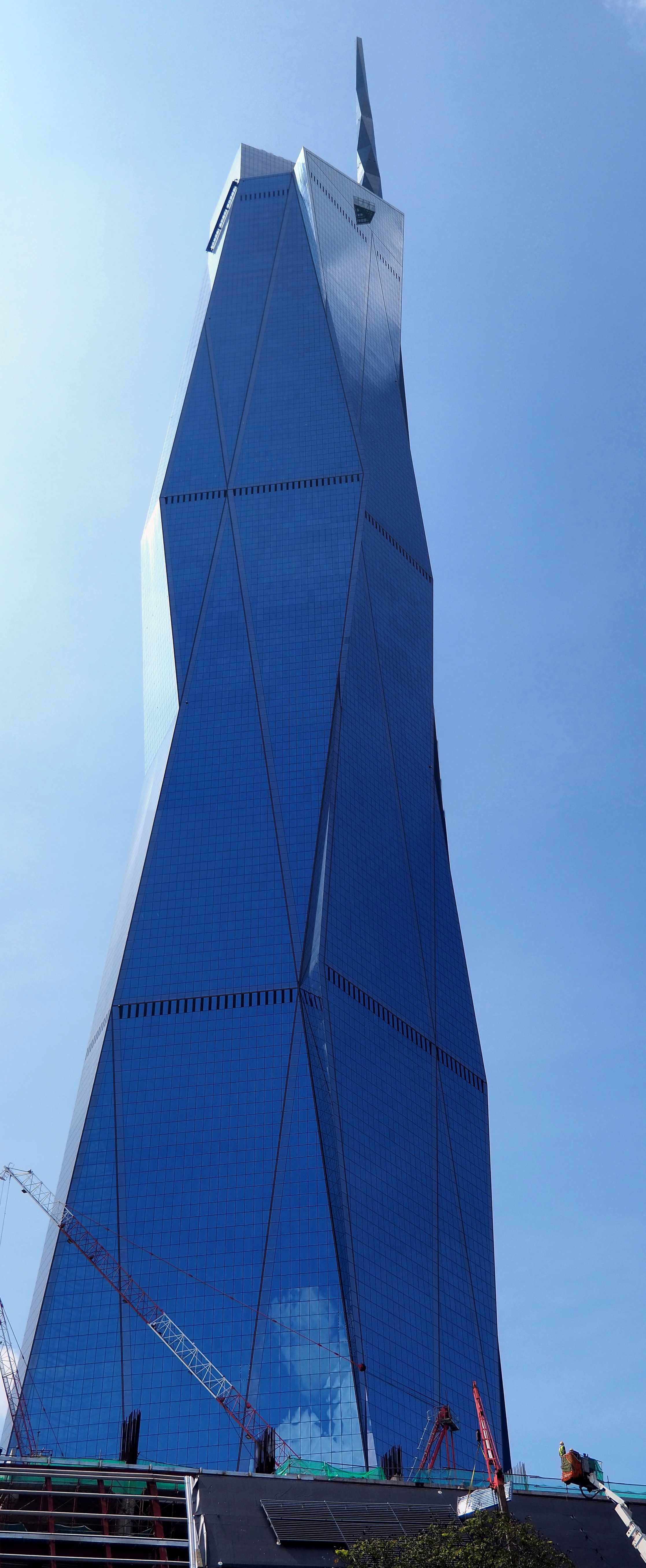


The main entrance.

The Petronas Towers
Tickets already in pocket, we leave for the last activity of the trip, the Petronas towers.


The Petronas twin towers, 452 meters high, are inseparable from Kuala Lumpur since their inauguration in 1999. Designed by architect César Pelli, they were the tallest in the world until 2004. A steel walkway, the Skybridge, connects the two buildings on the 41st and 42nd floors, 170 meters above the ground. We will be there in a few moments!


And here we are in the Skybridge.
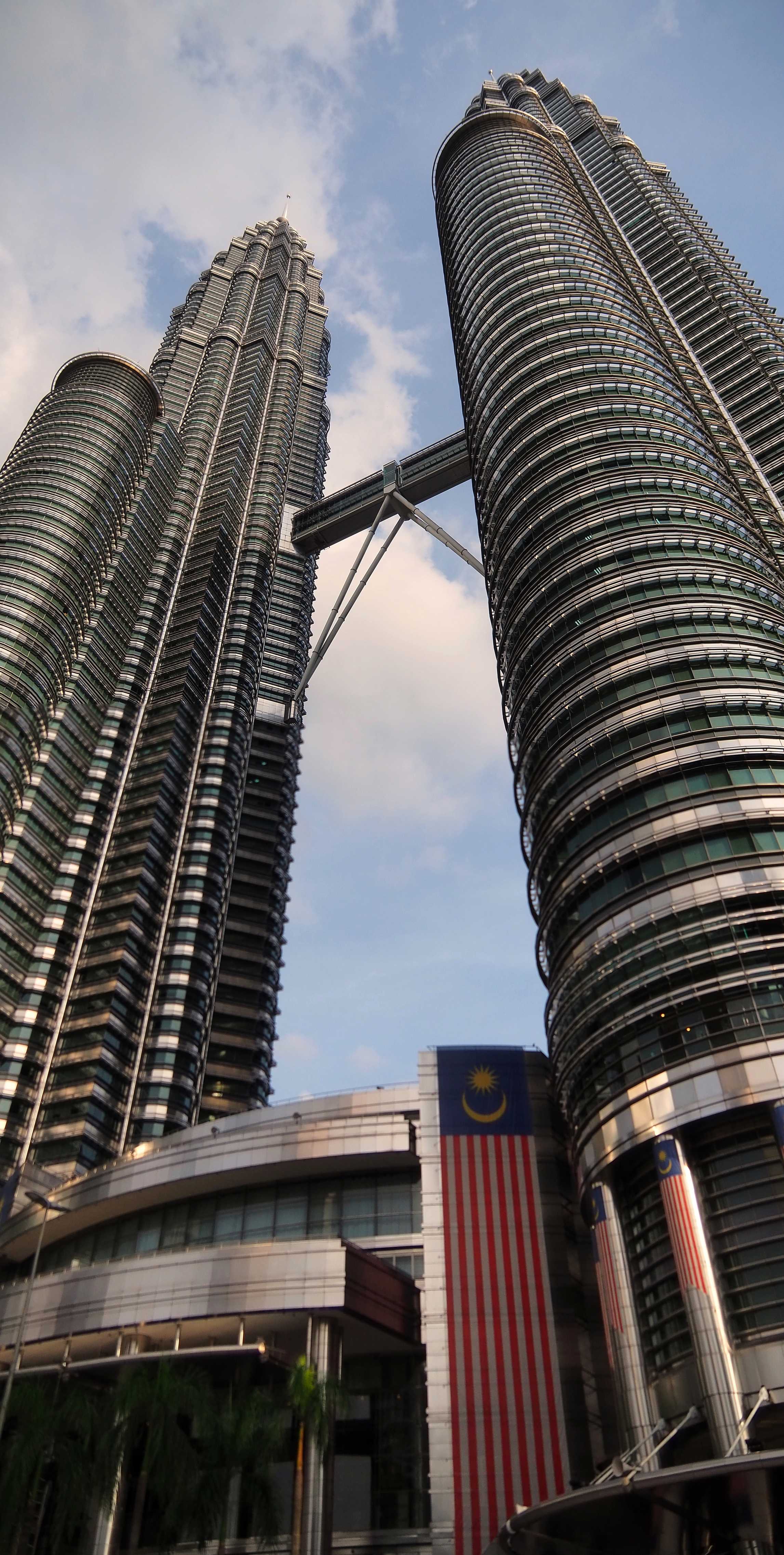

Breathtaking view of the heart of the capital.


The Menara Public Bank tower and its staggered architecture, headquarters of one of the largest Malaysian banks.


The ascent of the Petronas towers culminates at the observation deck on the 86th floor, located at an altitude of 370 meters.


Three generations rub shoulders from the perspective of the northeast tower. 2024, for the Merdeka, 1999 for the Petronas and 1996 for the KL Tower.
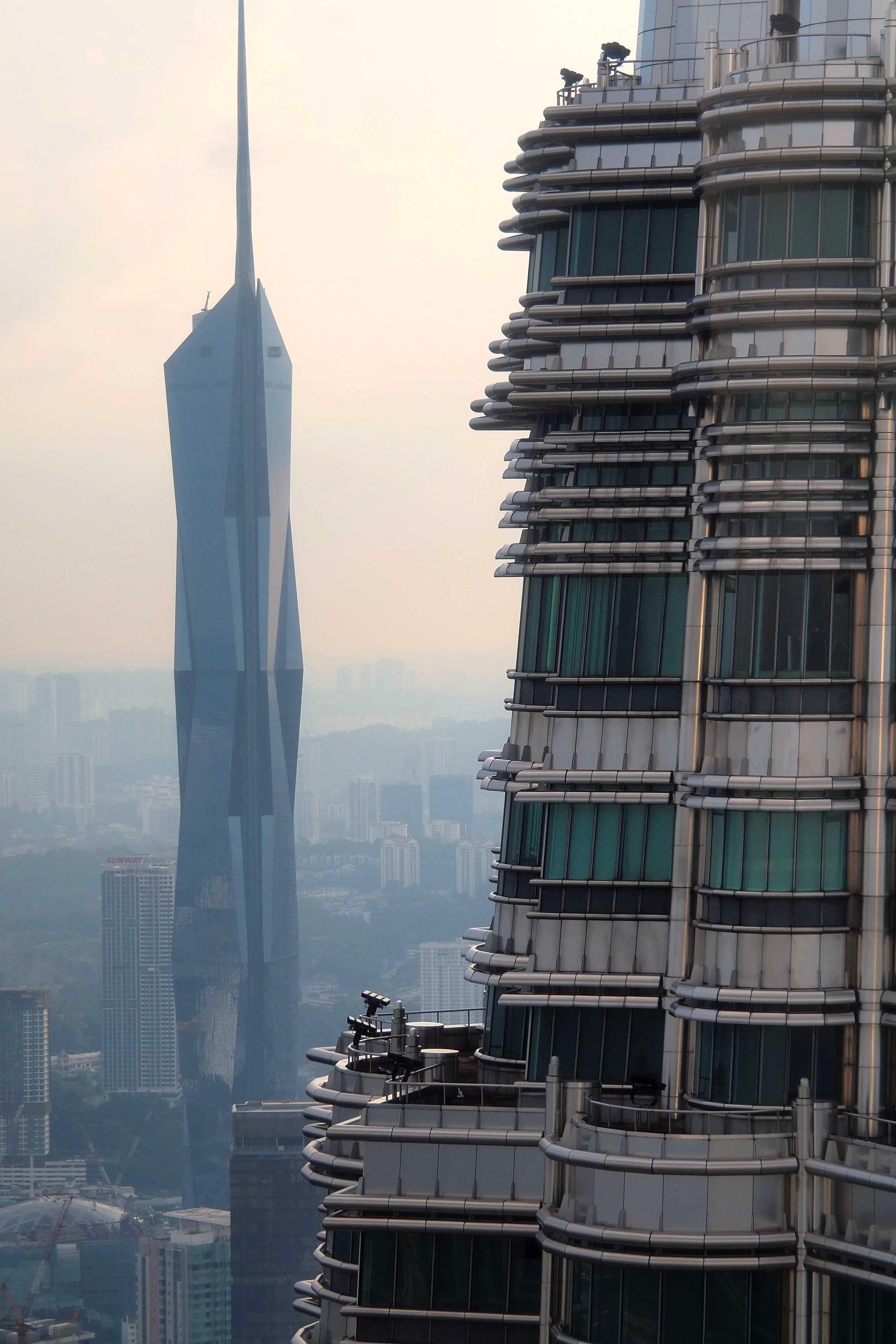


Kuala Lumpur has nearly two million inhabitants, but its metropolitan area, Greater Kuala Lumpur, brings together more than eight million.


The 86th floor of tower Petronas 2.


The Oxley towers, here in full construction phase, rises gradually overhung by its crane. The highest will be 340 meters.


The structure of the Petronas towers is based on the geometric plan of the Rub el Hizb, an eight-pointed star symbolizing harmony, gives the facade its multi-faceted sparkle. The spires recall minarets.


Model of the main towers of Kuala Lumpur.


Tower 1 is entirely occupied by the headquarters of the national oil company, Petronas, while Tower 2 hosts other multinationals. At their base, the Suria KLCC shopping center deploys its luxury brands, and cultural institutions such as the philharmonic concert hall and the Petrosains science center have also taken up residence there.


Here we are now at the very bottom of the towers, in the Suria KLCC shopping center.

To walk through the entire shopping gallery, you will have to cover six floors...


Goodbye towers! It smells like the end of the trip and the last return to the hotel! 

Platinum Hotel
And how to finish these three Malaysian weeks without bathing at skyscraper height in the high pool of the Platinum Hotel...


The pool of the neighboring tower is reflected in the glass ceiling...


Chromatic anthology offered by the KL Tower, virtually plunged into the blue of the pool...

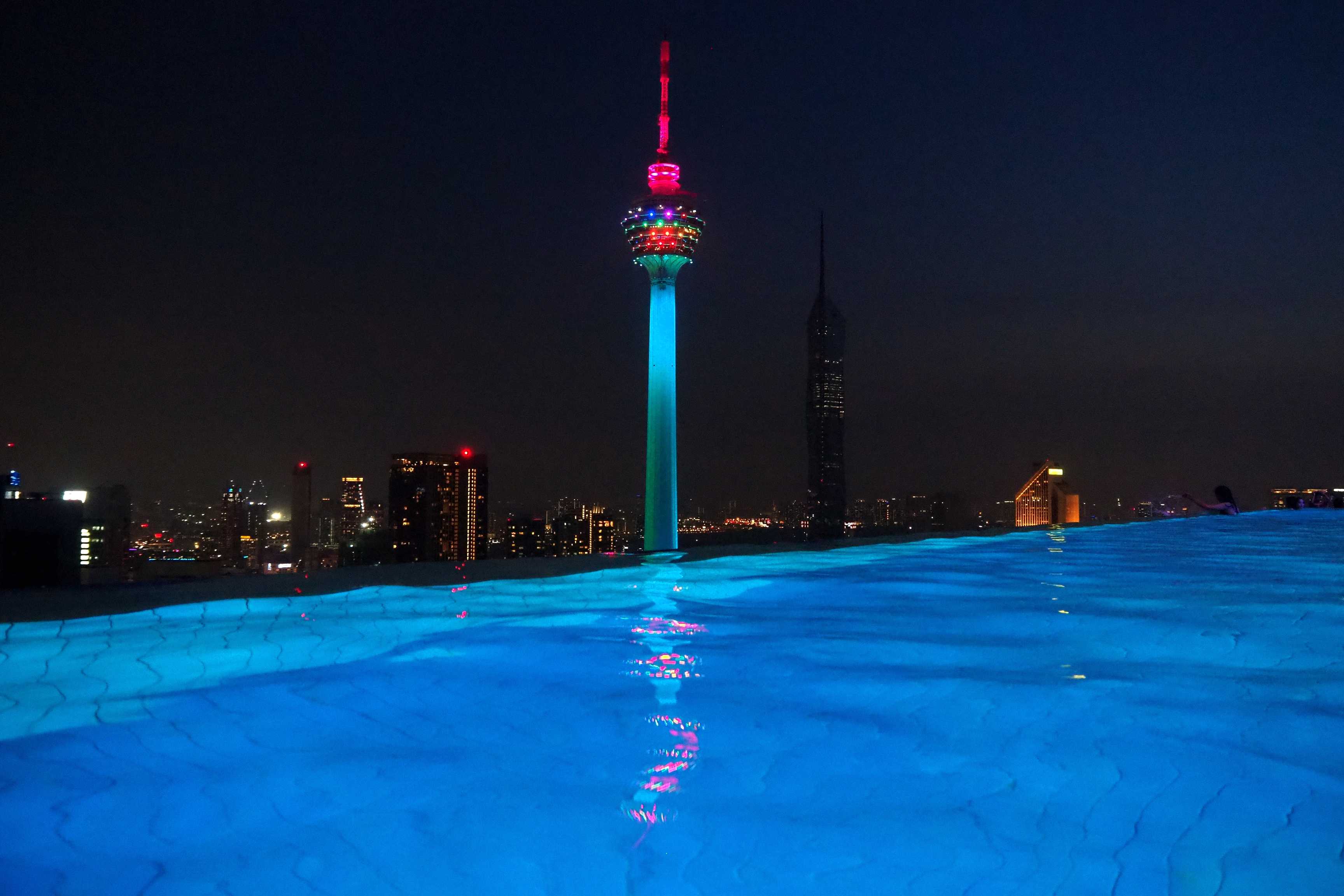


The Moon joins the city LEDs.


Last dinner with duck sizzling.

Wednesday13November
Return of the car to Europcar, at the airport.

Kuala Lumpur International Airport (KLIA) is big... You still have to take the shuttle to reach terminal 1 where our plane awaits us.

Oh but yes! The trip doesn't really end... Indeed, AirAsia will take us 300 kilometers further South, to another country... Singapore! Indeed, we had decided to take advantage of the proximity of the city-state to spend an extra week there. We would have liked to go there directly with our rental car, but it is much too complex to cross the border. So it is the plane that will teleport us to this second trip, which you can find here: Singapore 2024, the itinerary!

Latest comments
On Guatemala 2018
Le 25 Novembre 2024
Significado de este mural
On Chile 2016
Le 15 Septembre 2024
Rrrrrr
On Egypt 2003
Le 1er Avril 2023
Et oui c'est bien nous aux pieds de ce Colosse !
Le 1er Avril 2023
Bien petits aux pieds de ce Colosse !
On Namibia 2014
Le 3 Août 2021
very good indeed