


 My blog
  Support me on Tipeee!


Monday4November
Let's go! We leave the Majestic, the building that hosted us for these last two days.

The fresco at the foot of the building.


Penang
90 minutes later, we cross the toll that allows access to the bridge that joins the island of Penang. With the Touch'n Go, the passage is easy, you just have to buy a card in a highway gas station and pass the contactless card to raise the barrier.

The Sultan Abdul Halim Muadzam Shah bridge is the longest bridge in Southeast Asia. 23 kilometers long.


In the distance, the fishing villages.


Kek Lok Si Temple
We join directly the cultural stage of the day, the Kek Lok Si temple, whose buildings we see at the top of the hill named the "Crane Mountain".


A basin shelters Amboina box turtles (Cuora amboinensis), animals inseparable from the Buddhist religion.


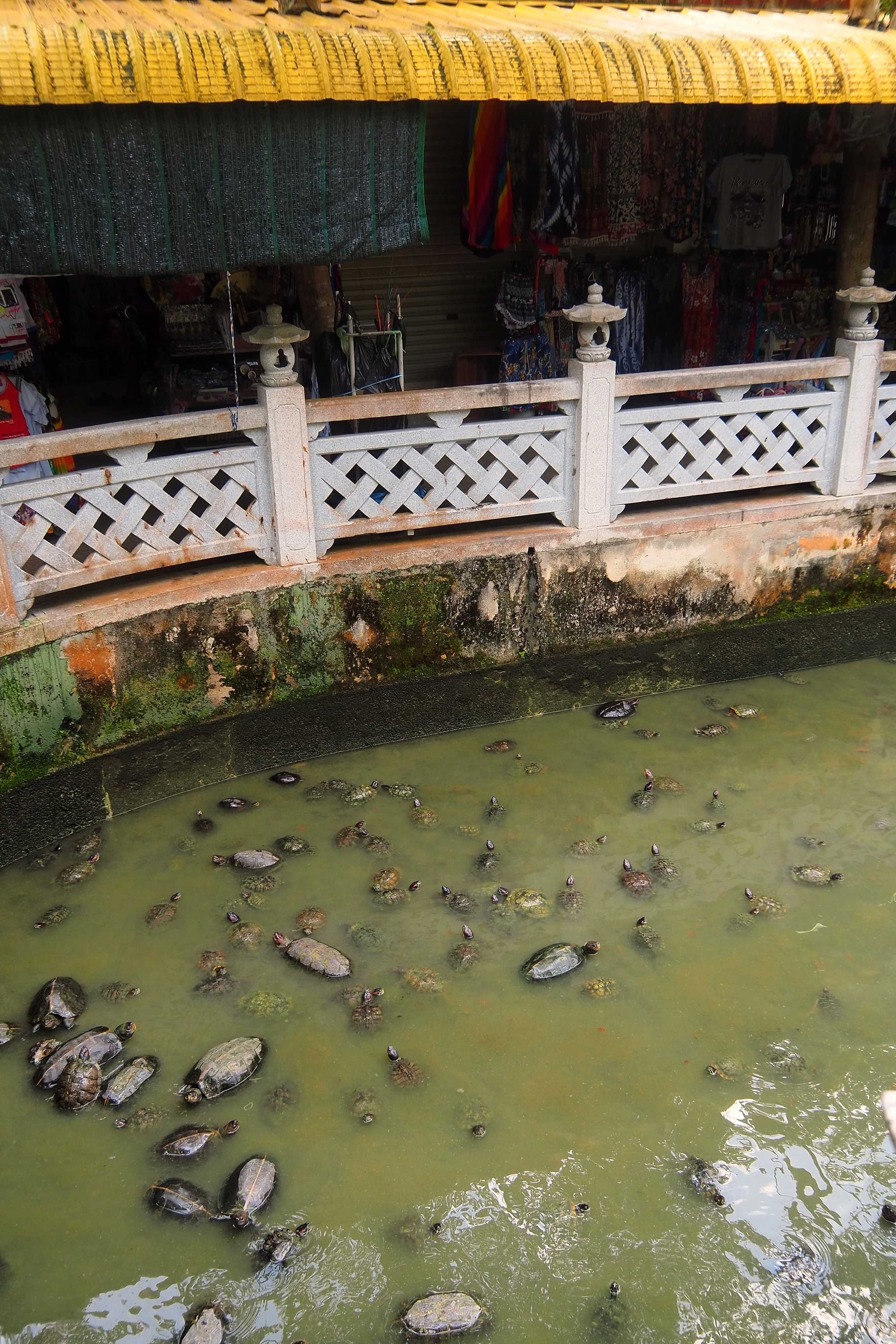
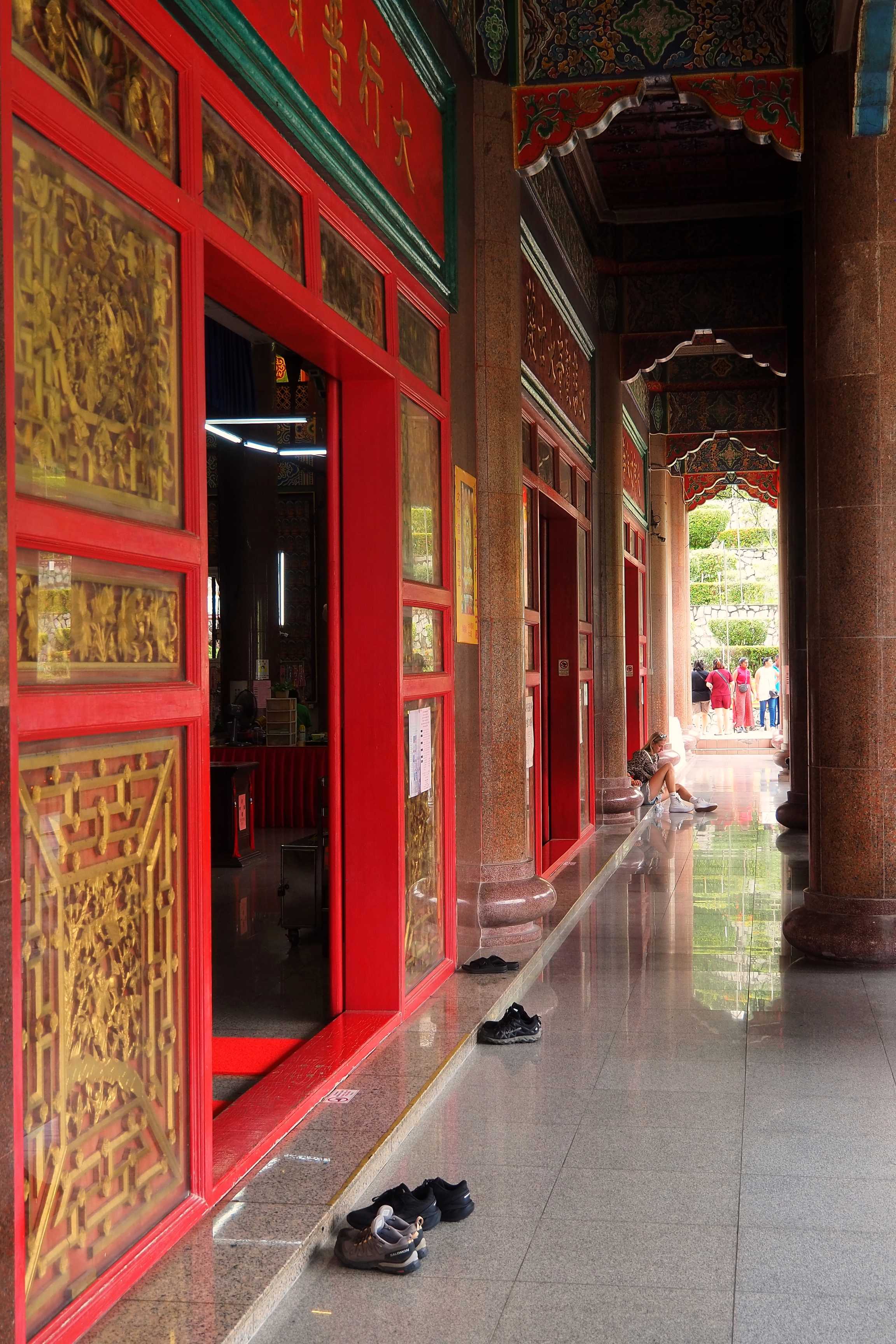
After a short walk, we arrive at the temple.


The imposing Pagoda of Ten Thousand Buddhas (Ban Po Thar) mixes Chinese, Thai and Burmese styles. 7 stories high and 30 meters, we will visit it before leaving.


View of the main city of the island, George Town.


The large prayer hall of the temple dedicated to the Goddess Guanyin.

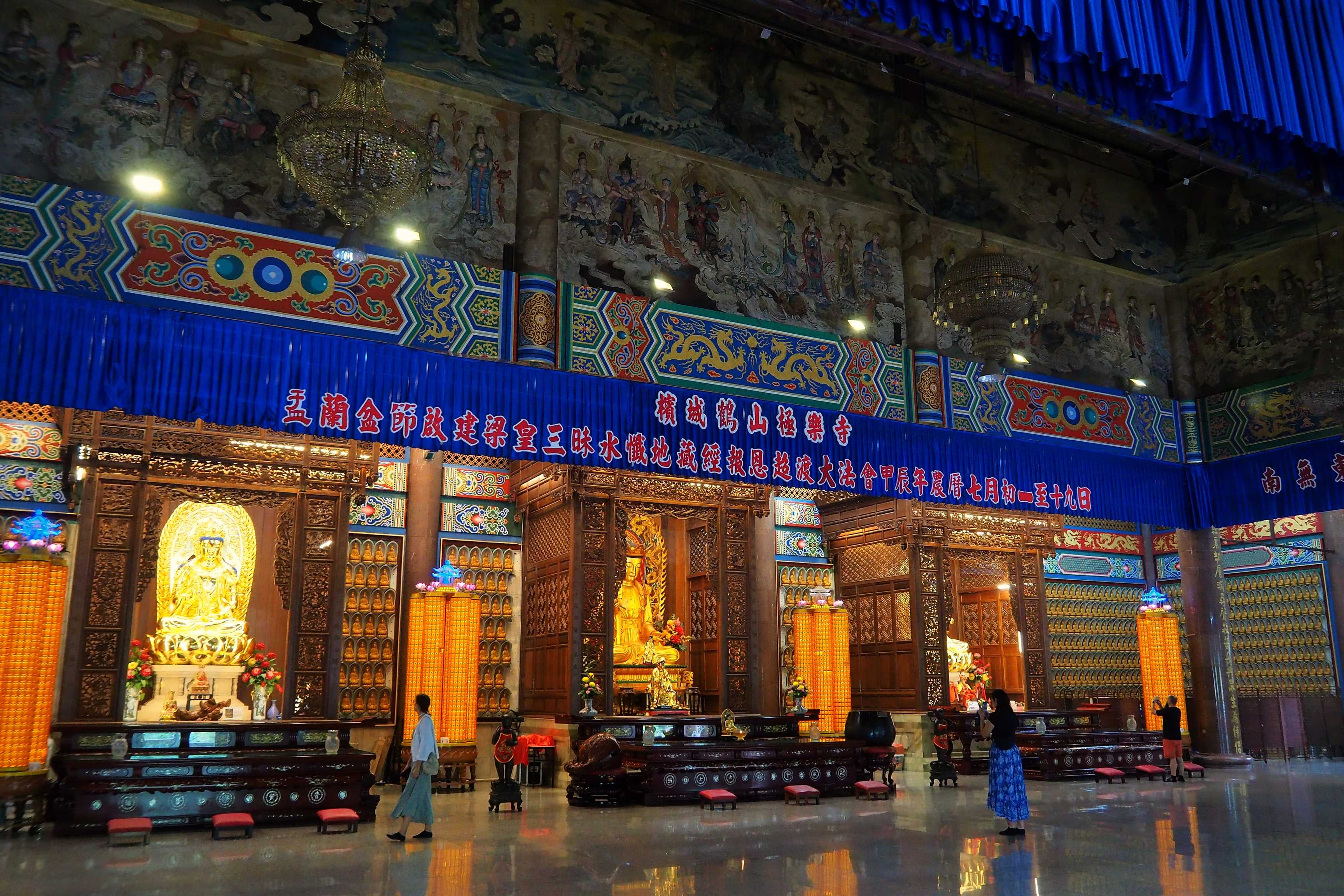


Thousands of small statues cover the walls of the temple. The donor's name is inscribed on each niche whose placement in height will be proportional to the value of the donation...


And more devotional plaques representing donors contributing financially to the construction and maintenance of the temple or charities.


Zoom on the small niches of the wall of ten thousand Buddhas. The golden Statue represents Guanyin, the Bodhisattva of Compassion.


The high richly decorated ceiling.


The "Celestial Well" (Zaojing), generally located in the center of the ceiling of a Chinese temple, serves to symbolize the connection between heaven and earth.


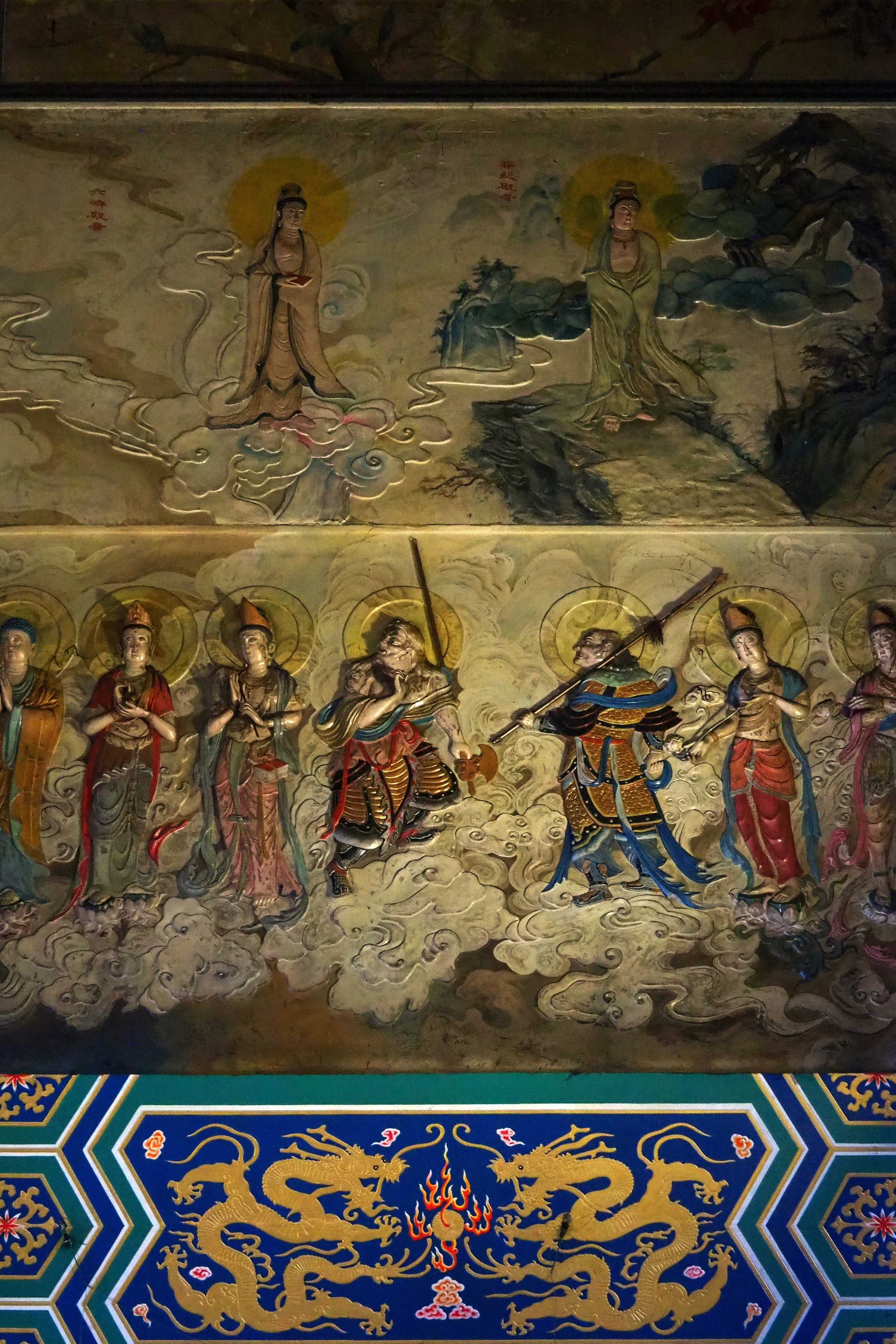
Bas-reliefs on the walls represent scenes from Buddhist mythology.


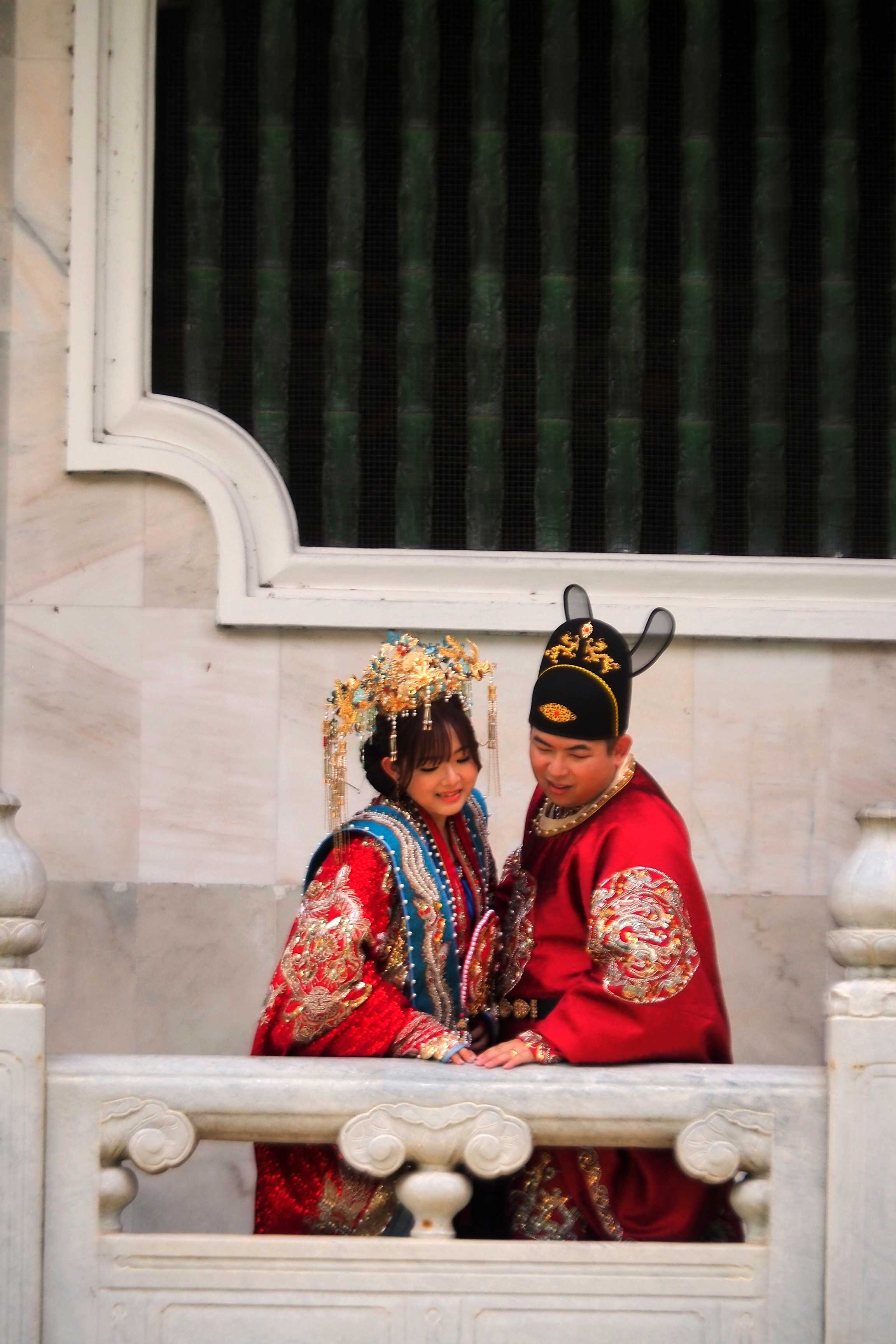
Outside, a photographer is busy, and indeed, it is worth a look, a couple in traditional Chinese wedding attire is in the middle of a photo shoot.


The bride wears a red Qun Gua, embroidered with phoenixes (feng), symbolizing beauty and good fortune, and topped with a phoenix crown (feng guan). The groom, meanwhile, is dressed in a red changpao adorned with dragons (lóng), representing power and nobility. The groom's headgear, with its rigid "wings", is a futóu, precisely a Zhanchì Futóu or "futóu with spread wings", originating from the Song dynasty.




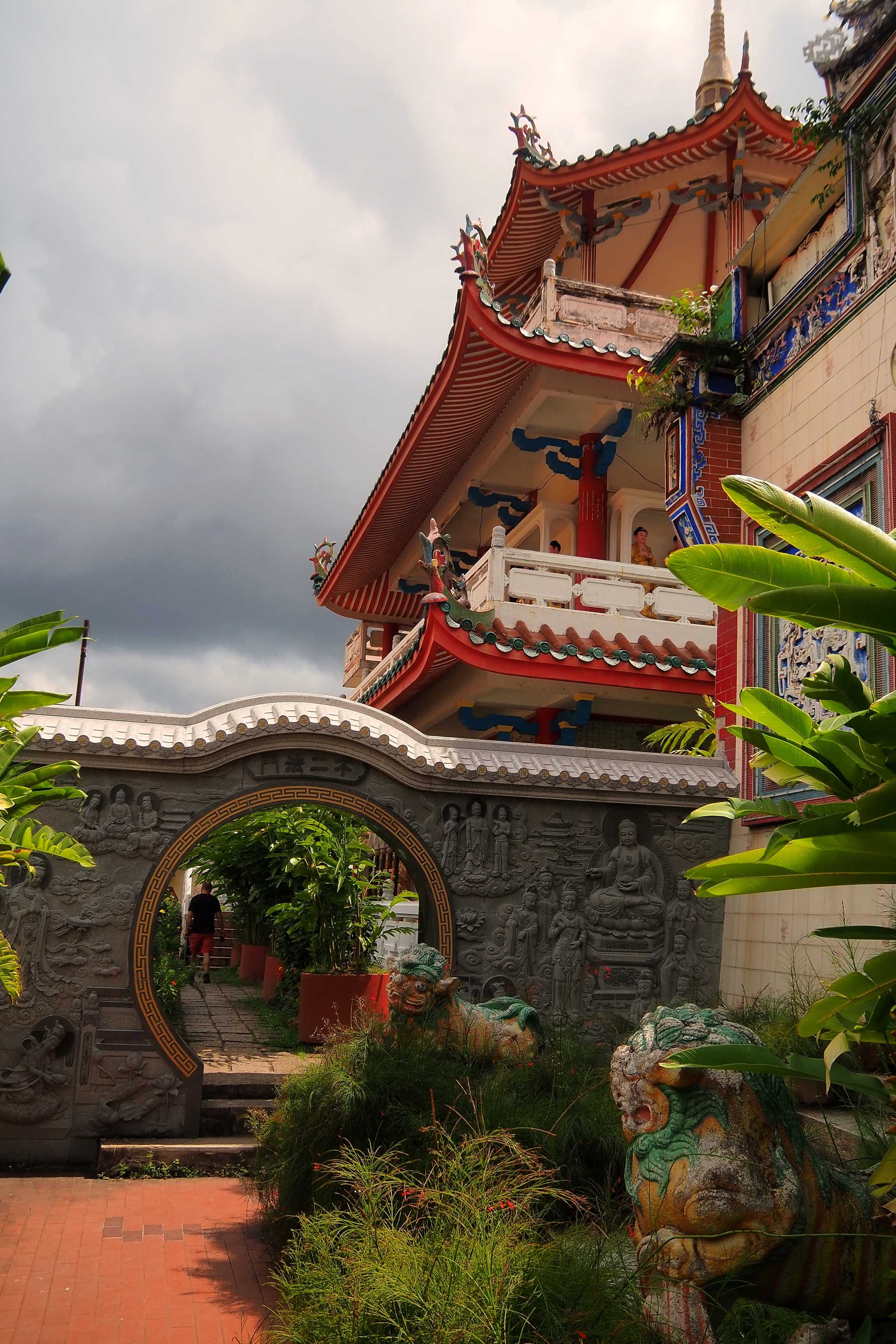
Let's move on to the next pagoda, located a little higher on the hill.


The entrance to the pagoda or "Pailou" with the inscription "???? ", which could be translated as A multitude of blessings converge and pay homage in this place.

Here we are inside this new enclosure.


Construction of the temple began in 1890, spanning several decades to become one of the largest and most important Buddhist temples in Southeast Asia.


Several rooms are accessible on several floors.


The "Hall of the Heavenly King".

The four heavenly kings, behind their windows, protect the world and the teachings of Buddha (the Dharma) against evil.


Three Buddhas sitting in padmasana meditation position on their lotus throne.


Left photo, the gigantic pavilion of the Goddess Guanyin, placed at the top of the hill. We will be there later.


A decorative frieze, faded by time, separates two sections of roof covered with ceramic tiles.

Another temple, richly decorated from floor to ceiling.


Buddha in white stone, probably white jade, facing his fruity and skilfully arranged offerings. 


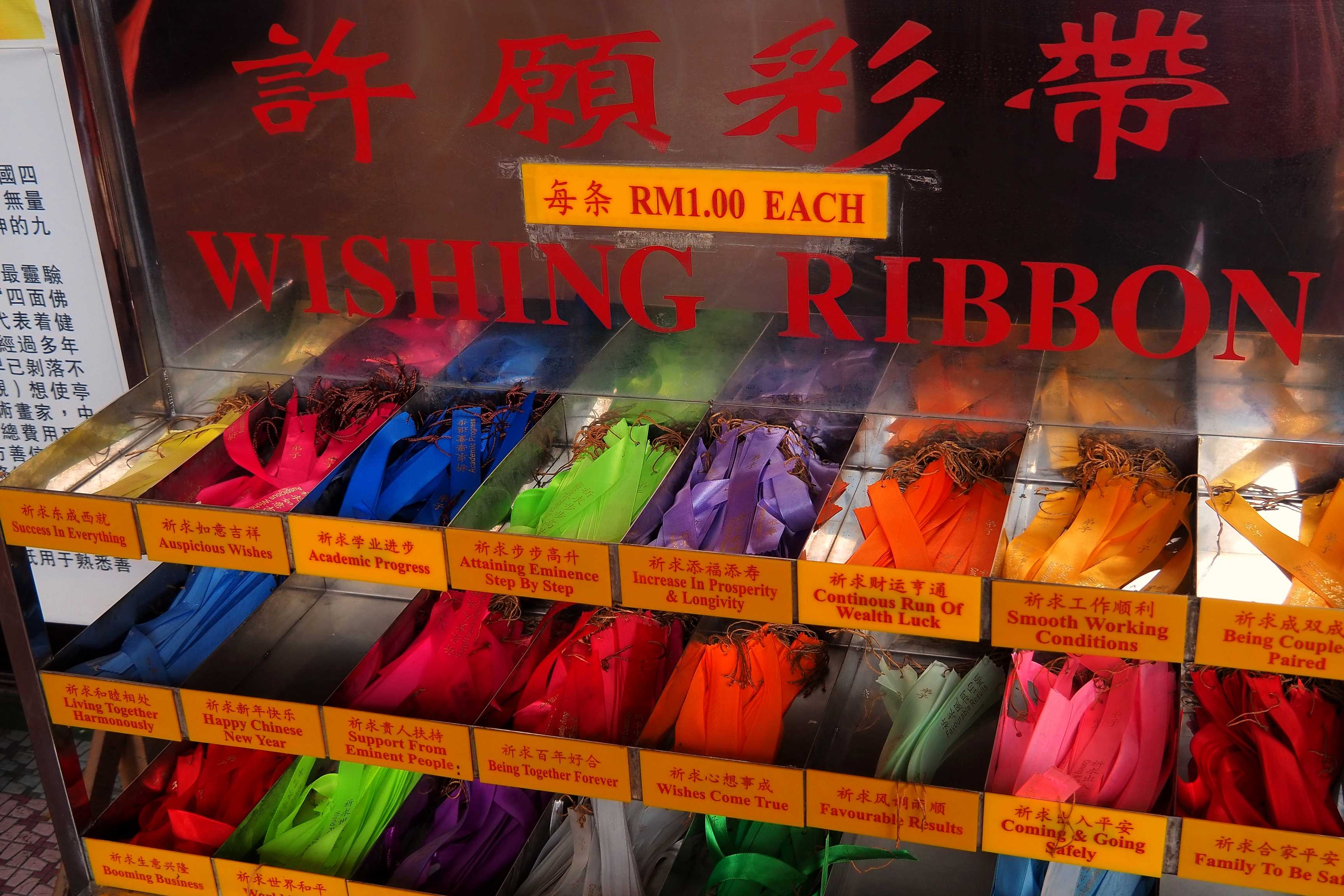
Visitors can participate in an ancestral tradition for one Malaysian ringgit, or about 20 euro cents: the purchase of "wishing ribbons". Each ribbon color is associated with a particular intention: prosperity, health, family happiness or academic success.


We then dive not into a prayer hall, but into a shop for souvenirs and piety objects appreciated by followers of Buddhism. And this man locked in his glass cube is not for sale! At least I think so... This statue is the hyper-realistic representation of the legendary Thai monk, Luang Phor Thuat. Born around 1582, he lived around a hundred years. He is renowned for his miracles and protective powers, particularly to protect travelers from accidents... 


The shop is the obligatory passage to access the funicular which goes up to the pavilion housing the monumental statue of Guanyin, the Goddess of Mercy.


Here we are at the foot of the pavilion inaugurated in 2002. The three-level roof rises to 82 meters and is supported by 16 granite pillars. Guanyin for her part is satisfied with a modest height of 30 meters...
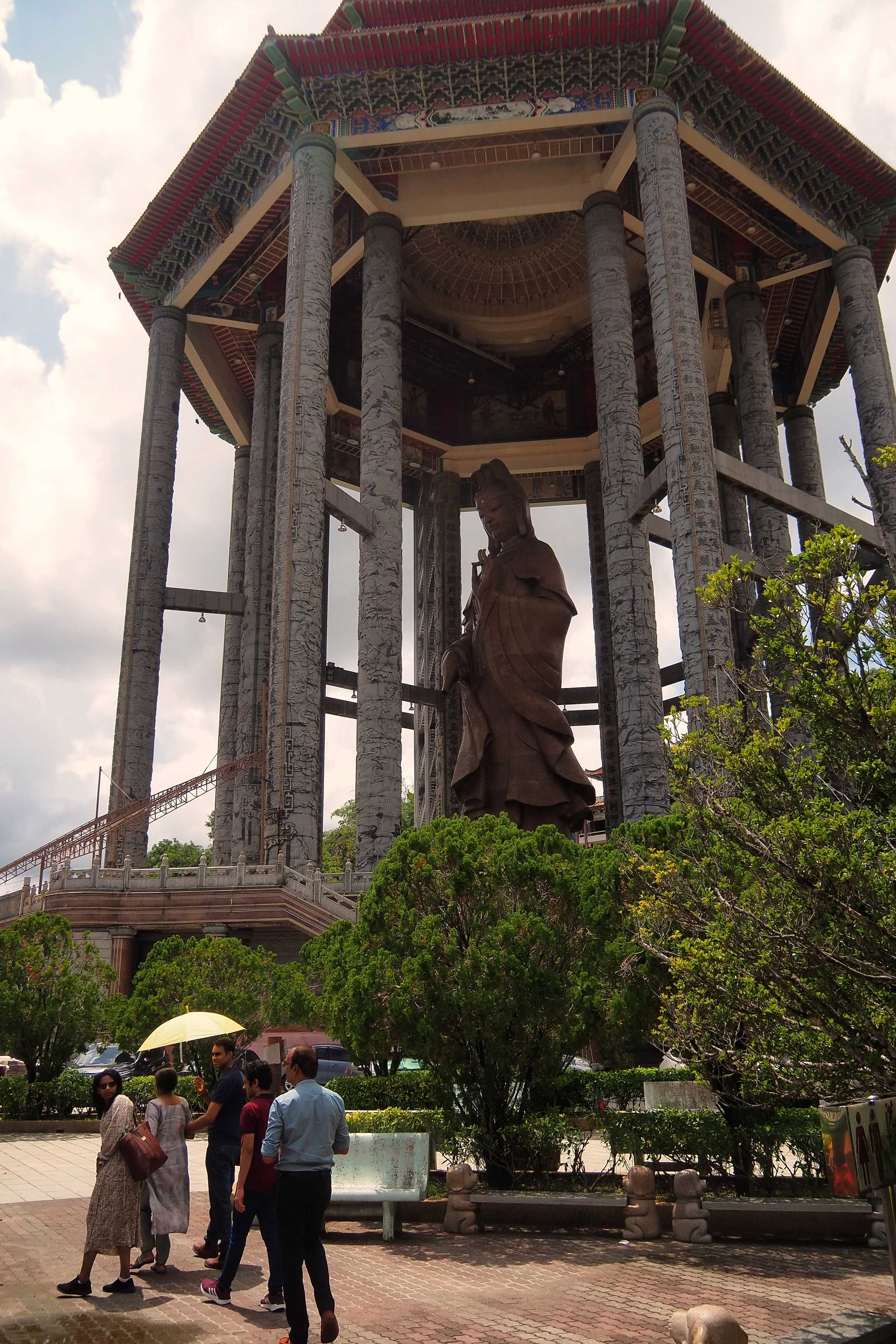

A first Heavenly King guards the huge bronze goddess.


The main door.

The frescoes under the roof.


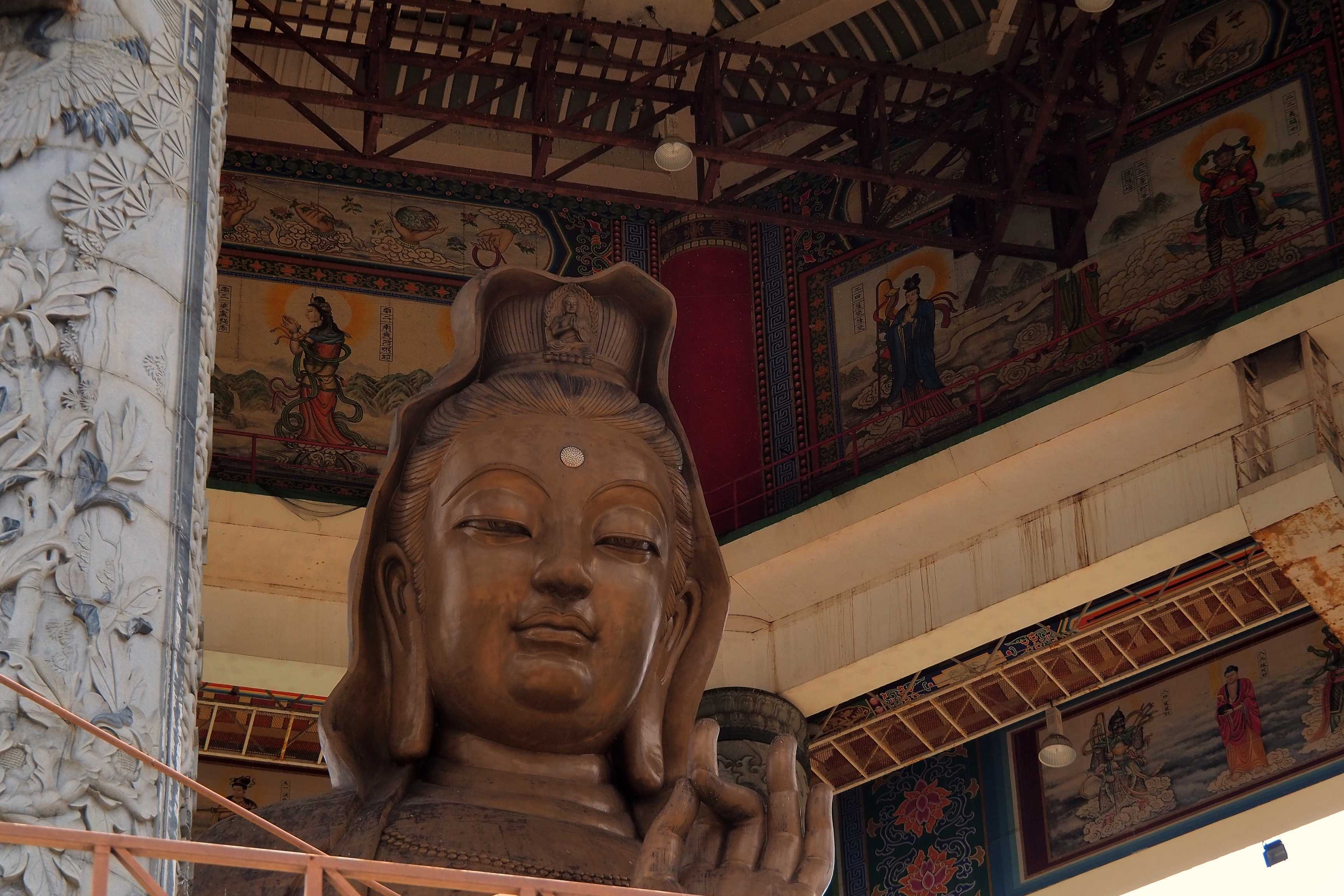
And here is the second Heavenly King. The other two that complete the quartet are on the other side.


This one is not a king but will make an equally good guardian.


Just next door, a Buddhist temple welcomes the faithful.


This Bodhisattva, more precisely Guanyin (Avalokiteshvara), the goddess of mercy, represented here with "a thousand arms" to symbolize her ability to help and rescue countless beings at the same time. She is the central figure of Mahayana Buddhism (called "Great Vehicle"), with very strong Chinese cultural influences.


On the right, columns collect small plaques for donors contributing to the temple's needs.

For one ringgit, this child can leave a ribbon with his wish.

Back in front of Guanyin. Her left hand is in the mudra position, while her right hand holds the Vase of Heavenly Dew containing the nectar of compassion and wisdom... 


Facing the pavilion, a large terrace allows enjoying the view of the city of George Town.


"The Old" Statue of Guanyin is more discreet than her replacement... 


Detail of the pavilion roof.


The tour of the pavilion done, we take the funicular back down.


The Main Prayer Hall, sometimes called Mahavira Hall.


Four dragon-pillars (Lóng Zhù in Chinese) entirely carved in stone support the ceiling. The dragon coiled around the pillar is a recurring motif, a symbol of protection and good fortune.


The bas-reliefs on the walls of the hall.
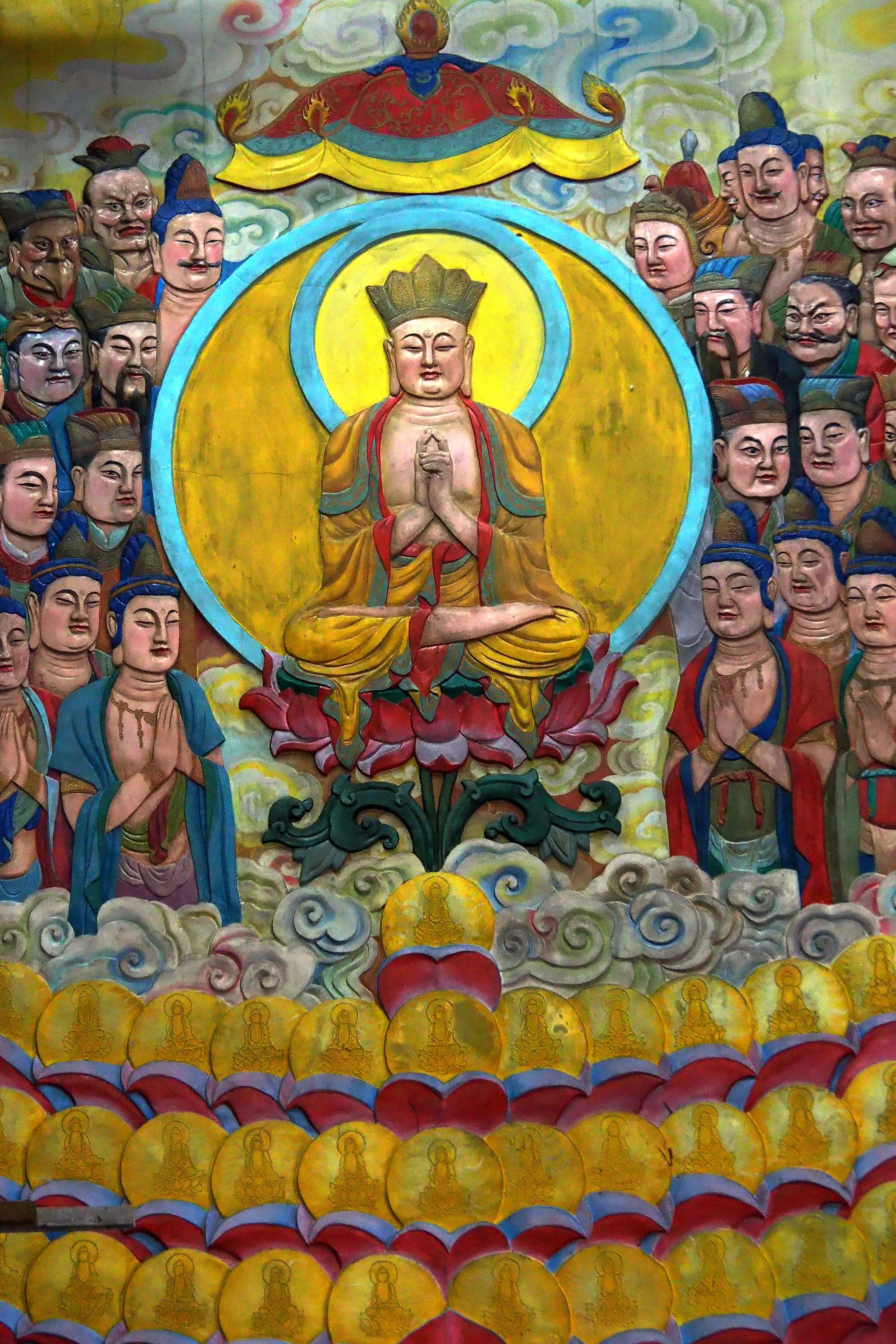


Other stone bas-reliefs, and monochrome this time, on the exterior walls of the hall.


The Pagoda of Ten Thousand Buddhas (Ban Po Thar). We will finish the visit by climbing the seven floors. This pagoda combines three distinct architectural styles: the base in Chinese style, the middle in Thai style and the top Burmese.

Here we are in the pavilion which is in front of the pagoda.

Left: His Majesty King Chulalongkorn of Siam, also known as Rama V. He reigned from 1868 to 1910. Right: Beow Lean (Miao Lian in Mandarin). He initiated the Kek Lok Si Temple project in 1890.


The red lantern hanging from the ceiling.

And let's go, here we are on the first floor of the pagoda of ten thousand Buddhas. We won't count them, but given all the statues carefully placed in the small niches on the walls of the room, we can say that there are many many.

Let's move to the next floor where it is earthenware that represents Siddhartha Gautama, future Buddha.


Buddha in perpetual meditation and contemplation in front of the site which seems to be covered with a very threatening cloud...


And as expected, the cloud ceiling literally collapses in a continuous stream.
Here is a bare roof that has lost its indispensable protection. The restoration of this roof seems to have been paused for a long time and the terracotta tiles will not protect much except themselves...


Let's move to the next floors with here a Reclining Buddha (The Parinirvana).


We also add these to the list of ten thousand buddhas...

The Buddhas have generously left a small spot for this bird.

And we chain the floors. These have enclosed their buddhas behind windows.


And finally, the last floor where you can go completely around by the balcony but the rain does not give us time to appreciate!

In the distance, under the deluge, the large statue of Guanyin seems to appreciate the protection of its giant pavilion...

Back down. The rain is not decided to stop. So we stay sheltered!


"Rules and Regulations of the Zen Temple of Supreme Bliss on Crane Mountain, Penang Island City". The monks of the temple had to respect some rules like:
Rule 2: Prohibition to consume alcohol, gamble, smoke opium and engage in other vices.
Rule 3: Monks residing at the temple who fall ill must be treated. If they need wine as a remedy, they must inform the abbot.
Rule 4: Monks residing at the temple must not leave the monastery to engage in worldly activities.


We decide to brave the curtains of rain to extricate ourselves from the site because it has been lasting for a good 45 minutes...


We can now greet the ten thousand Buddhas one last time and take the car back to reach the city.


Lunch break in the west of George Town in a classic gathering of small stands (hawkers) preparing and selling a variety of local dishes at affordable prices. 


Latest comments
On Guatemala 2018
Le 25 Novembre 2024
Significado de este mural
On Chile 2016
Le 15 Septembre 2024
Rrrrrr
On Egypt 2003
Le 1er Avril 2023
Et oui c'est bien nous aux pieds de ce Colosse !
Le 1er Avril 2023
Bien petits aux pieds de ce Colosse !
On Namibia 2014
Le 3 Août 2021
very good indeed