FR EN ES
Previous Page
The Cameron Highlands
Next Page
Ipoh and the Sam Poh Tong Temples

Malaysia 2024

Ipoh and Perak Tong Temple


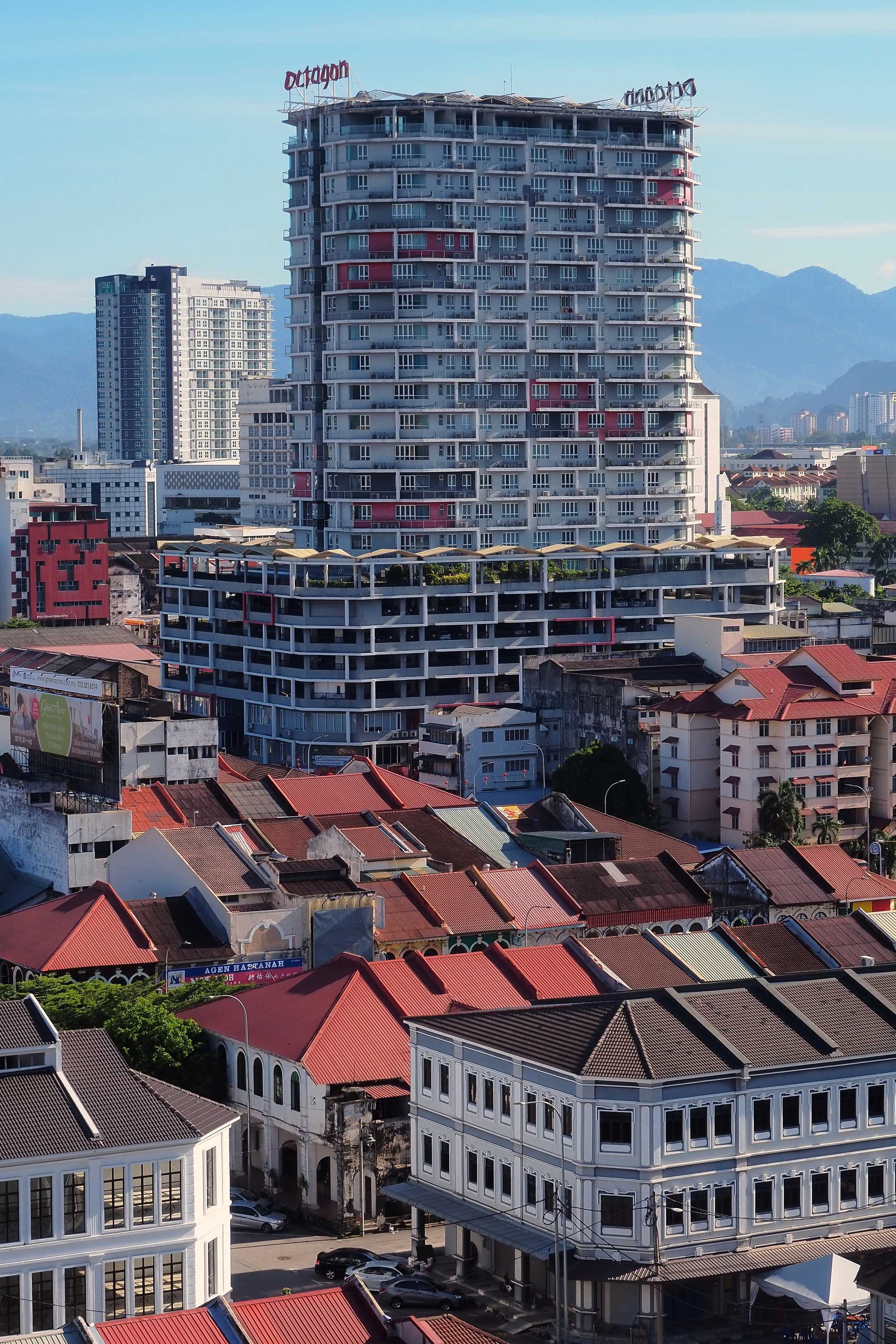
Eighth day in Malaysia. This new day will be tourist-spiritual with visits to caves housing Buddhist temples. For now, it is on the roofs of the city of Ipoh that my lens lingers.

View of Ipoh city, The Majestic Imperial Tower, dwellings and mountains.
Urban view of the rooftops and buildings of Kampung Paloh, Ipoh.The Octagon building in Ipoh.View of Ipoh city, Paloh district.

It is at the foot of its mountains that the Perak Tong temple is located, which we will visit later.

Urban panorama of Ipoh and mountain ranges.

We take a little height by going to the roof terrace of the building.

Urban view and mountains from The Majestic Imperial Tower in Ipoh.

The Kinta Valley, where Ipoh is located, was one of the richest tin ore regions in the world. The boom of this industry, between the 19th and early 20th centuries, transformed Ipoh into a prosperous city. It is from this period that the colonial architecture of the city dates.

Ipoh cityscape, Kampung Paloh district, and its mountains.
Ipoh cityscape, Kampung Paloh district.Urban view of Kampung Paloh in Ipoh.
Ipoh city, Sultan Azlan Shah airport and surrounding mountains.
View of Ipoh city and the surrounding mountains, Kampung Paloh district.Sultan Azlan Shah Airport in Ipoh and surrounding mountains.
The city of Ipoh, its mountains and Sultan Azlan Shah airport.
City of Ipoh, red rooftops and mountains.
Cityscape of Kampung Paloh district, Ipoh.
Red rooftops of Kampung Paloh district in Ipoh.Colorful rooftops of Kampung Paloh in Ipoh.Red rooftops of Kampung Paloh, Ipoh.
Street in Kampung Paloh, Ipoh, with vehicle and commercial signs.
Urban view of Ipoh, Octagon tower and rooftops of Kampung Paloh district.View of Ipoh city and the Kledang range, Paloh district.
Cityscape and mountains in Ipoh.
Urban view of Ipoh with the Octagon condominium, Kampung Paloh district.Ipoh cityscape, Kampung Paloh district, with mountains in the background.
View of Ipoh city, colorful rooftops and limestone mountains.
Misty mountains near Kampung Paloh in Ipoh.Misty mountains near Kampung Paloh, Ipoh.

The Perak Tong Temple

Here we are facing Perak Tong, a cave converted into a Buddhist temple in 1926 by a Chinese couple.

Entrance to Perak Cave Temple, Ipoh.

"In 1926, Chong Sen Yee and his wife Choong Chan Yoke, from Jiao-Ling province in China, discovered Perak Tong. With the approval of the Perak state government, they began to develop the cave temple. While Chong Sen Yee was mainly concerned with the planning and development of the temple, his wife endeavored to collect donations to realize the project, locally and internationally. After more than 50 years of diligent and meticulous work in and around the temple, Perak Tong has become one of the most beautiful cave temples in Malaysia. Chong Sen Yee died in 1980 and his wife Choong Chan Yoke in 1983, passing the legacy to their son Chong Yin Chat. He put even greater efforts into the temple and thus made Perak Tong an international tourist site in Perak."

Information sign for Perak Tong Cave Temple in Ipoh.
Incense sticks in a cave temple in Ipoh, Perak.Incense sticks at Taman Loke Lim Cave Temple, Ipoh, Perak.Entrance to Perak Cave Temple in Ipoh.
Entrance to Perak Cave Temple in Ipoh.

A wall of gratitude. Each name inscribed on the wall represents a person or family who has made a financial donation for the construction, renovation or maintenance of the temple. By inscribing their names, the temple publicly honors them for their generosity. For donors, it is also a way to accumulate "merit" (??, gongdé), an important spiritual notion.

Chinese scriptures in Perak Tong Cave Temple in Ipoh.Chinese calligraphy in Perak Tong Temple in Ipoh.
Interior of Perak Tong Cave Temple in Ipoh with Buddha statue.
Inscription of Perak Cave Temple in Ipoh.Buddha statue in Perak Tong Cave Temple in Ipoh.

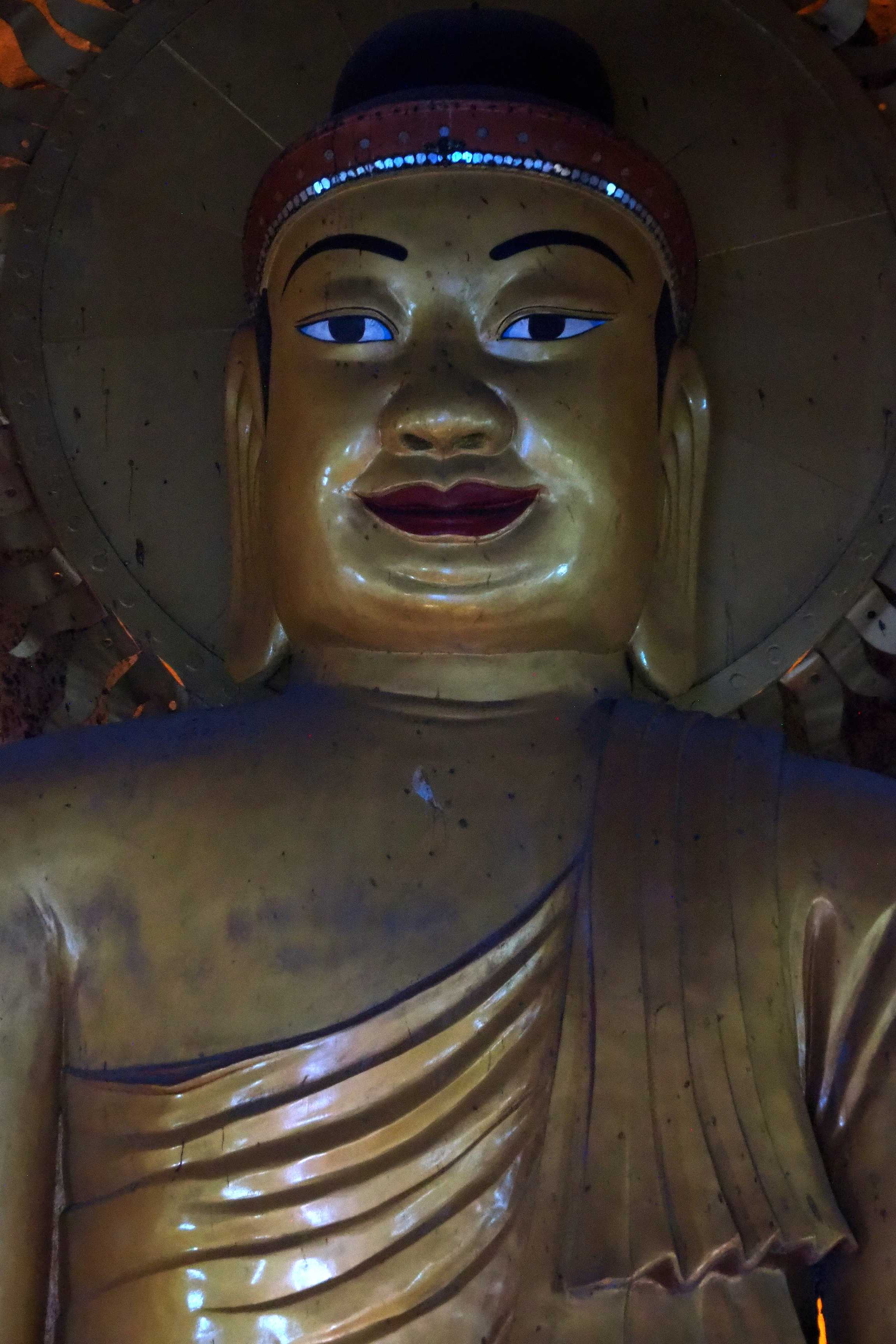
The Buddha statue contemplates the pilgrims who came to pray to him from the height of his 40 feet, or 12.2 meters.

Buddha statue in Loke Lim Cave Temple, Ipoh.

What did you see first? The monk's belly or the dog's eyes?  

Painting of Laughing Buddha and dog at Perak Tong Temple, Ipoh.

Many of the paintings adorning the walls of the cave were made by Chong Yin Chat himself, the son of the temple's founders.

Buddhist frescoes and statues in a cave temple in Ipoh, Perak.Buddha mural by Edward H. Harrison at Sam Poh Tong Cave Temple in Ipoh, with visitors.
Painting of the Laughing Buddha in a cave temple in Taman Loke Lim, Ipoh.Painting of Buddha at Perak Cave Temple, Taman Loke Lim, Ipoh.
Mural of a Dharma guardian at Perak Tong Cave Temple, Ipoh.Painted figure at Taman Loke Lim Cave Temple, Ipoh, Perak.Mural painting of a horse in Taman Loke Lim Cave Temple, Ipoh.
Buddhist paintings on the cave walls of Perak Tong Temple in Ipoh.
Devotees at Perak Tong Cave Temple in Ipoh.

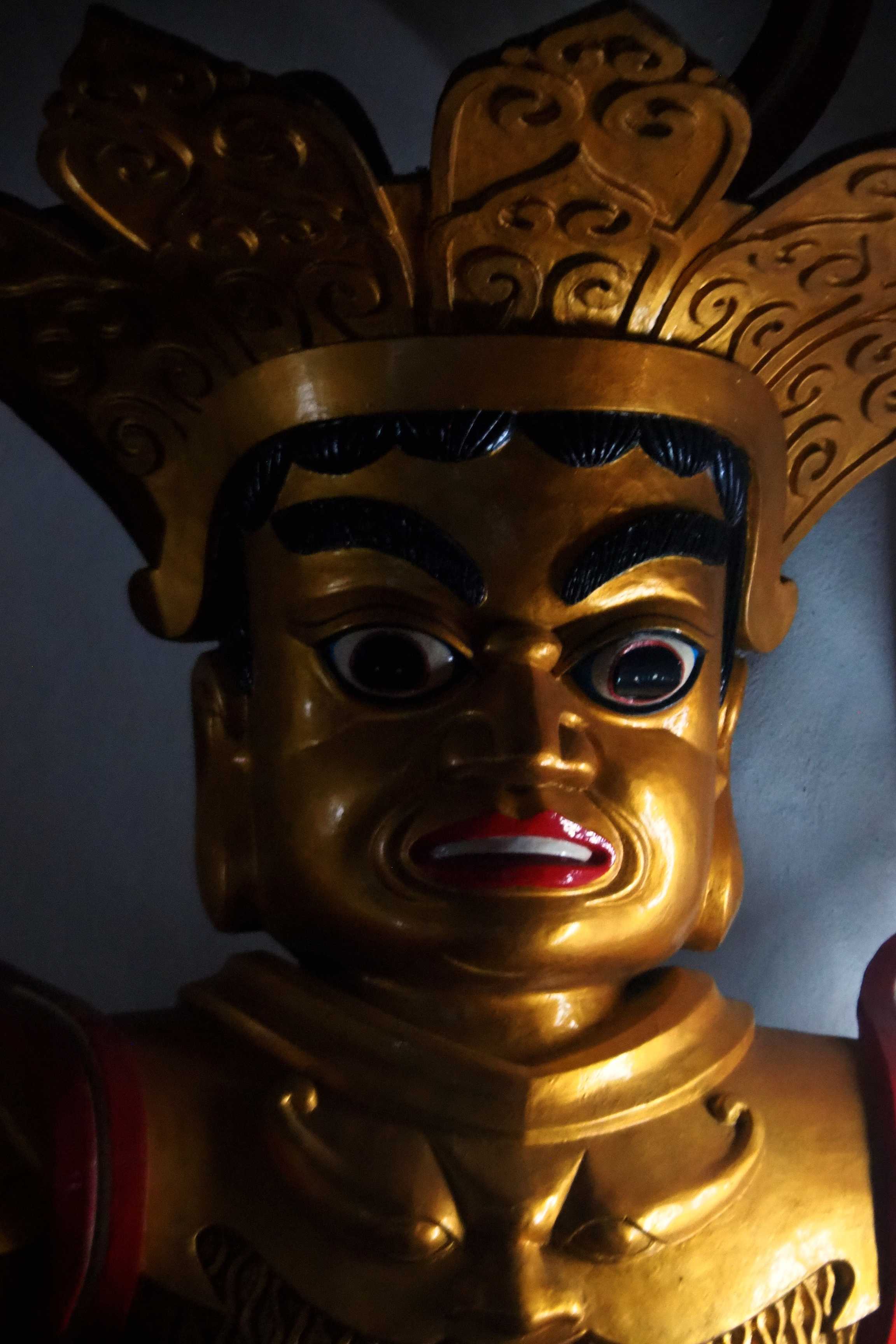
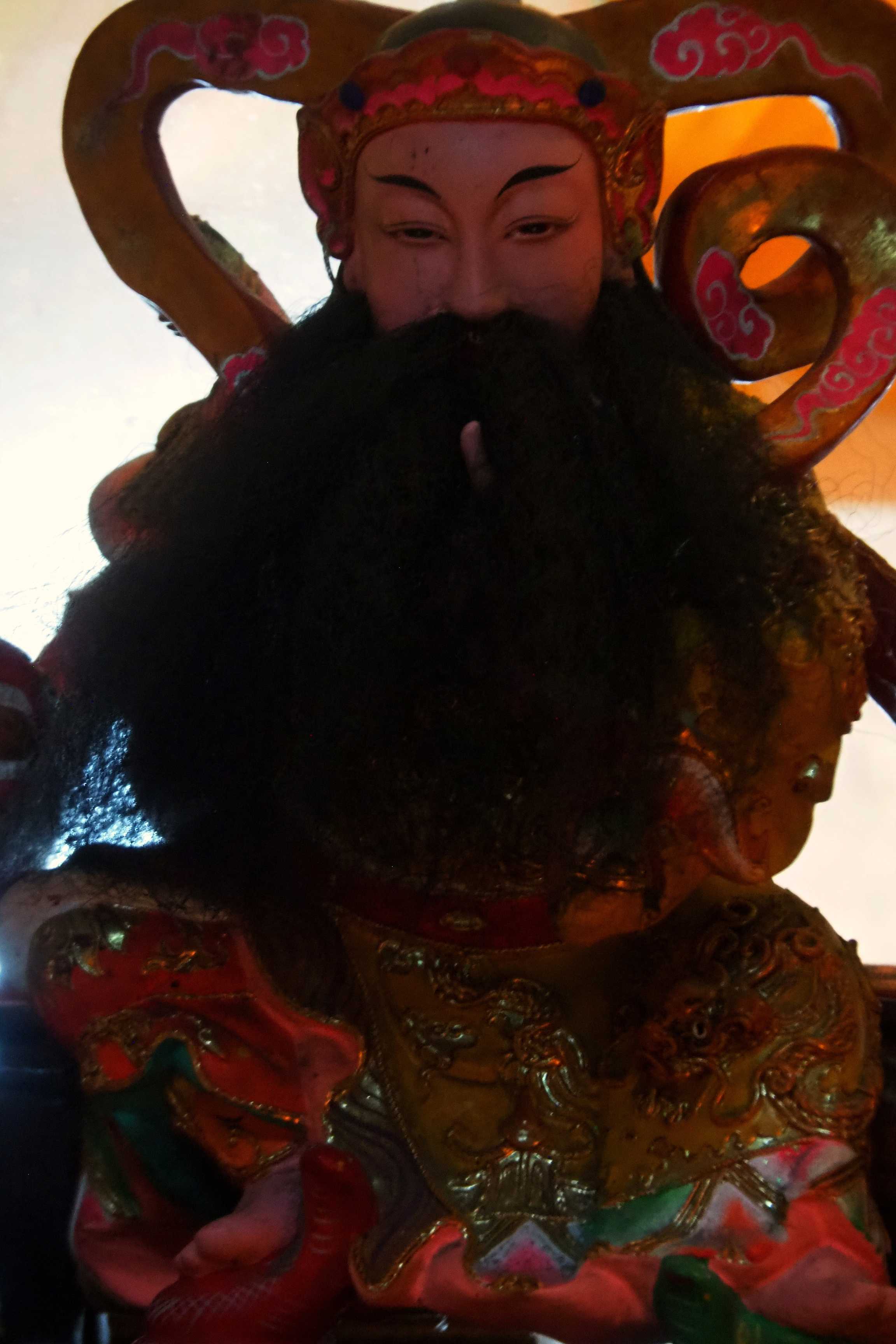
The Four Heavenly Kings, the guardians of the Buddhist world. On the left, the Guardian of the East. The lute (pipa) he holds symbolizes the use of music to convert beings to Buddhism. He harmonizes the world and protects his kingdom. On the right, the Guardian of the South. The sword he wields symbolizes the power to cut ignorance, bad thoughts and spiritual obstacles.

Statue face at Sam Poh Tong Cave Temple in Ipoh.Statues of the Guardian Heavenly Kings in a cave temple in Ipoh, Perak.Statue face at Perak Tong Cave Temple, Ipoh.

On the left, the Guardian of the West. He is "The one who sees everything". The green snake he holds symbolizes his control over nagas (snake deities) and unpredictable forces. The red pearl in his other hand represents the purity of Buddha's teachings (the Dharma). On the right, the Guardian of the North. He is "The one who hears everything" and is often considered the leader of the Four Kings. He is also a deity of wealth. The umbrella he holds is a symbol of protection. It protects living beings from impurities and suffering, just like an umbrella protects from the sun.

Statue of a deity at Perak Tong Cave Temple, Taman Loke Lim, Ipoh.Statues of guardian deities at Ling Sen Tong Temple in Ipoh.Statue in a cave temple in Taman Loke Lim, Ipoh, Perak.

Evil spirits are crushed by the Heavenly Guardians.

Statue of Heavenly King Mo Li Qing in a cave temple in Ipoh.Statue of a heavenly guardian trampling a demon, Perak Tong Temple, Ipoh.An evil spirit crushed by the Heavenly Guardian.

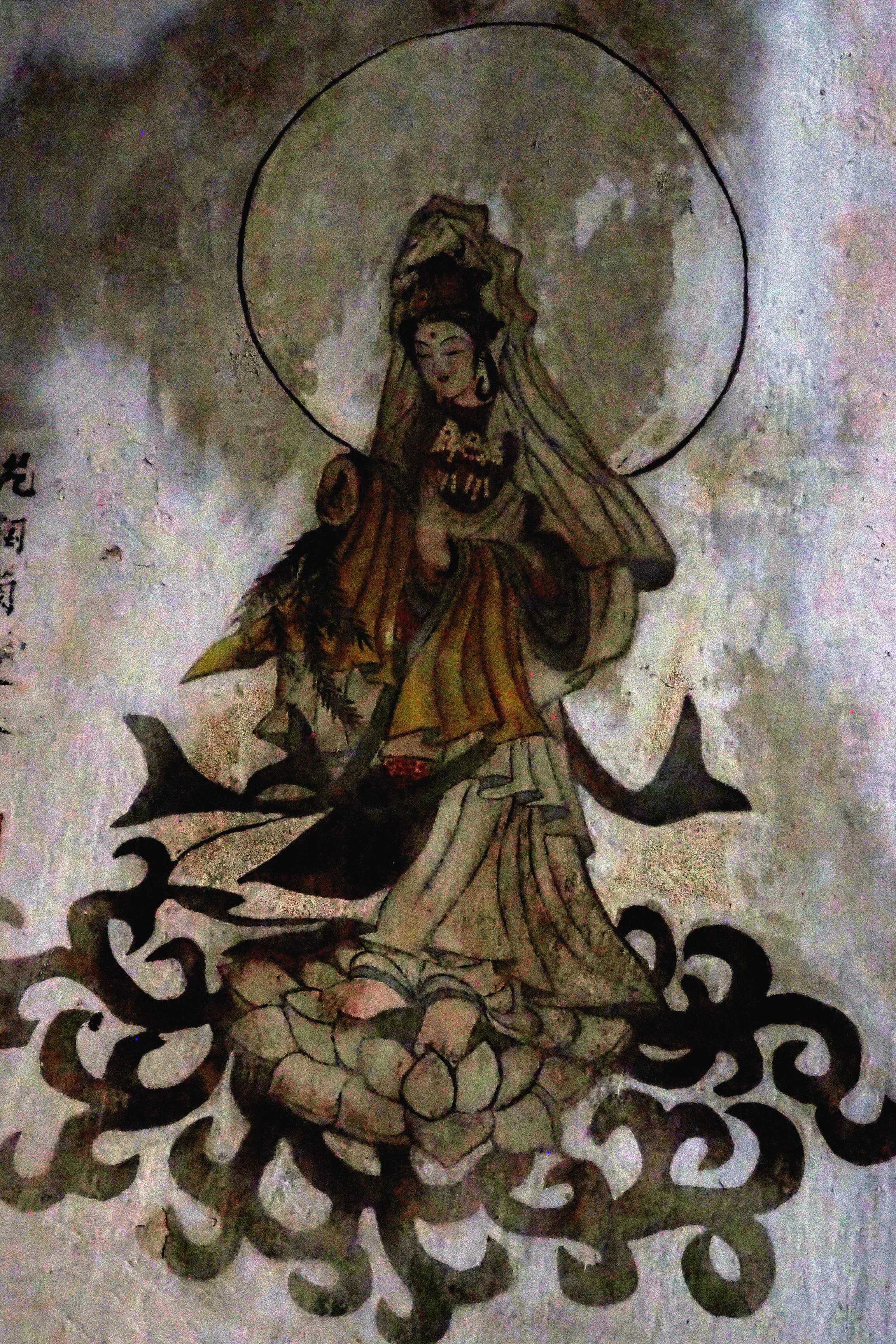
Guanyin, Bodhisattva of Compassion.

Mural painting of a Bodhisattva in a cave temple in Ipoh, Perak.Mural painting of an Asian-style woman at Perak Tong Cave Temple in Ipoh.
Mural painting of Perak Tong Cave Temple in Ipoh.Painting of an old man in a cave temple in Ipoh, Perak.
Mural painting of women at Perak Tong Cave Temple in Ipoh.Painting of a Buddhist monk at Taman Loke Lim Cave Temple, Perak.
Buddha statue and mural in Perak Tong Cave Temple in Ipoh.Golden Buddha statue in Perak Tong Cave Temple in Ipoh.

Prayer in front of the Buddha statue in Taman Loke Lim Cave Temple, Ipoh.

The Arhats (Luóhàn in Chinese) are the original disciples of the Buddha. They have reached Nirvana and thus freed themselves from the cycle of rebirths. These figures are revered as holy guardians of the Dharma, the teachings of the Buddha, until the advent of Maitreya, the next Buddha. The Arhats are depicted as unique individuals, each with their own personality, history and distinct supernatural powers.
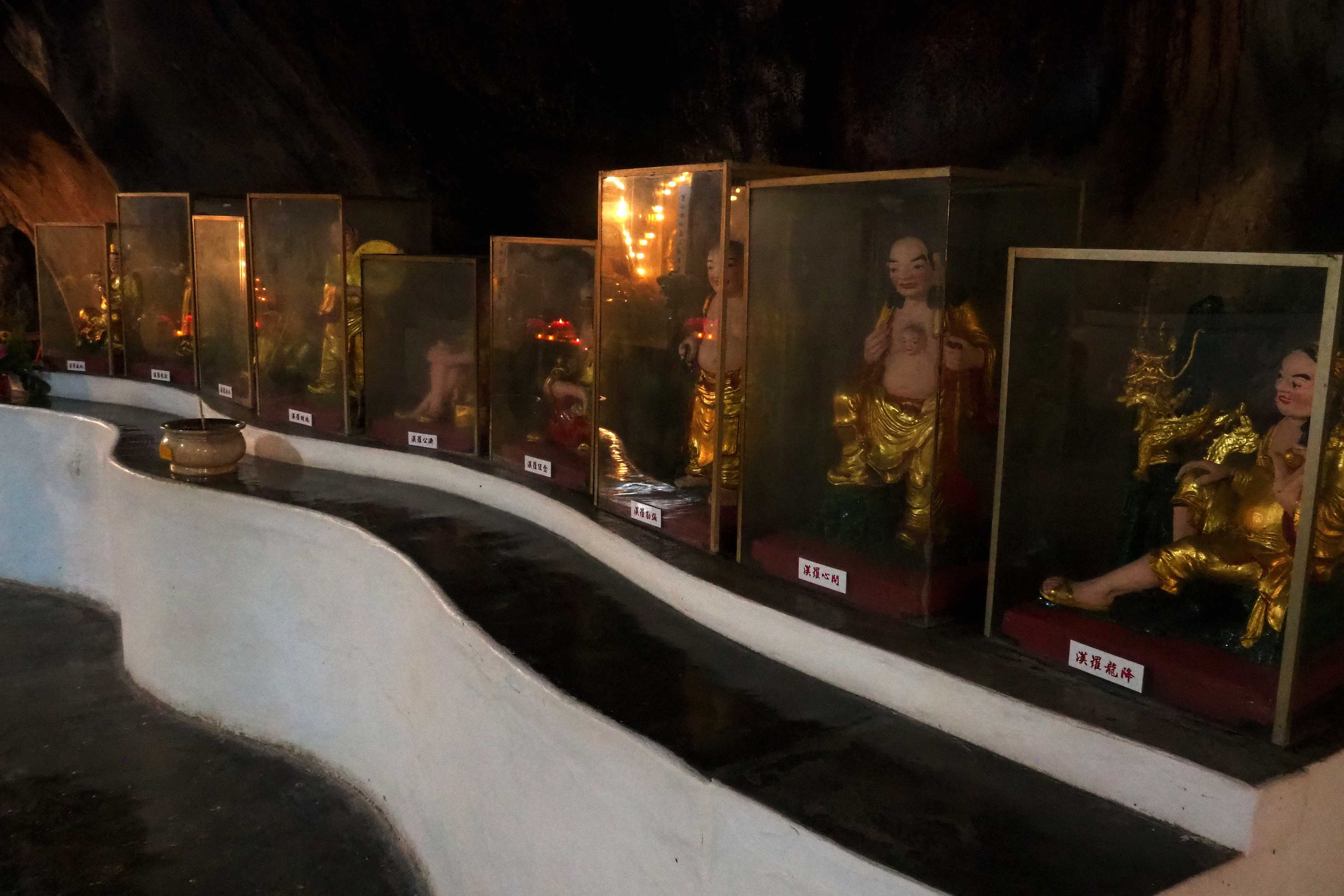
Buddhist statues of Perak Tong Cave Temple, Ipoh.

Jiànglóng Luóhàn, Dragon Taming Arhat: He is famous for his ability to master a dragon, symbolizing the power of the enlightened mind over the powerful forces of nature and human passions. Bùdài Luóhàn, Calico Bag Arhat: Better known as the "Laughing Buddha", his big belly symbolizes generosity and happiness. He is considered an incarnation of Maitreya, the future Buddha. Kanmén Luóhàn, Arhat Guarding the Gate: Also called Panthaka,: According to legend, Panthaka was known for being slow-witted, and the Buddha gave him the simple task of sweeping the temple and looking after the doors. By focusing on the simple act of opening and closing the door, locking and unlocking it, he finally achieved enlightenment. Xuanzang: The famous pilgrim monk who traveled to India. He holds a Ruyi scepter, symbol of good fortune, authority and wish fulfillment.

Statue in Taman Loke Lim Cave Temple, Ipoh.Statue of a deity at Taman Loke Lim Perak Cave Temple, Ipoh.Statue of a deity at Taman Loke Lim Perak Cave Temple, Ipoh.Statue of a deity at Taman Loke Lim Perak Cave Temple, Ipoh.
Ceremonial candle in Ipoh, Taman Loke Lim district.Statue of Guanyin at Taman Loke Lim Cave Temple in Ipoh, Perak.
Buddha statues and wall frescoes at Perak Tong Cave Temple in Ipoh.

Bodhidharma and his unique sandal: According to legend, after his death and burial, an official met him on the road to India, walking with a stick and wearing only one sandal. When his grave was opened, it was empty, except for the other sandal... On the right, the Teaching Arhat with his two hands forming the Vitarka Mudra, where the thumb and index finger touch to form a circle.

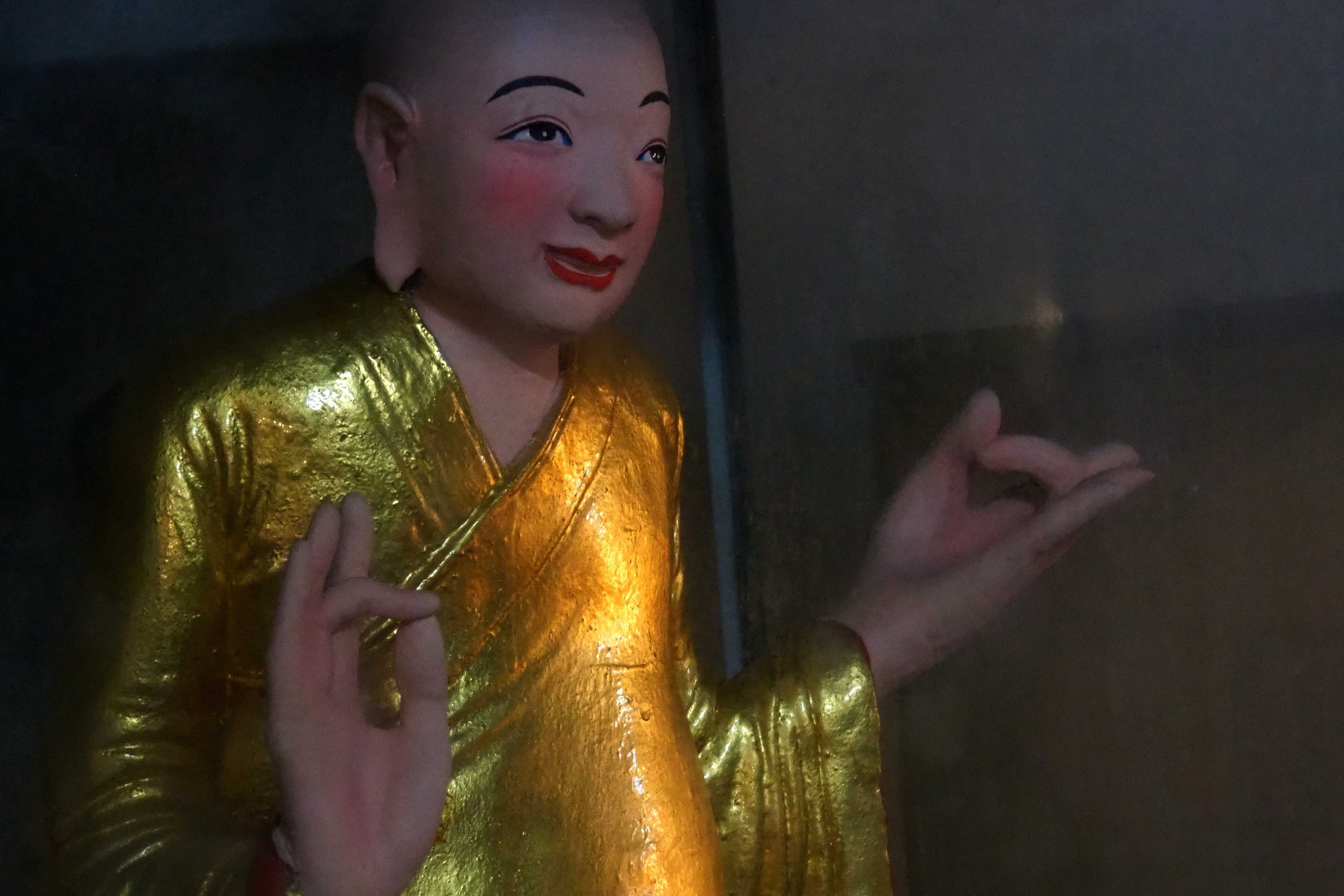
Statue in the Taman Loke Lim Cave Temple in Ipoh.Buddhist statue from Sam Poh Tong Cave Temple in Ipoh.
Worshipper and Buddha statue at Perak Tong Cave Temple, Ipoh.

A prayer "cushion" whose pieces of colored fabric are assembled in a patchwork reminiscent of a mandala. In Buddhism, a mandala is a symbolic representation of the universe. The concentric layers represent the different levels of existence or stages of the spiritual path. The center is the point of origin, the essence, the ultimate goal of awakening.

Statue in the Guanyin Cave Temple, Taman Loke Lim, Ipoh.Textile patchwork at Taman Loke Lim Cave Temple in Ipoh.Floral patchwork with heart at Taman Loke Lim, Ipoh.
Guan Yin fresco in the Perak Cave Temple in Ipoh.Painting of monks at Perak Tong Cave Temple, Taman Loke Lim, Ipoh.
Budai statue at Perak Tong Cave Temple in Ipoh.Budai statue in a cave temple in Taman Loke Lim, Ipoh.
Painting of Budai in the Perak Tong Cave Temple in Ipoh.Painting of peonies at Taman Loke Lim Perak Cave Temple in Ipoh.
Fresco at the cave temple, Taman Loke Lim, Ipoh.
Wall frescoes in the Buddhist cave temple of Perak Tong in Ipoh.
Golden statues in Perak Tong Temple in Ipoh.
Golden statue of a Chinese deity at Kek Lok Tong Cave Temple, Ipoh, Perak.Buddha statue on a lion at Perak Tong Cave Temple in Ipoh.Buddha statue at Taman Loke Lim Cave Temple, Ipoh, Perak.
Votive lantern in a cave temple in Ipoh, Perak.Votive lamp and Buddhist statue at Taman Loke Lim Cave Temple, Perak.

The cave continues into different rooms, then a staircase leads us higher to the outside.

Buddha statue in Perak Cave Temple, Taman Loke Lim, Ipoh.Inscription and staircase of Perak Tong Cave Temple, Ipoh.
Interior of the cave temple in Ipoh, Perak.Interior of Taman Loke Lim Cave Temple, Ipoh, Perak.

And outside, a completely different Arhat awaits us, hairy this one. It is the usual crab-eating macaque (Macaca fascicularis).

Crab-eating macaque (Macaca fascicularis) at Taman Loke Lim Cave Temple in Ipoh.
Crab-eating macaque in Gunung Tasek Park in Ipoh.Crab-eating macaque in Taman Loke Lim in Ipoh.Crab-eating macaque (Macaca fascicularis) in Tasek, Ipoh.Crab-eating macaque from Gunung Tasek, Taman Loke Lim, Ipoh.

Steps extend the path to lookouts with views of the city.

Pavilion in Taman Loke Lim in Ipoh.
View of Ipoh city, Taman Loke Lim area and Gunung Tasek hills.Gunung Tasek Apartments and houses in Taman Loke Lim district in Ipoh.View of Ipoh from Gunung Tasek viewpoint, Taman Loke Lim.
Stairs and pavilion at Gunung Tasek, Ipoh.
View of Ipoh city from Gunung Lang Tasek.
Canopy and gazebo of Gunung Lang Recreational Park in Ipoh.Staircase leading to Yún Bù Tíng pavilion of Sam Poh Tong Temple in Ipoh.

"Where is my way?"

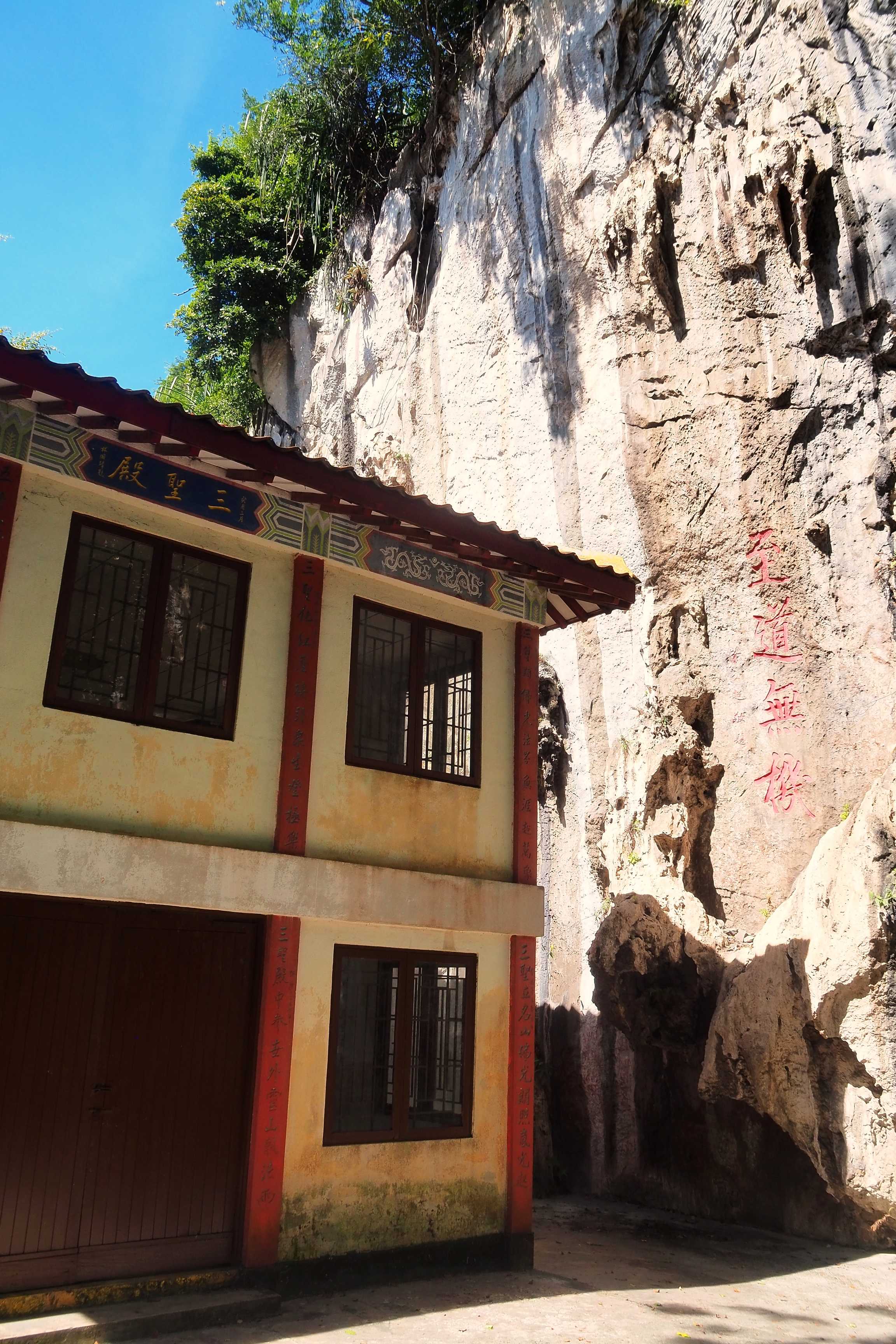
Gunung Tasek pavilion, rocks and vegetation, Ipoh.Chinese calligraphy on Gunung Tasek, Ipoh.

A house closed to visitors.

Lo Ke Lim Temple in Ipoh, backed by the rock face.Buddhist paintings from Gunung Tasek Temple in Ipoh.Painting of the goddess Guan Yin in Ipoh, Gunung Tasek area.

And we continue the tour outside. 450 steps make up this whole route from inside the cave.

Stairs of Gunung Tasek in Ipoh.Vegetation landscape of Gunung Tasek in Ipoh.
Industrial landscape of Gunung Tasek, Ipoh, with mountains.

We arrive on the other side of the mountain.

Pagoda on Gunung Lang hill in Ipoh.
View of Ipoh and the mountains from Kek Lok Tong Temple.

Details of the roof of the small pavilion.

Ceramic roof tiles of Loke Lim Temple in Ipoh.Roof tiles of Kek Lok Tong Temple in Ipoh.
Ridge figures and glazed tiles on the roof of an Ipoh temple.
Temple roofs with a panoramic view of Ipoh and the mountains.

In a century, the view from the top of the temple must have changed a lot...  

Cityscape and limestone hills of Gunung Tasek in Ipoh.
Aerial view of Taman Loke Lim residences, Ipoh, with Gunung Tasek.Taman Loke Lim residential area in Ipoh.
Inscribed pillar of Gunung Tasek, Ipoh.Calligraphy and view of Gunung Tasek from Taman Loke Lim, Ipoh.
Roof detail of Kek Look Tong Temple in Ipoh.Roofing and calligraphy of Kek Lok Tong Temple, Ipoh.

We go back down and up other stairs where an elephant carrying a Buddha awaits us...

Stone staircase of Perak Tong Temple, Gunung Tasek, Ipoh.Staircase leading to Perak Cave Temple, Taman Loke Lim, Ipoh.
Bodhisattva statue on an elephant at Perak Tong Temple, Ipoh.Guanyin statue in the cave temple of Taman Loke Lim, Ipoh.Elephant statue in a cave temple, Taman Loke Lim area, Ipoh, Perak.
Golden Buddhist statue seated on an elephant, at Perak Tong Cave Temple in Ipoh.
Building of Perak Tong Cave Temple, Ipoh.

On the left photo, calligraphy ? meaning Buddha?  

Calligraphy of the Buddha character at Perak Cave Temple, Ipoh.Chinese characters on the wall of a cave temple in Ipoh, Perak.

And we go back into the cave following the ramp that has surely supported millions of hands.

Entrance to a cave temple in Ipoh, Perak.Spiral staircase of Taman Loke Lim, Ipoh.Stair railing detail at Perak Tong Temple, Ipoh.
Painting of Guanyin on an elephant and Buddha statue in a cave temple in Ipoh, Perak.Murals of a cave temple in Ipoh, Perak.

This "Chan Chu", stone toad holding a gold coin in its mouth, symbolizes prosperity and wealth in Chinese culture.

Frog statue, symbol of prosperity, at Perak Tong Cave Temple, Ipoh.Toad statue with coin, Ipoh cave temple, referencing the deity Zhan.
Buddha statue and giant incense sticks in a cave temple in Ipoh, Perak.Large incense sticks in a cave temple in Ipoh, Perak.
Murals of deities at Perak Tong Cave Temple, Ipoh.

The fresco representing the Eight Immortals going to the Banquet of the Peaches of Immortality, organized by the Queen Mother of the West...

Fresco of the Eight Immortals from Chinese mythology, Ipoh cave temple, Perak.Mural painting of Perak Cave Temple in Ipoh.
Mural painting at Perak Tong Cave Temple, Ipoh.Fresco of Buddhist deities from a cave temple in Ipoh, Perak.Mural painting of figures at Perak Tong Cave Temple, Ipoh.

Votive candles and pilgrims' wishes.

Mural of a Buddhist deity and candles in a cave temple in Ipoh, Taman Loke Lim, Perak.Illuminated wish vases at Perak Tong Cave Temple, Ipoh.
Candles and votive lamps at Perak Tong Cave Temple, Ipoh.Prayer candles at Taman Loke Lim Cave Temple in Ipoh.

Return to the Great Buddha.

Buddha statue at Perak Tong Cave Temple, Ipoh.
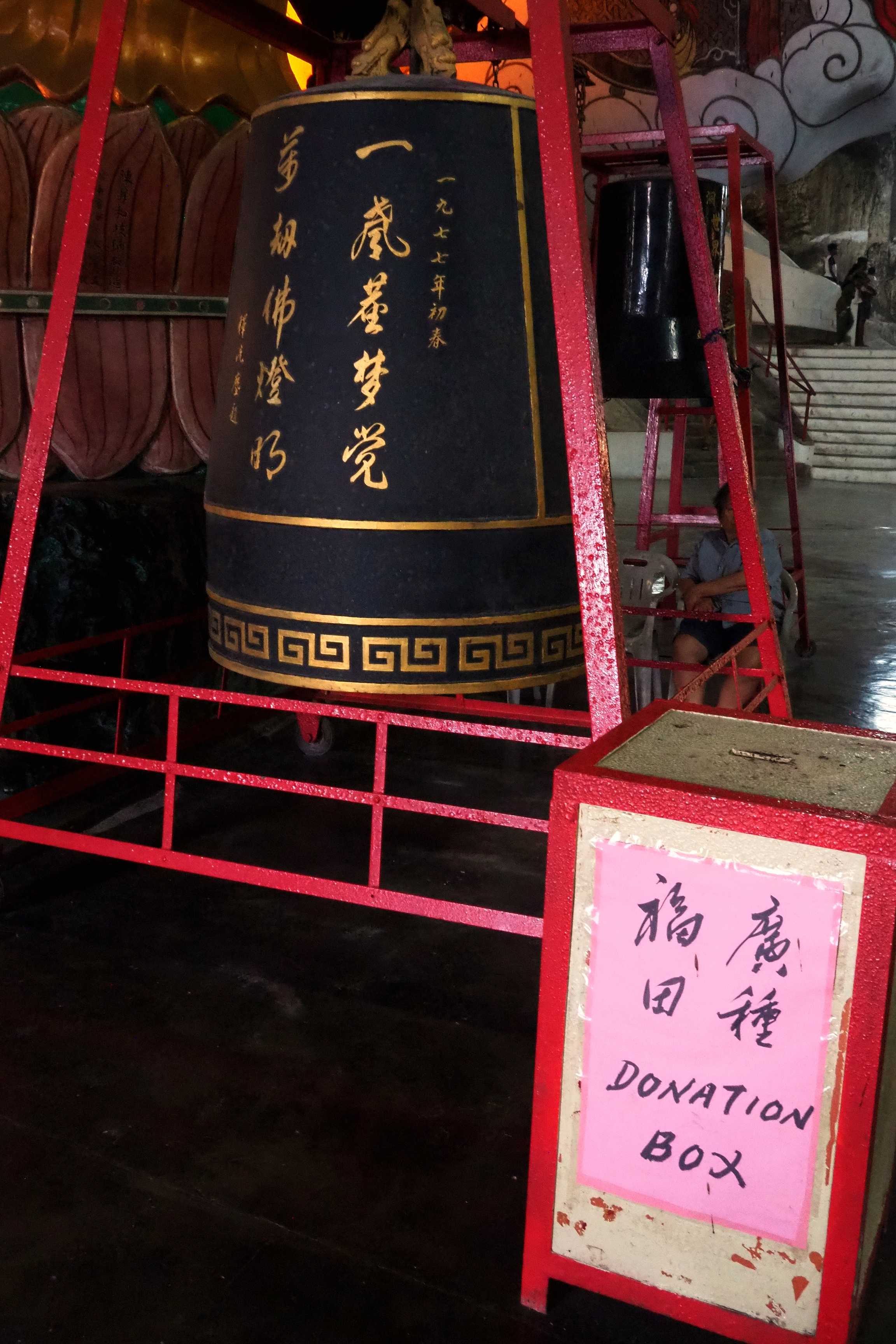
Bell in the cave temple of Taman Loke Lim in Ipoh, Perak.Cave temple bell with Chinese inscription dated 1977 in Ipoh, Perak.Bell of Perak Tong Cave Temple in Ipoh.Drum with warning sign in a cave temple in Ipoh, Perak.

Thousand-Armed Guanyin surrounded by Arhats.

Multi-armed Guanyin statue in Perak Tong Cave Temple in Ipoh.
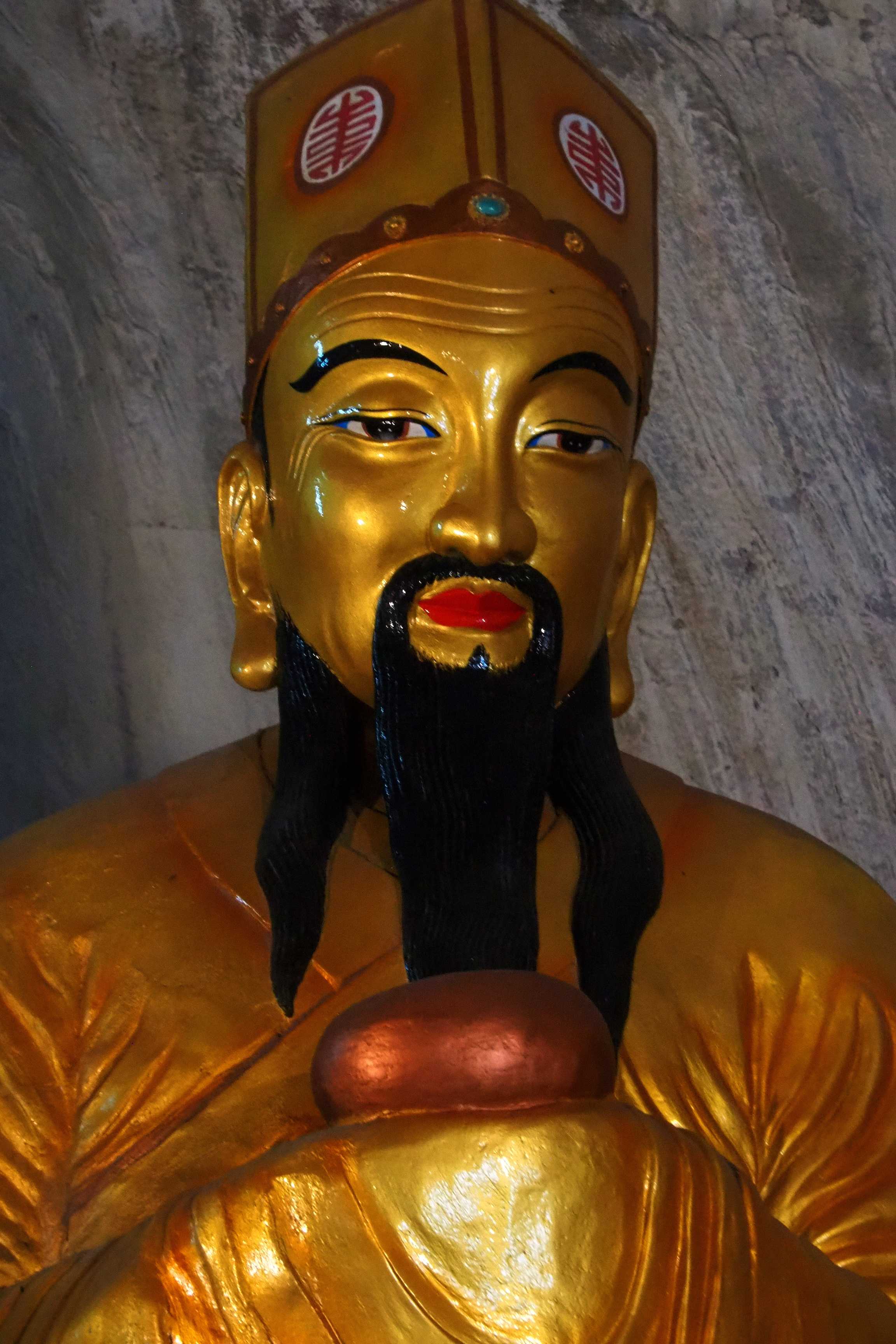
Statue of a revered figure in a Buddhist cave temple in Ipoh, Perak.Statues of Chinese deities in a cave temple in Ipoh, Perak.Statue of the god Shou Xing in a cave temple, Ipoh, Perak.
Statue of Shou Xing, God of Longevity, in a cave temple in Ipoh.Statue of Guan Yu, Ipoh Cave Temple, Perak.Statue at Perak Cave Temple, Ipoh.

The dance of the Apsaras.

Fresco of apsaras in a cave temple in Ipoh, Perak.
Buddhist statues in the Perak Tong cave temple in Ipoh.Candle lit in the Perak Tong cave temple in Ipoh.

The large Buddha statue is in the lotus position. Its hands adopt the Bhumisparsha Mudra, gesture of the Buddha touching the earth to call it to witness his merits, symbolizing his victory over the illusions of the demon Mara and the unshakeable moment of his enlightenment...

Buddha statue at Perak cave temple in Ipoh.
Buddha statue at Perak Tong cave temple, Ipoh.Buddha statue in a cave temple in Ipoh, Perak.Buddha statue in the Taman Loke Lim cave temple, Perak.

We climb above the entrance portico.

Entrance to Perak Tong cave temple.

Up there, several rooms open to the outside are dedicated to the missing beings. On these red pillars, one can read:
"The sound of thunder rises with piety. A famous mountain beyond the seas stands at an immense height".
"Its glorious reputation reaches the highest heavens; (this place) welcomes the sun and the moon."

Red lantern and architecture of a cave temple, Taman Loke Lim, Perak.

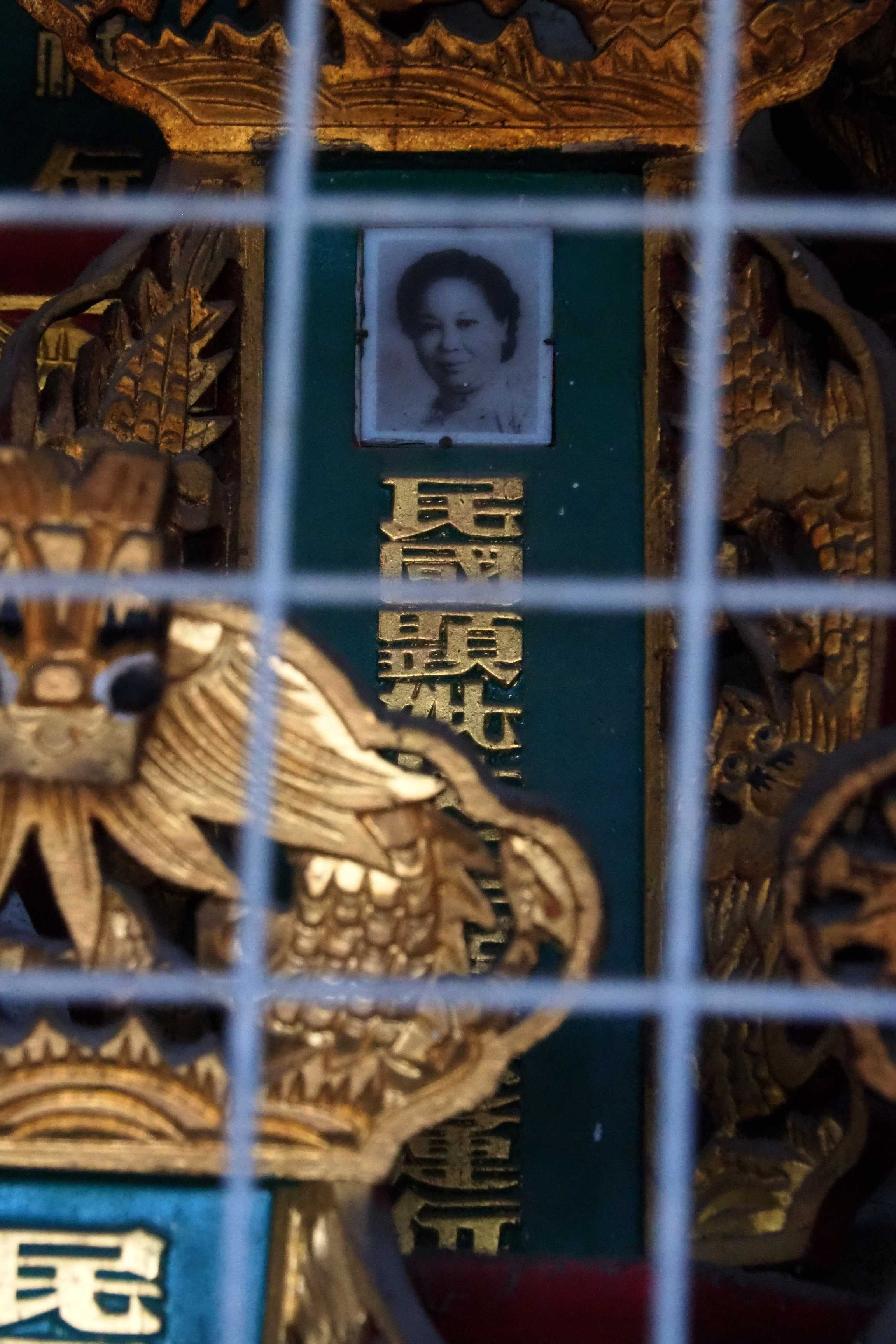
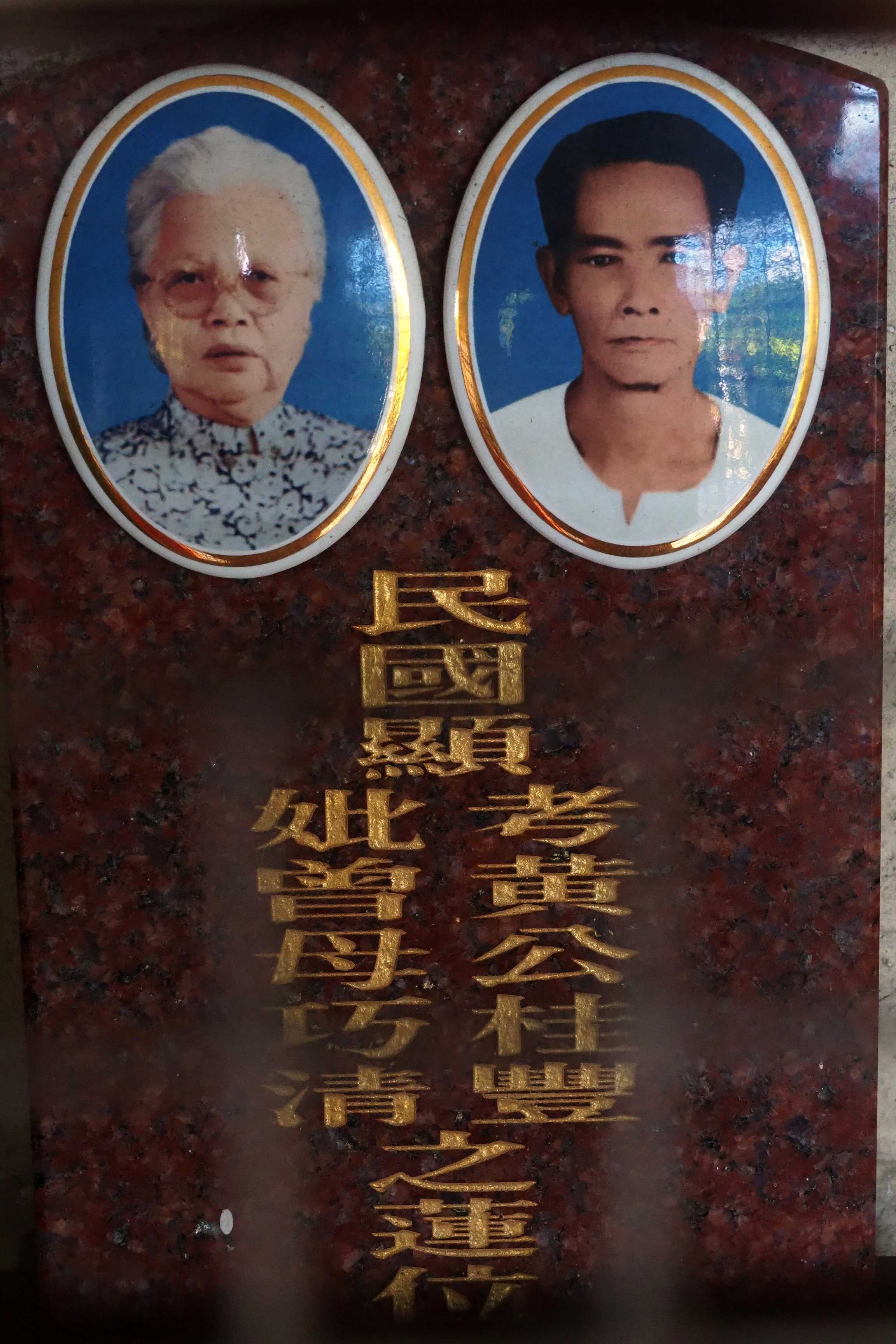
This room is a memorial where, behind its gates, plaques commemorate the deceased.

Commemorative plaques in a cave temple in Ipoh, Perak.
Commemorative portrait at Taman Loke Lim cave temple, Ipoh.Portrait in Taman Loke Lim cave temple in Ipoh, Perak.Commemorative plaque in a cave temple, Taman Loke Lim, Ipoh.

In this other space, a columbarium, funeral urns are deposited.

Columbarium at Perak cave temple, Taman Loke Lim.Columbarium niches in a cave temple in Taman Loke Lim, Ipoh.
Window and altar in a cave temple in Ipoh, Perak.
Pillars and lanterns of Perak Tong cave temple in Ipoh.Red pillars adorned with calligraphy in a cave temple in Ipoh, Perak.
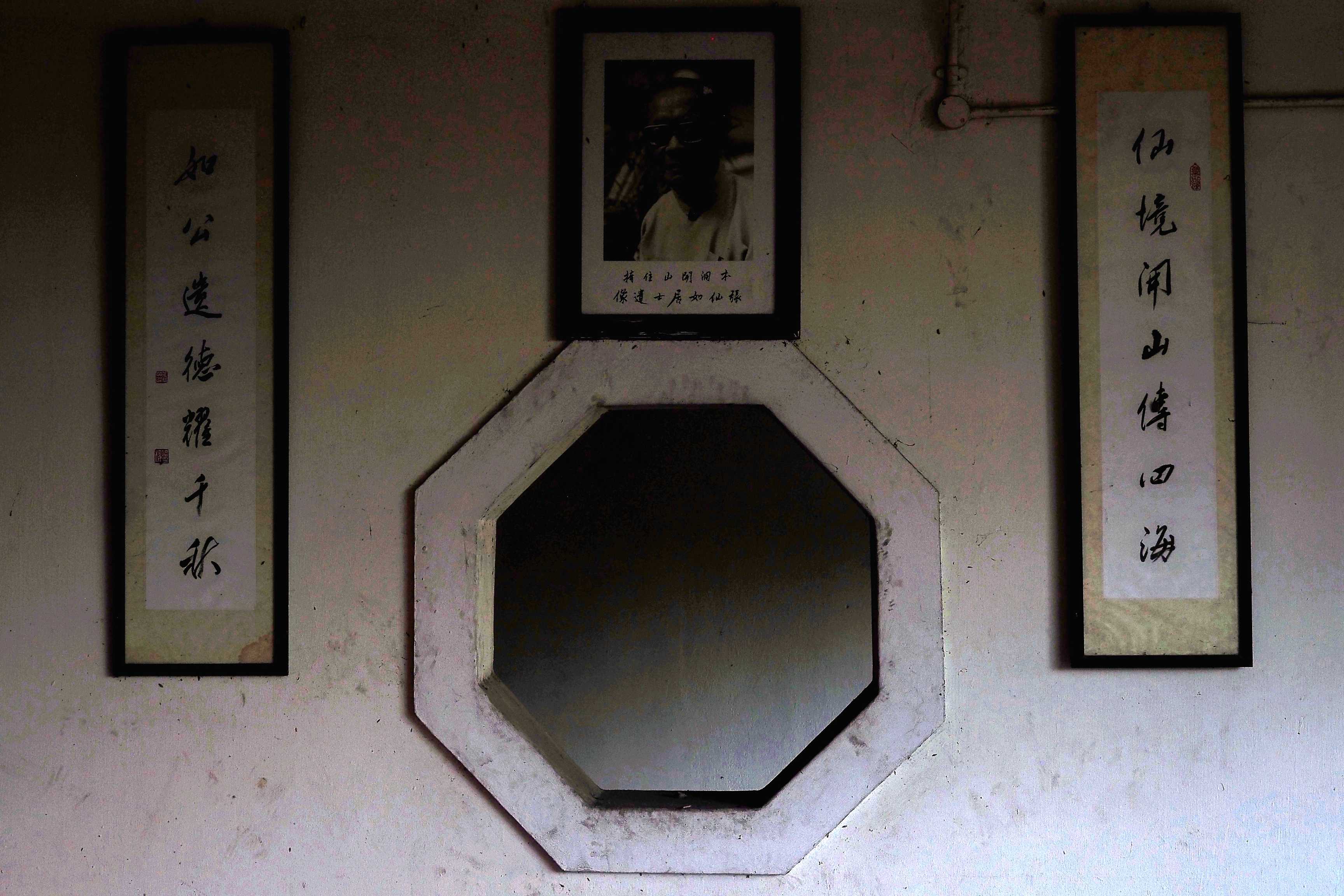
Bench and calligraphies at Taman Loke Lim cave temple, Ipoh.Calligraphy scrolls and portrait in a cave temple in Ipoh, Perak.

Another columbarium.

Columbarium of Taman Loke Lim Perak cave temple in Ipoh.Funeral niches at Taman Loke Lim cave temple, Ipoh, Perak.Funerary stele with portraits at Taman Loke Lim cave temple in Ipoh.

And finally, a last room with commemorative plaques.

Interior of a cave temple in Ipoh, Perak, with its ancestral tablets.
Pillars with Chinese calligraphy at Taman Loke Lim cave temple, Ipoh, Perak.Octagonal window at Lok Lim Perak cave temple in Ipoh.
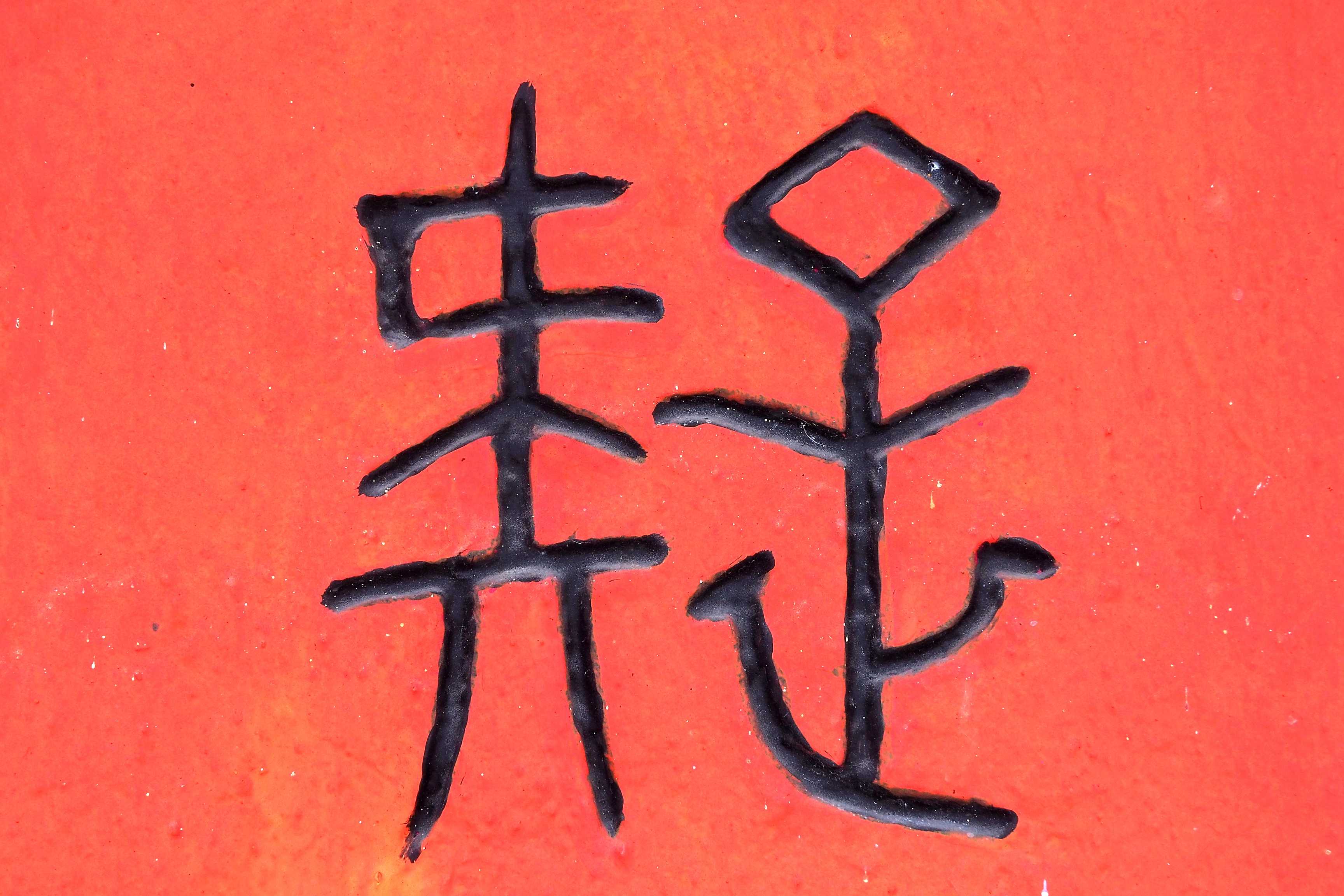
Calligraphy "洞天" in a cave temple in Ipoh.Chinese calligraphy at Perak Tong cave temple in Ipoh.Chinese calligraphy at Taman Loke Lim Perak cave temple, Ipoh.Calligraphy at Taman Loke Lim cave temple, Ipoh.

Back outside, around the large basin facing the temple entrance.

Guan Yin statue at Ipoh cave temple, Perak.Guan Yin statue on a lotus in the pond of Sam Poh Tong temple in Ipoh, Perak.

The Statue of Guanyin.

Two white and red hibiscus flowers (Hibiscus rosa-sinensis). Hibiscus is the national flower of Malaysia. And a calliandra Calliandra haematocephala.

Hibiscus rosa-sinensis at Taman Loke Lim, Ipoh.Red hibiscus at Taman Loke Lim Cave Temple, Ipoh.Combretum rotundifolium flower at Taman Loke Lim in Ipoh.
Flowering hibiscus at Taman Loke Lim, Perak cave temple, Ipoh.Guanyin statue in the pond of Perak Tong cave temple, Ipoh.

The count is good for Perak Tong, we can take the car back to go to other caves, those of Sam Poh Tong, 20 minutes further south from here.

Perak Tong cave temple in Ipoh, Perak.


Previous Page
The Cameron Highlands
Next Page
Ipoh and the Sam Poh Tong Temples