


 My blog




Friday15November
Second day in Singapore. The metro is the essential way of the city. The Mass Rapid Transit, or MRT, is Singapore's public network. Some trains are fully automated like the Circle Line where we are here. 


Strict rules, unusual for our western regions, are applied, such as the prohibition to transport durian (Durio zibethinus), whose strong and penetrating smell could cause trouble in the subway car. 

Here we are on Pagoda Street, in the Chinatown district, heritage of the first Chinese immigrants.


This bronze sculpture by artist Lim Leong Seng pays tribute to the Samsui women, Chinese immigrants who played a decisive role in Singapore's development in the 20th century. Recognizable by their iconic red headdress, a folded and starched cloth to protect themselves from the sun, they formed a significant part of the workforce on construction sites.

The Sri Mariamman Temple
The Sri Mariamman temple, the oldest Hindu shrine in Singapore. Its entrance is surmounted by a gopuram, a pyramidal tower characteristic of Dravidian architecture of southern India. This structure is entirely covered with detailed polychrome sculptures, representing a pantheon of deities and mythological creatures.

Madurai Veeran, a popular hero of Tamil folklore, revered as a powerful protector. He is traditionally represented with a prominent mustache and a scepter, flanked by his two horses.


A small shrine houses a colossal head adorned with a cobra. It is Iravan, a hero of the great Hindu epic, the Mahabharata. He is particularly revered in the cult of Draupadi and plays a central role during the Thimithi festival, the annual fire-walking ceremony.


The goddess Draupadi.

Devotees advance down the aisle to present their offerings and receive darshan, i.e. receive the visual blessing of the main deity, Mariamman.


On Temple Street, a mural by artist Yip Yew Chong brings back to life a scene from the past, a wayang, the Chinese street opera that once animated the city's neighborhoods.


Buddha Tooth Relic Temple
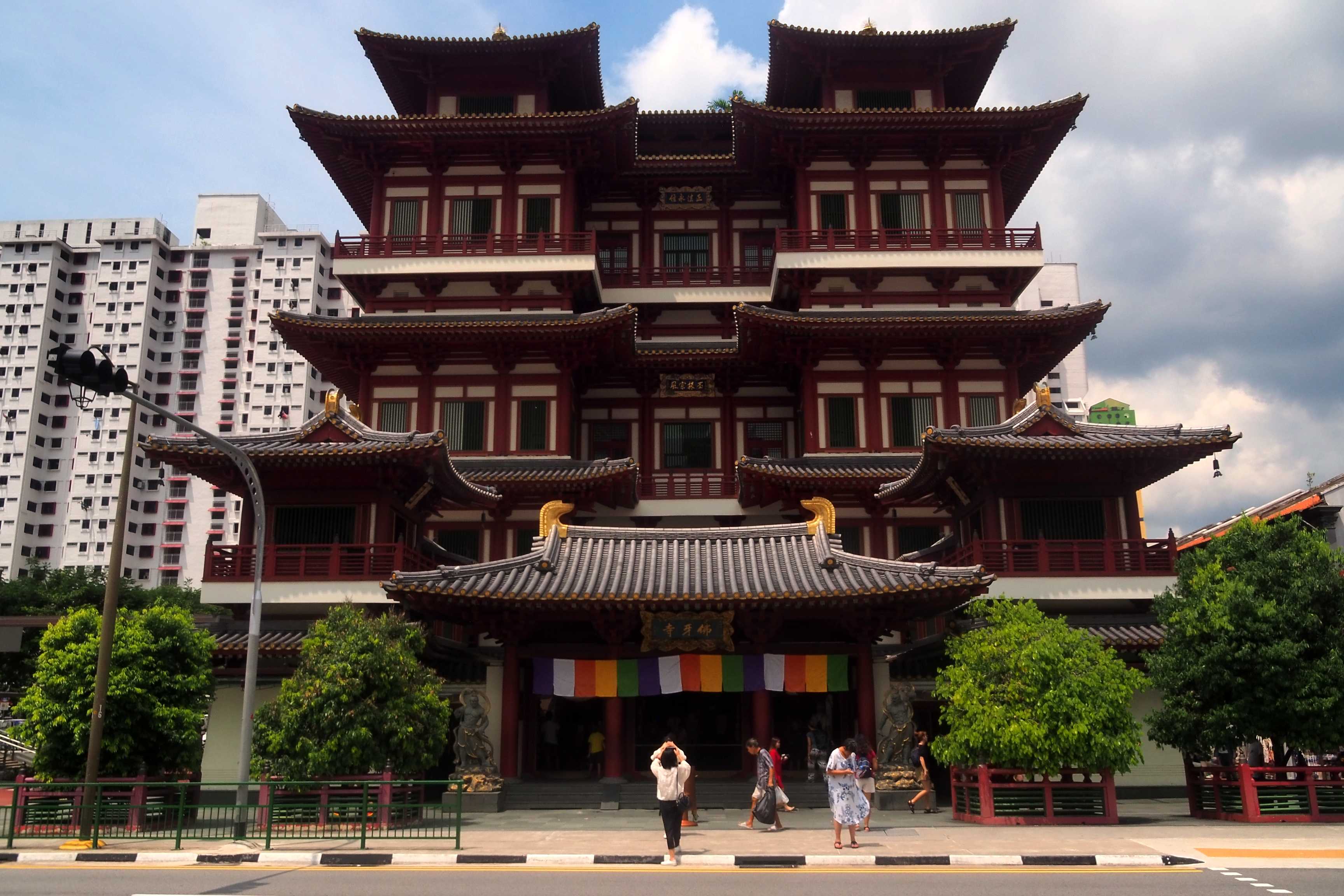
We arrive in front of what will undoubtedly be the spiritual climax of our four weeks on the Malaysian peninsula! This large temple, completed in 2007, aims to house a sacred relic, a tooth of Buddha. This is what is presented as the left canine tooth of Buddha, recovered from a collapsed stupa in Myanmar.


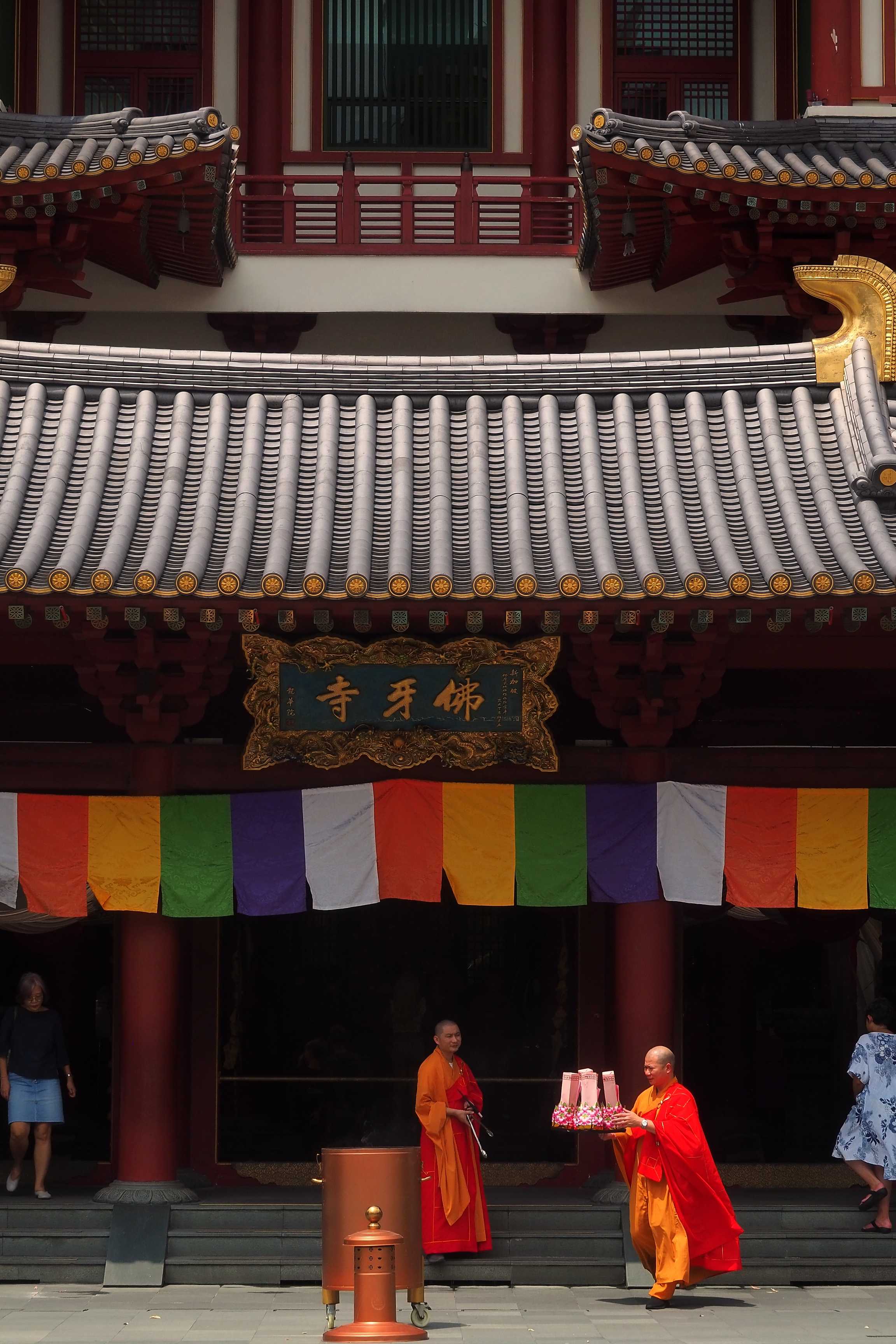
The entrance to the temple opens onto the Hall of a Hundred Dragons, the main prayer space. The faithful and monks gather there for daily ceremonies. But today, we are lucky, it is the closing ceremony of the "Great Offering to Buddhas and Celestial Beings"! This ceremony consists of presenting offerings to the Triple Gem, which represents the Buddha, his teachings and the monastic community, as well as to various protective deities. According to tradition, this act of devotion allows participants to accumulate merits and receive blessings for the coming year.


At the back of the room, the great Buddha Maitreya.


Food offerings like rice (Oryza sativa) are a common practice for the faithful. This act aims to accumulate merits and support the monastic community. The message accompanying these gifts invokes the blessings of the Triple Gem, that is to say the Buddha, his teachings and the community of monks.


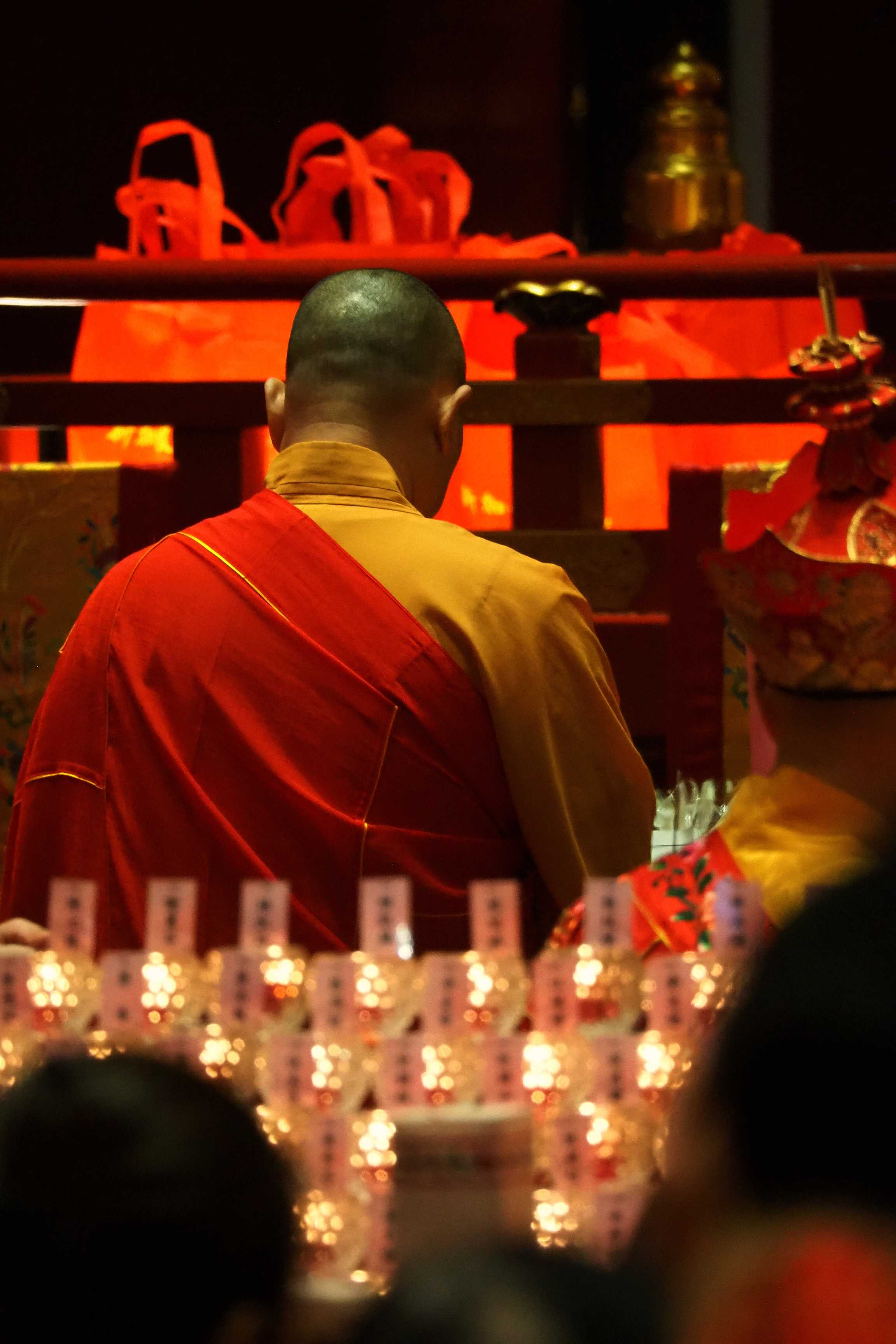

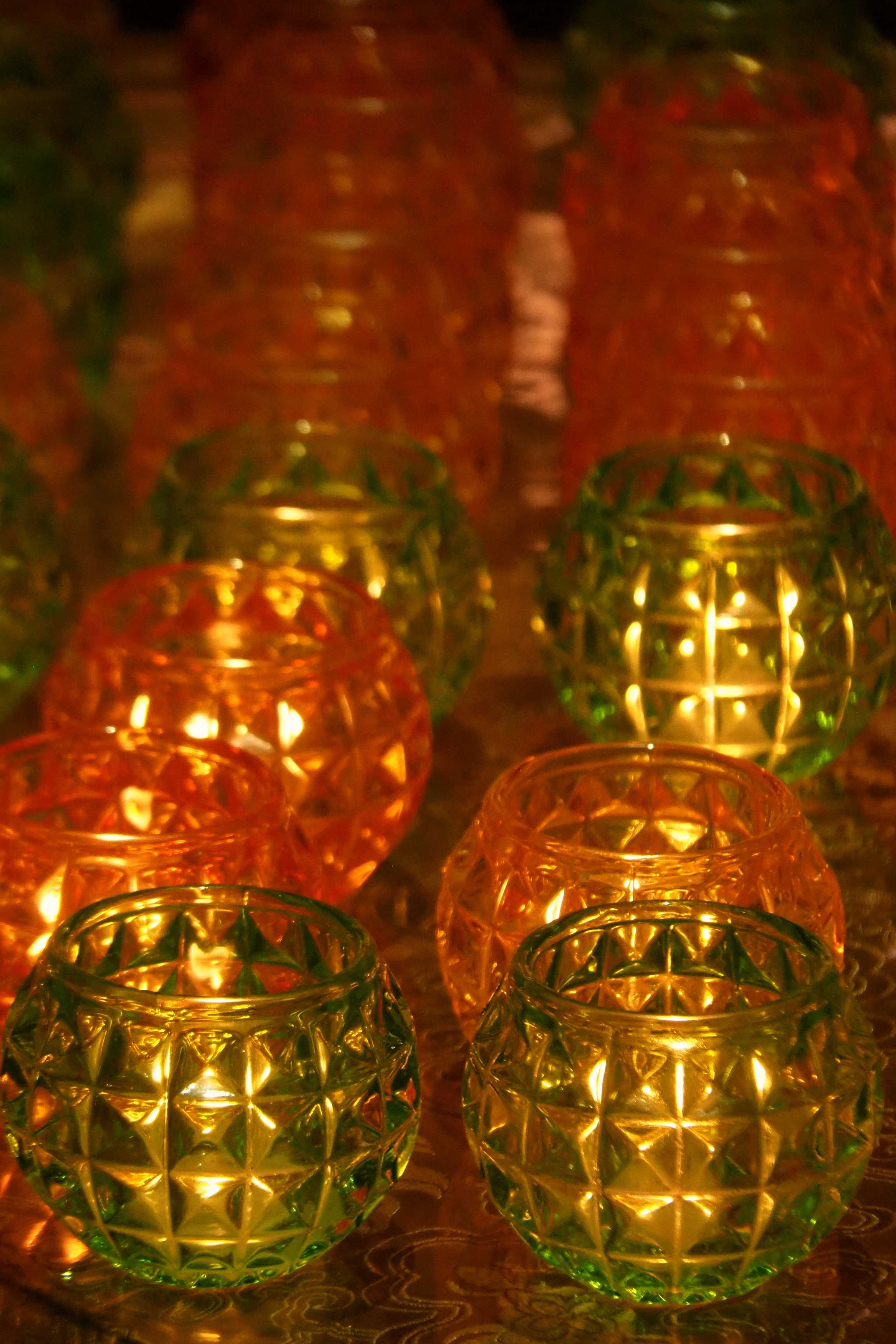
While the ceremony follows its course, we go up to the last floor, that of the Pagoda of Ten Thousand Buddhas. The walls are lined with thousands of small illuminated niches. Each alveolus houses a statuette of the Buddha, a practice that allows the faithful to accumulate merits through donations.


Here we are on the roof terrace where a small pavilion houses a large prayer wheel covered with the mantra in Tibetan script. Turning the wheel clockwise is an act of devotion. Each rotation is spiritually equivalent to the recitation of the thousands of prayers it contains.


This altar is dedicated to the Medicine Buddha, Bhaisajyaguru. The statue, recognizable by its blue hair, is represented in meditation position on a lotus throne. Before it, offerings of fruits and rice are arranged by the faithful.


The pavilion with the large wheel is topped with a golden spire, or finial, an ornament typical of Buddhist stupas. It is composed of rings and bells, symbolizing the different levels of enlightenment.


Back to the ground floor.


At the entrance to the Hall of a Hundred Dragons, an offering box has equipped itself with QR codes to make a donation. 

We go up to the 3rd floor, to the Temple Museum.


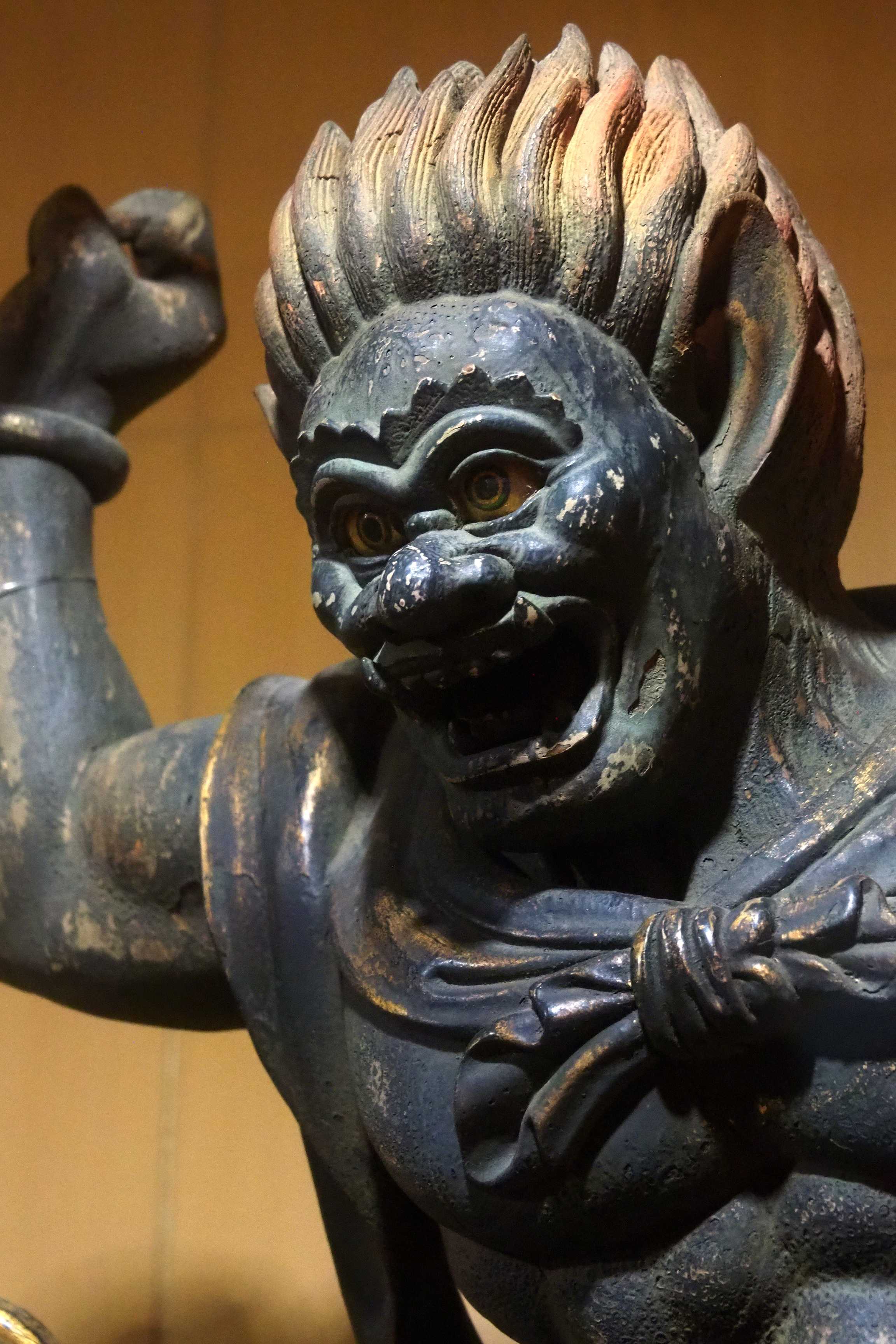


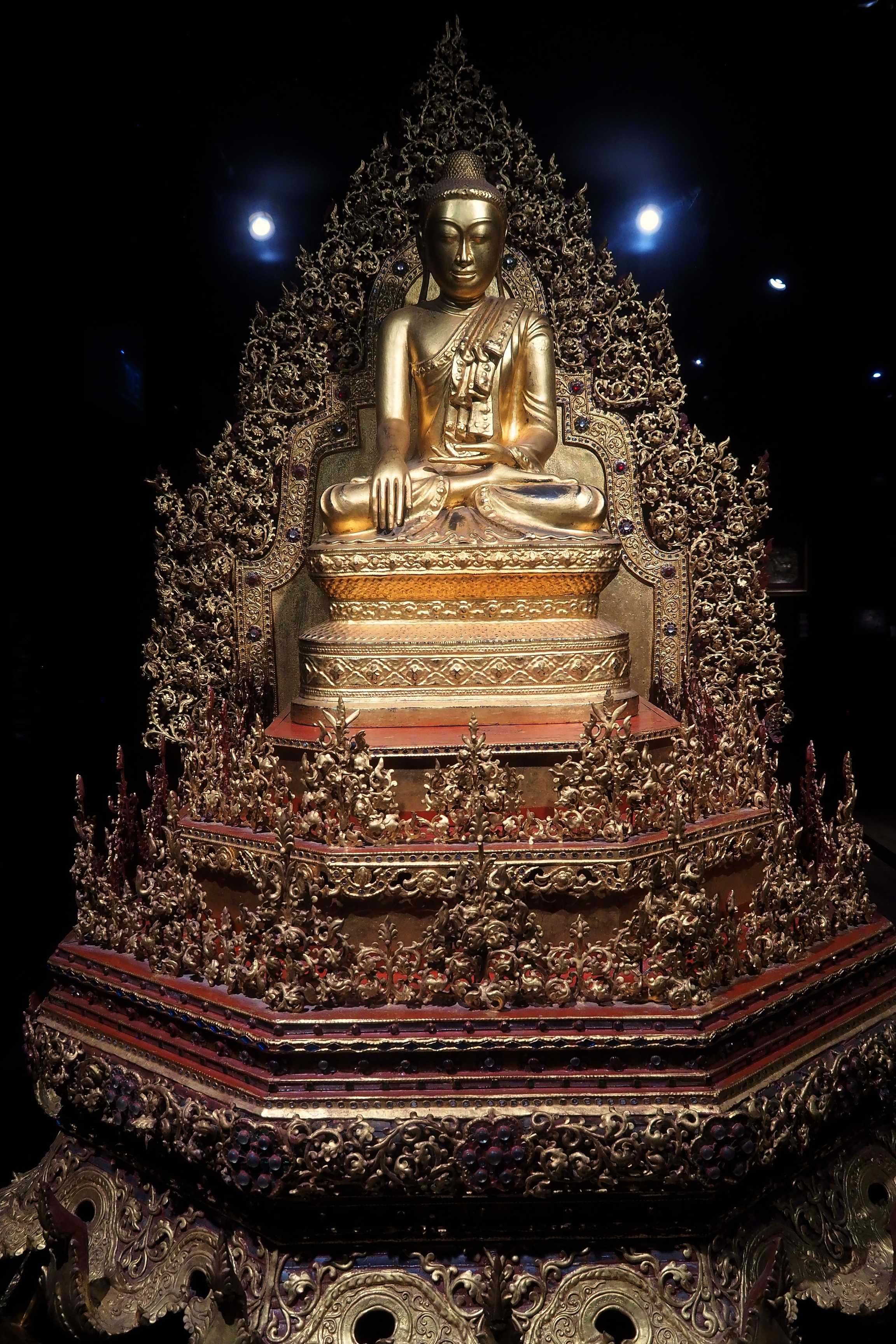


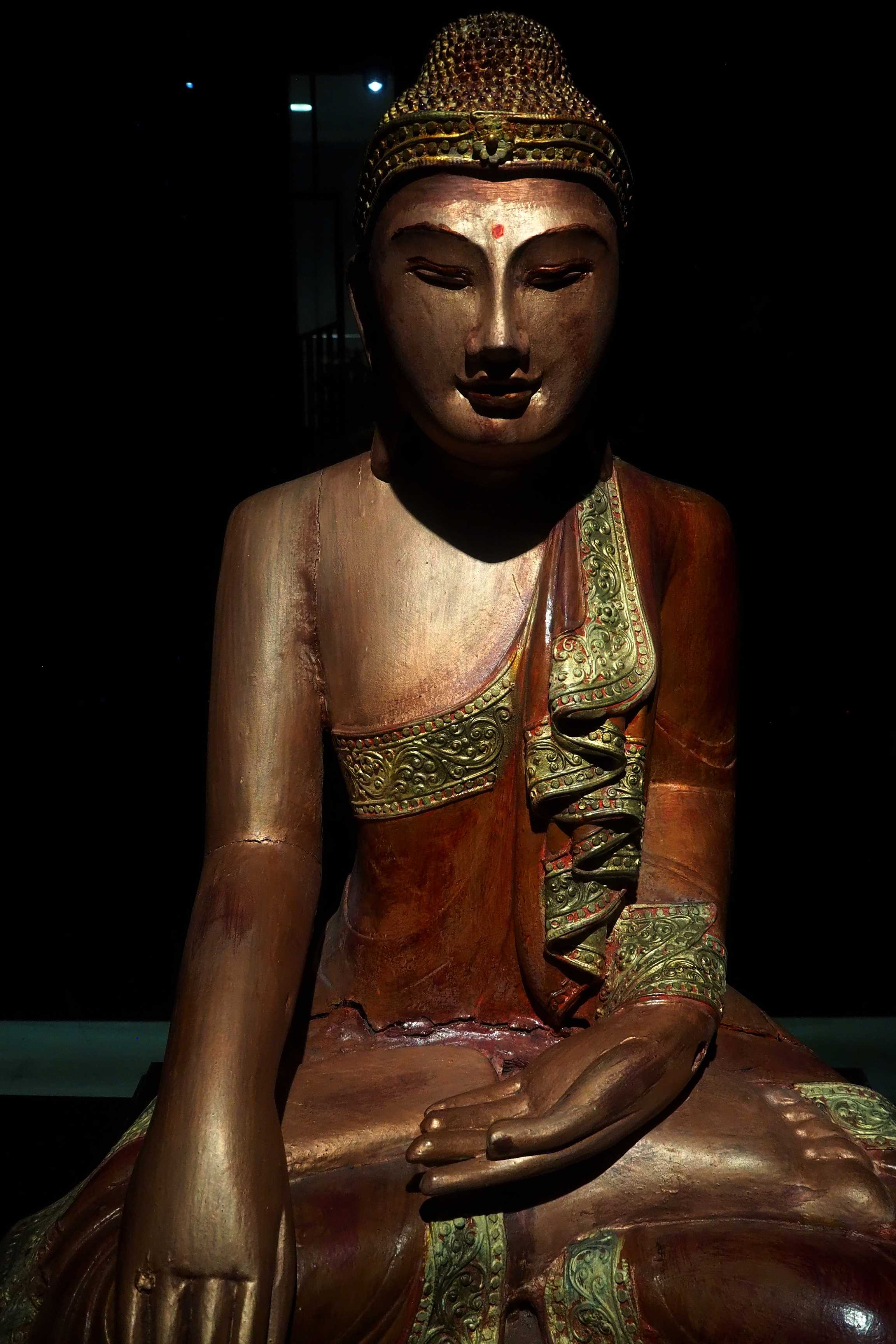
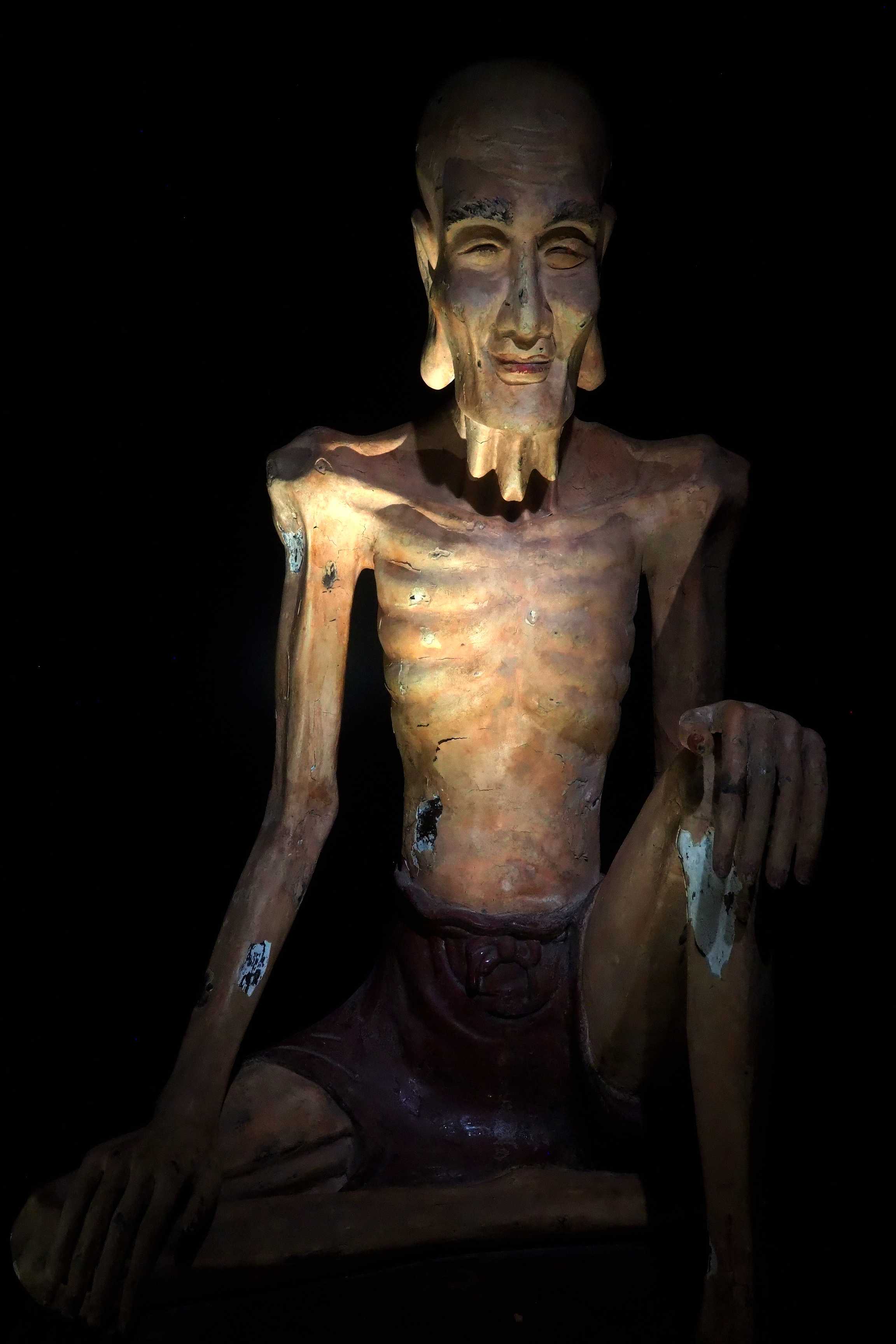

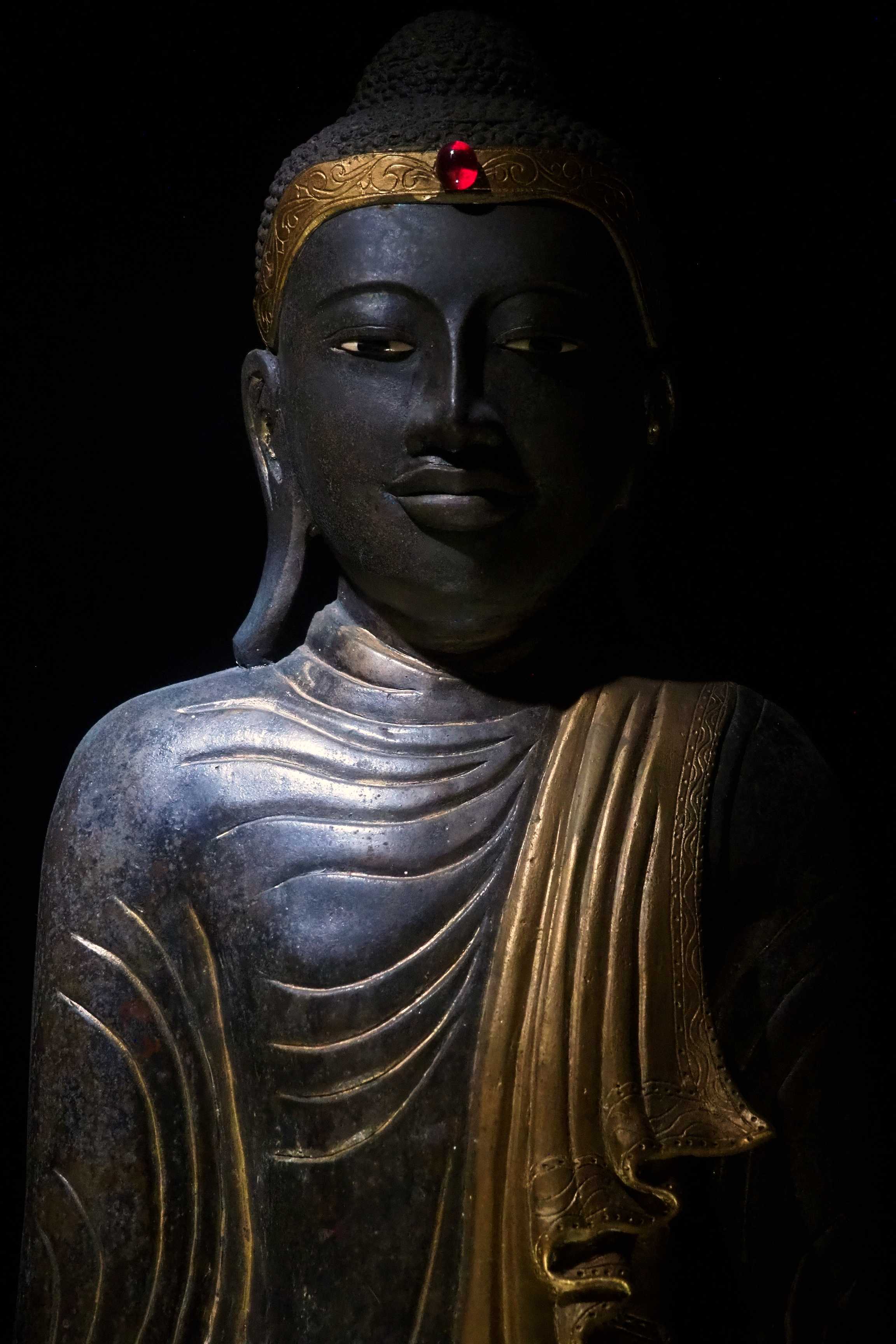


The mezzanine gallery offers a plunging view of the Hall of a Hundred Dragons. From this floor, one can observe the ceremonies through the blinds.


The Great Offering ceremony, or Gongfó Dàzhaitian begins before dawn with a solemn invitation phase, Yíngqing, where monks invite the 24 Devas, the protective celestial beings, to a symbolic banquet. The heart of the ritual is the great offering, Shànggong, during which vegetarian dishes, fruits, flowers and incense are presented on garnished altars. Each element is symbolic, like the hundreds of lit lamps representing wisdom dispelling ignorance. The ceremony concludes with the Sòngshèng ritual, a respectful escorting of the deities. This act of devotion aims at accumulating merits for the faithful.


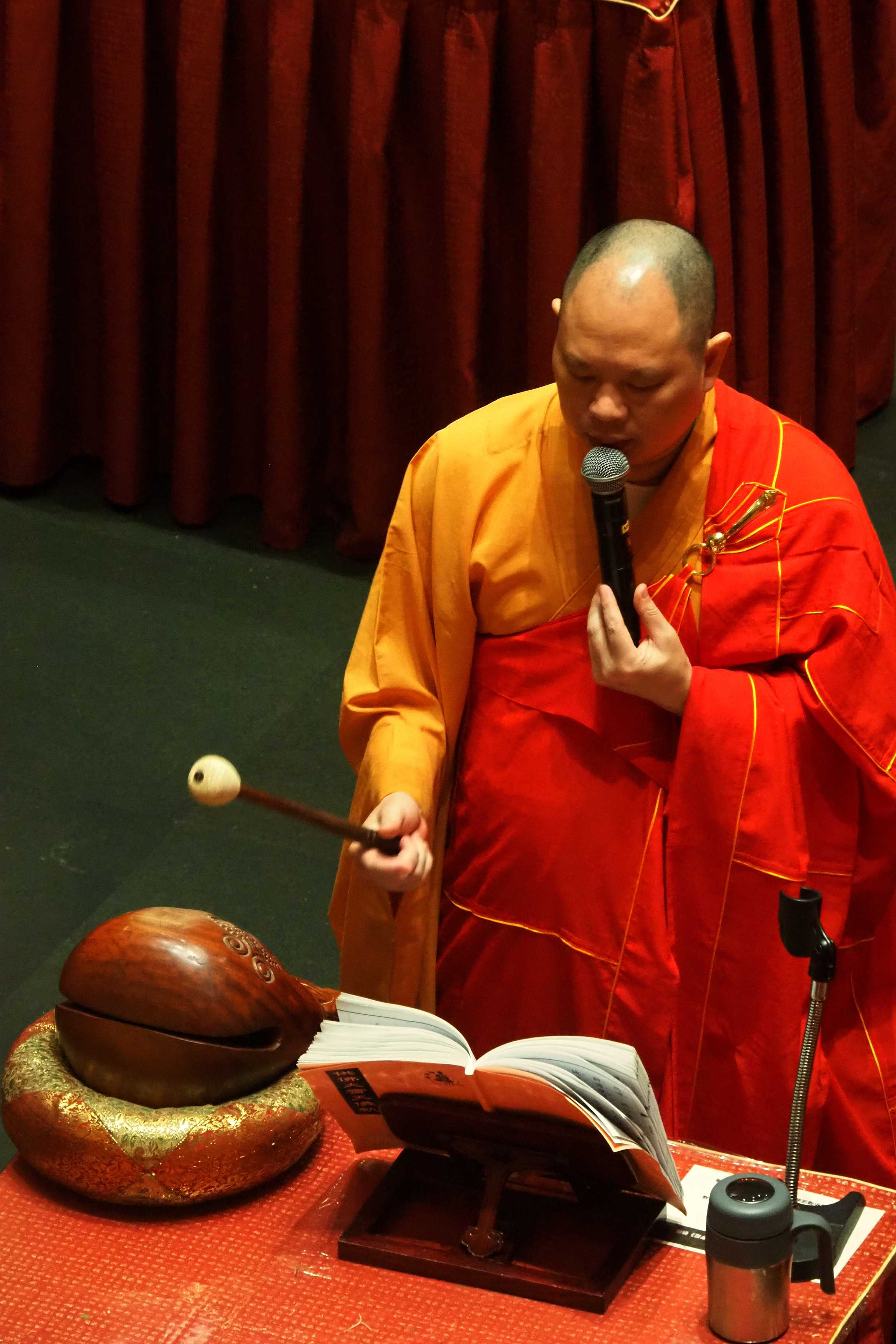
Some monks rhythm the ceremony to the sounds of their traditional instruments. The monk on the right plays the suona, a traditional Chinese oboe with a clear and piercing sound.


The suona player swapped his instrument for a dizi, another Chinese flute but transverse this one.


Led by the temple abbot and senior monks, the ceremony begins with chants and rituals to purify the place.
Then, through chanting specific sutras and mantras, the monks respectfully invite the Buddha, the Bodhisattvas, and then, one by one, the 24 Devas to descend from their celestial realms to attend the banquet.
The heart of the ceremony is the phase of the Great Offering, or Shànggong. It is at this time that offerings are presented, including vegetarian food, fruits, and steamed buns. Incense is also burned to purify the atmosphere and carry prayers.


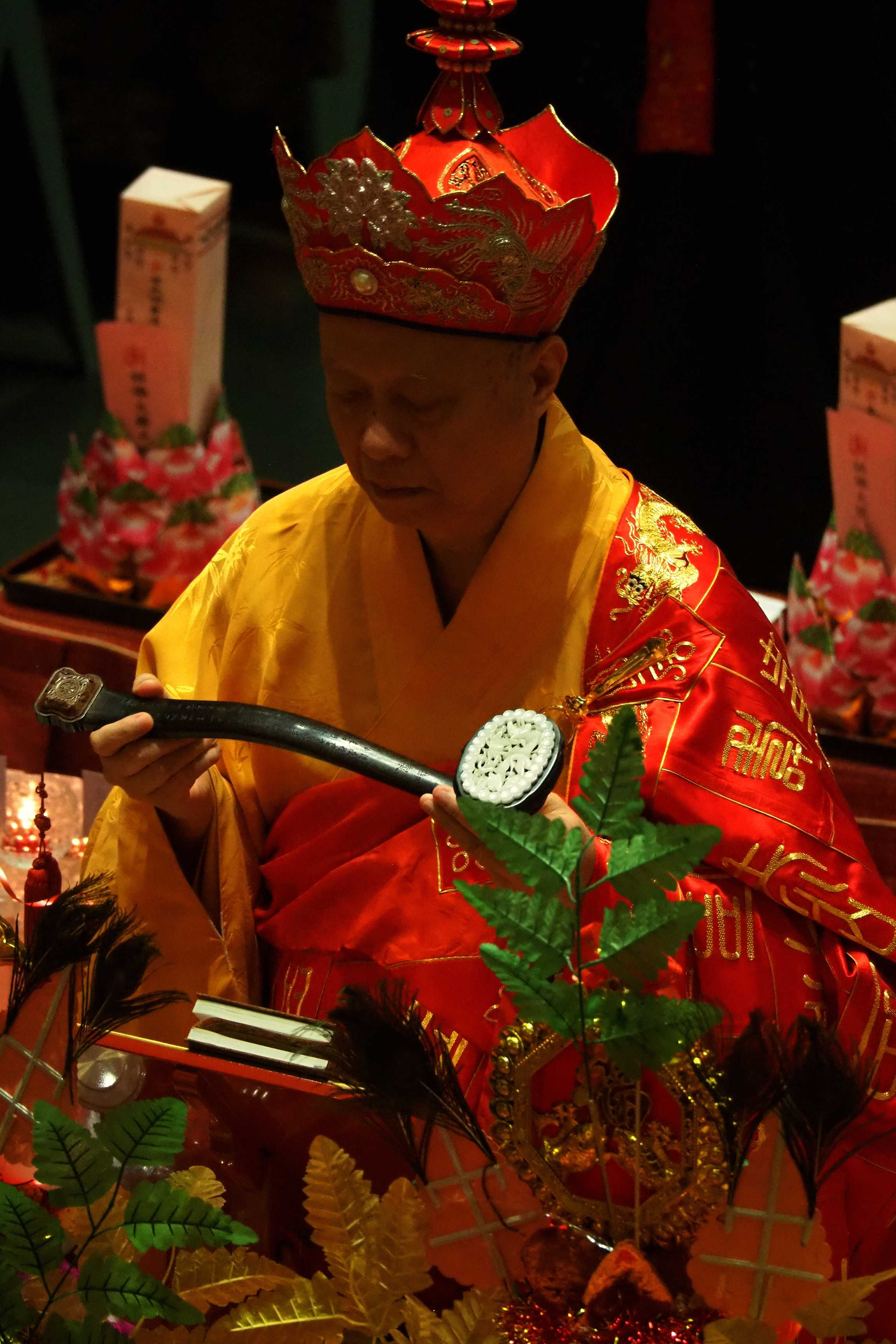
The officiating monk is dressed in a ceremonial costume reserved for major rituals. His red headdress is a "Crown of the Five Buddhas", or wufoguan. Over his monastic robe, he wears a red cape embroidered with dragons and sacred characters in gold thread. He holds a ruyi scepter, a ritual object symbolizing authority and spiritual power in Chinese Buddhism.






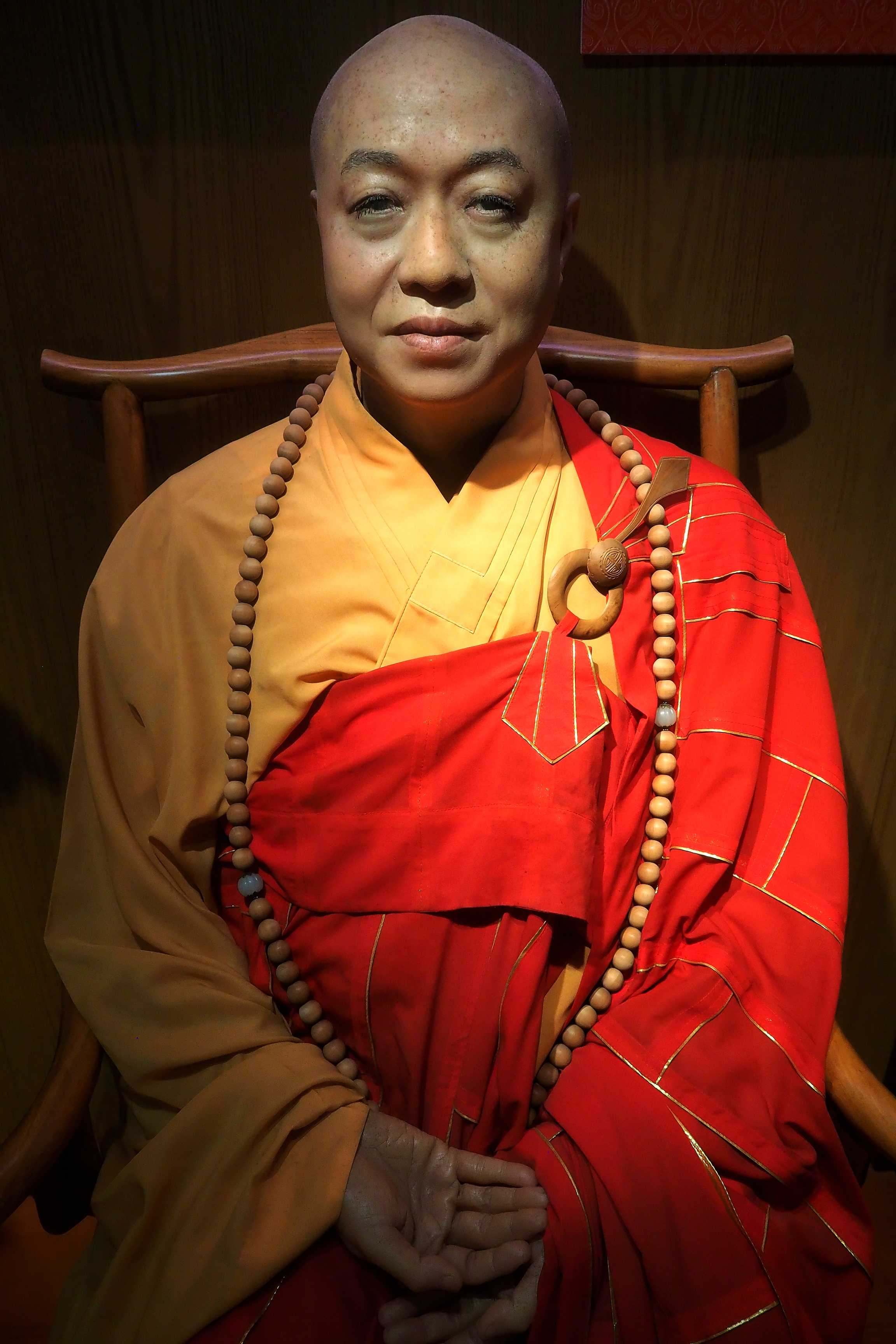
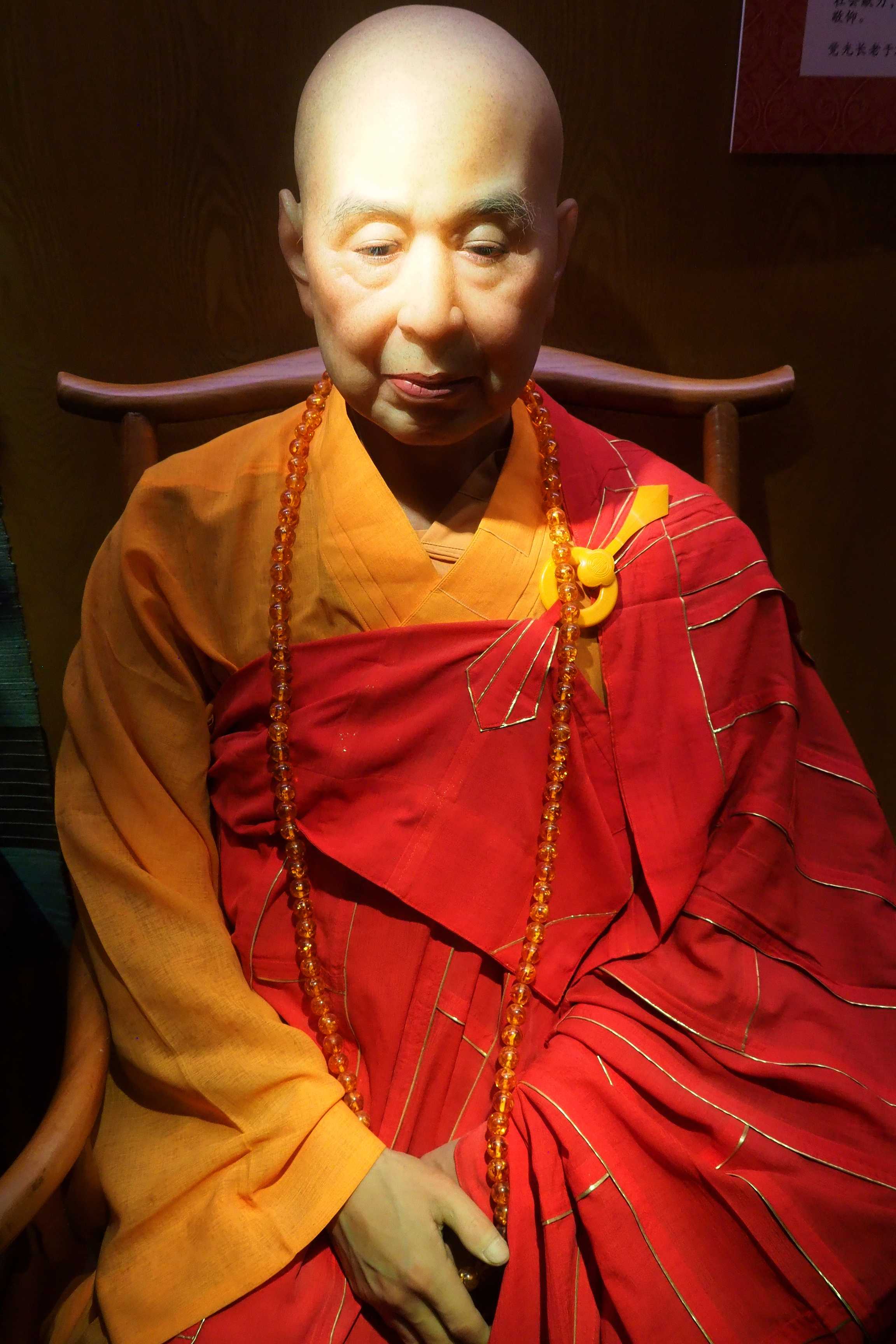
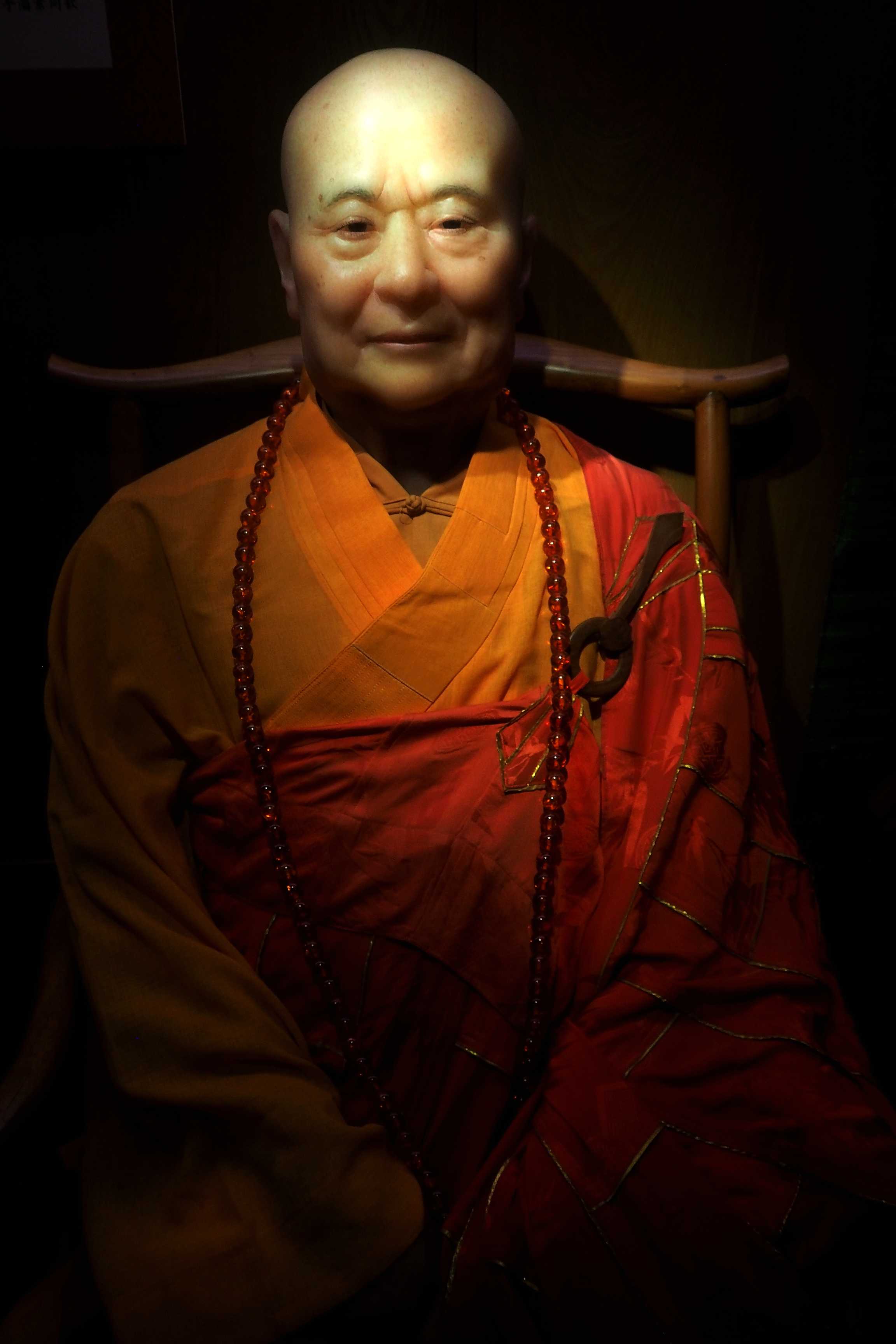
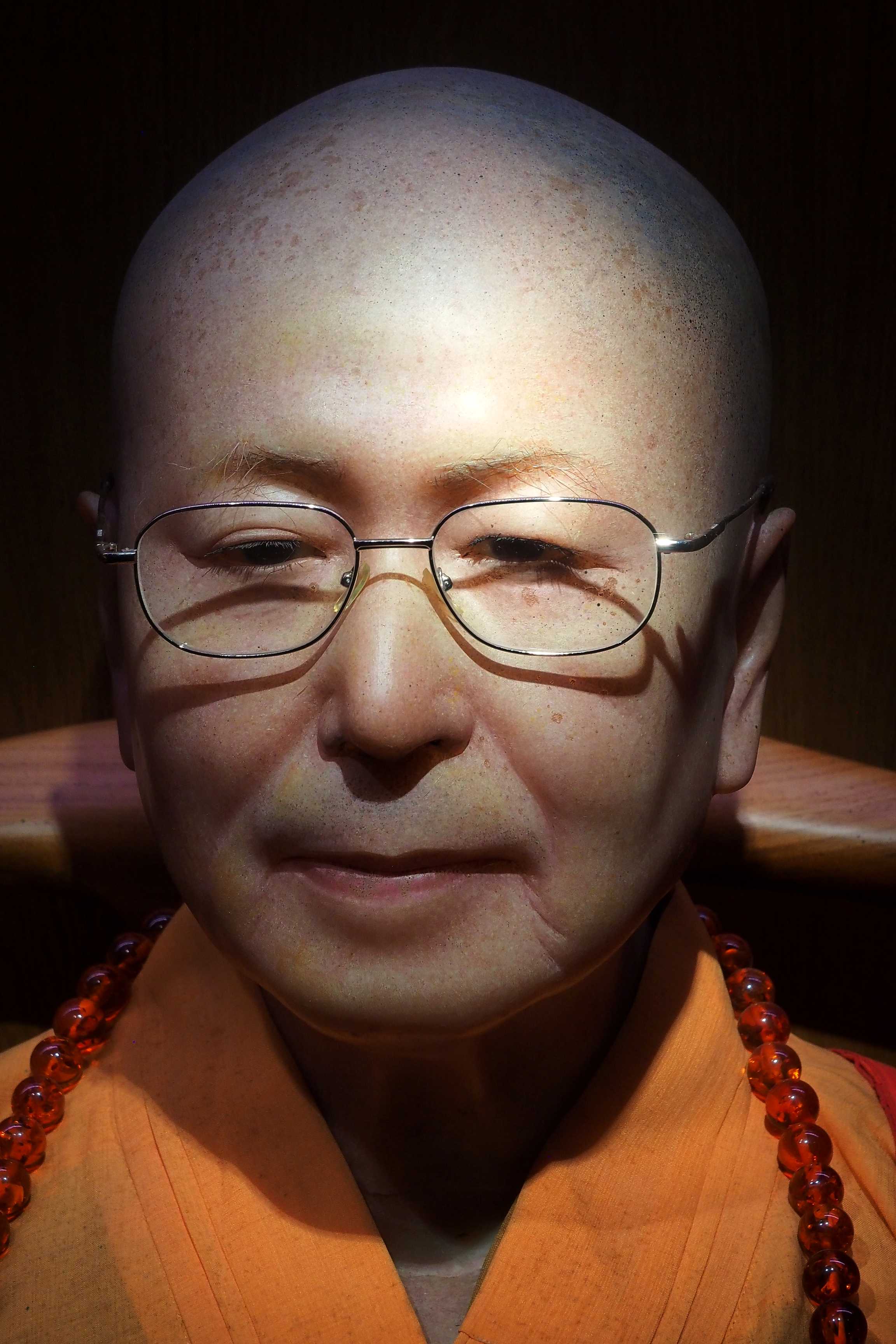
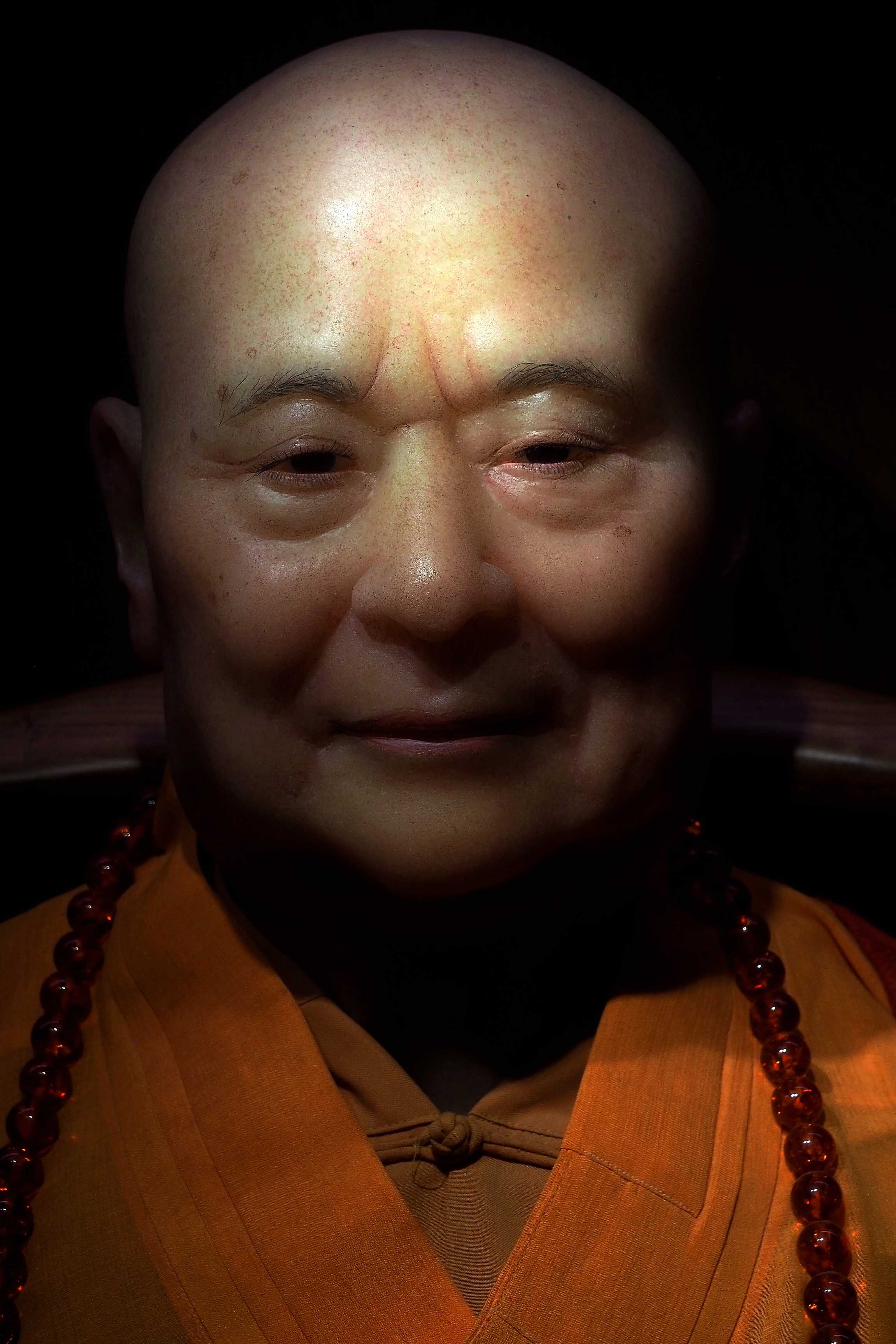
That's not all, but there are things to see in this mezzanine! Ultra realistic wax representations of the Eminent monks of the temple are exhibited all around the gallery. We have for example here in the middle, the Venerable Shi Fa Zhao, the monk who founded this temple where we are. He is in his monastic attire, the kasaya with his prayer beads, or mala. 

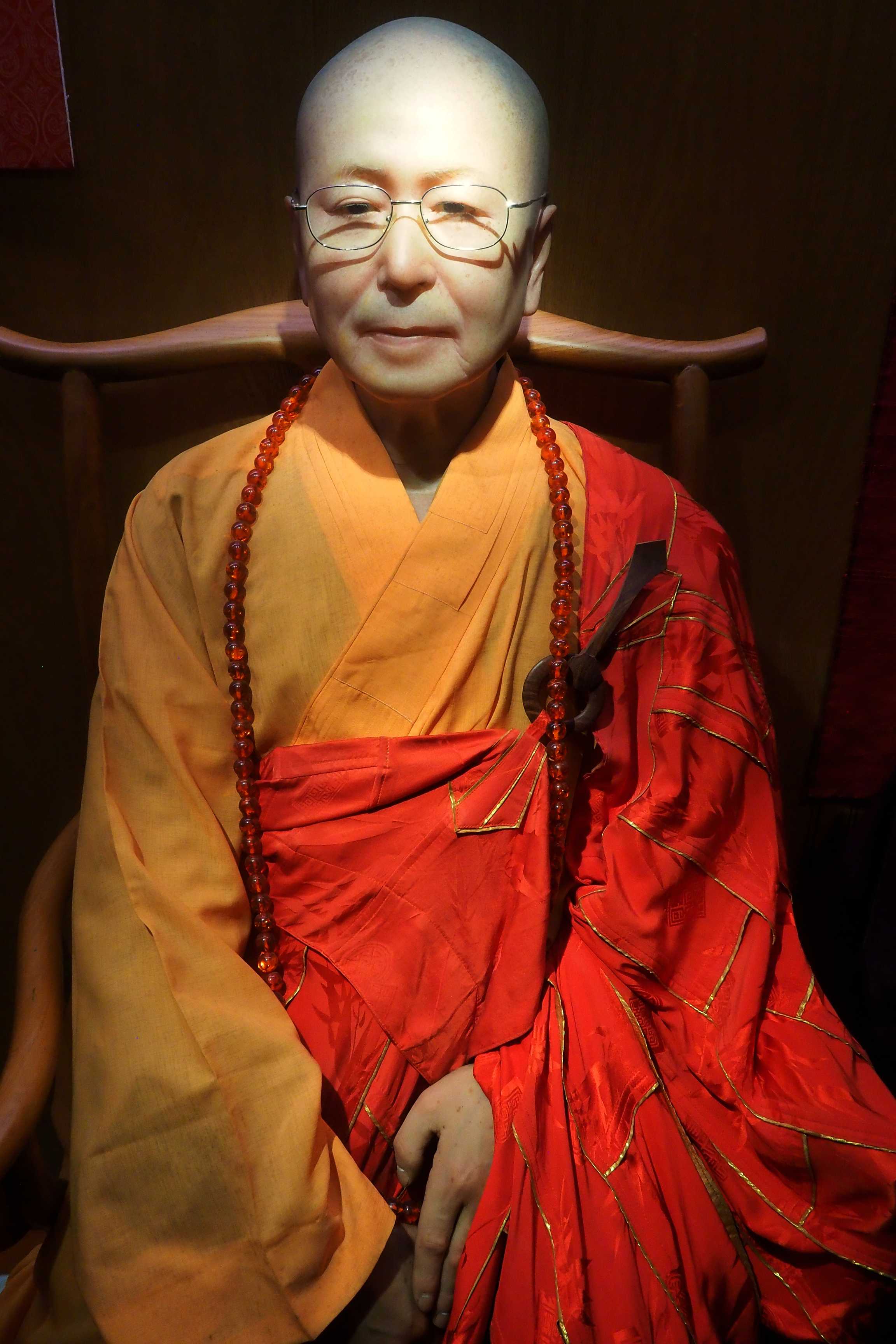
The wax monks from the other side of the mezzanine.





We come out of the temple and go around it to reach another access door.


Here we are at the secondary entrance which opens onto the Hall of Universal Wisdom. Inside, the hall is dedicated to the bodhisattva Cundi, a manifestation of Guanyin. The altar, flanked by guardian statues, is illuminated by hundreds of lights suspended from the ceiling.


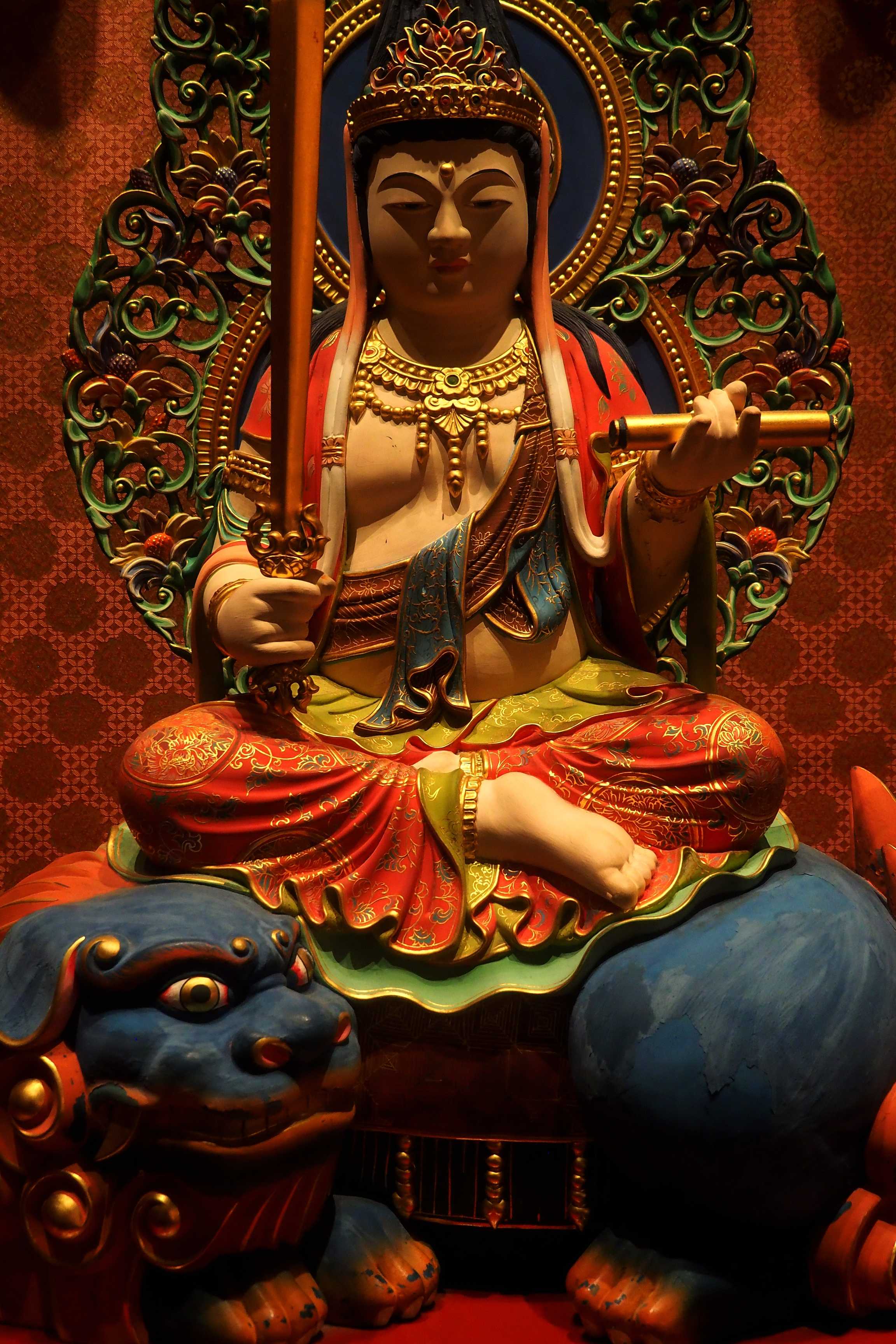
Samantabhadra on his white elephant is entirely surrounded by hundreds of Buddha statuettes.




Enough to feed a good big Buddha and some deities... 




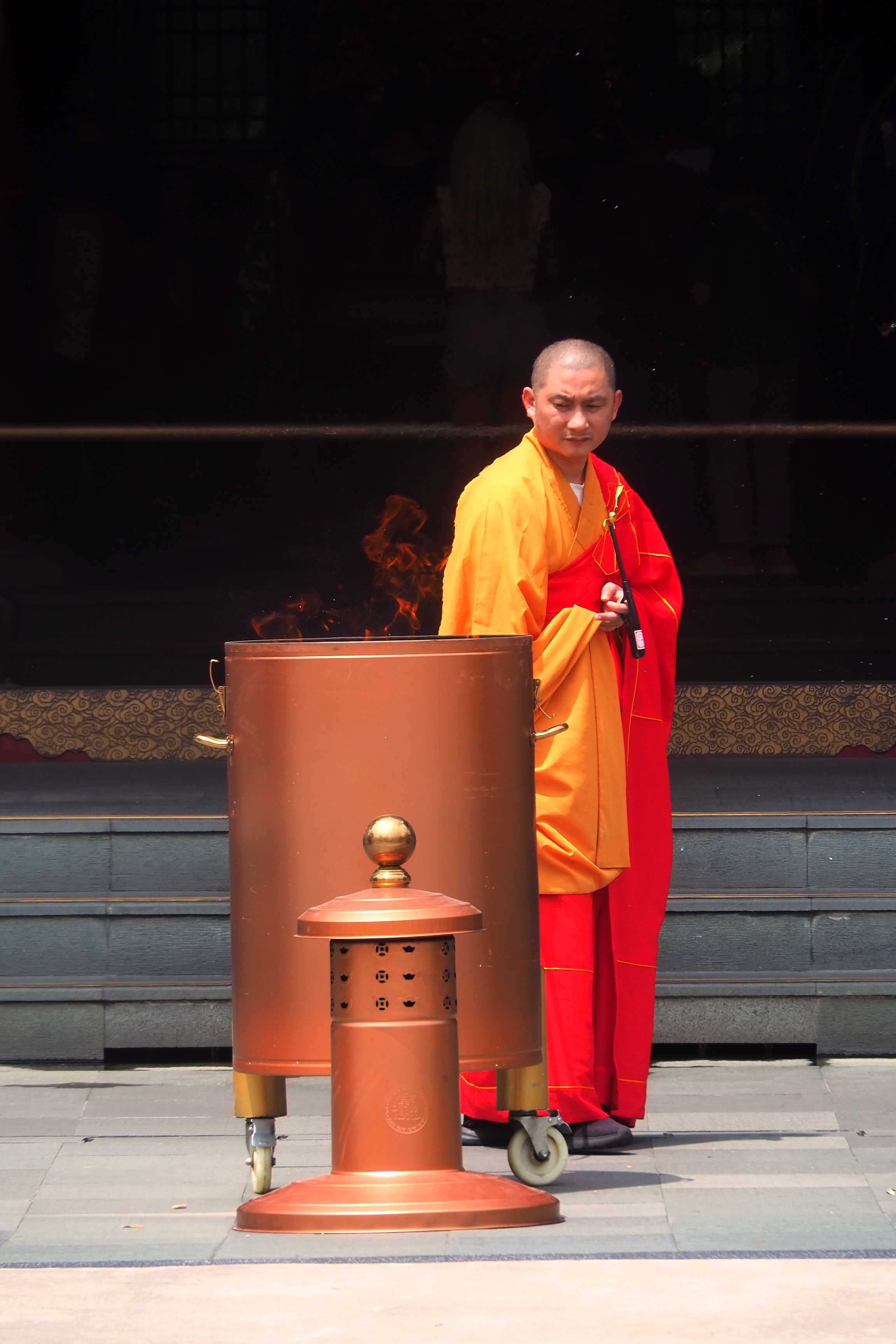
The Great Offering ceremony, or Gongfó Dàzhaitian, ends with the Sòngshèng ritual, the escorting of the deities. This final stage culminates with the burning of the main tablet and prayer papers. This act is not destructive but transformative. Smoke is considered a symbolic vehicle, transporting accumulated merits and the gratitude of the faithful to the celestial realms. This final gesture ensures that prayers and offerings have been transmitted, thus closing the ritual cycle.







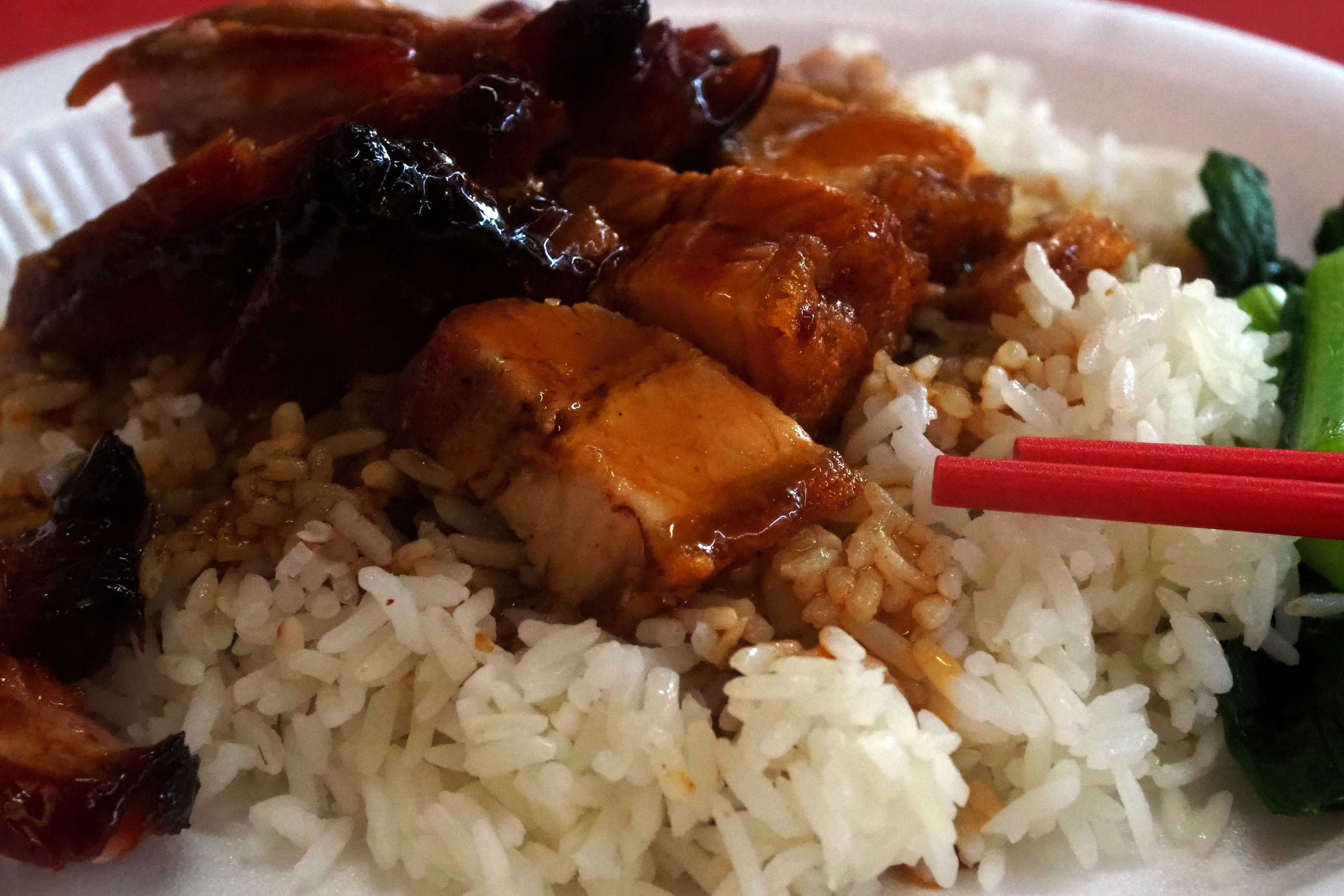
Hawker centers are an institution in Singapore, inscribed on the UNESCO Intangible Cultural Heritage list. These vast food courts bring together multiple independent stalls, offering a wide variety of dishes at affordable prices. They reflect the multiculturalism of the city-state, where Chinese, Malay and Indian cuisines rub shoulders. We are here at the Chinatown Complex, one of the largest in the city. 


For me, it will be soon kueh, at least I think so... A specialty of Teochew cuisine, one of the Chinese communities in Singapore. These dumplings are steamed and their skin, made from rice flour and tapioca, is translucent.;



Trengganu street.

Ha!  Here is the fruit plastered everywhere as sworn enemy number 1! The durian (Durio zibethinus)! Yet it is nicknamed the "king of fruits"!


Right photo. The People's Park Complex, with its narrow yellow and green facade, is an icon of Brutalist architecture in Singapore. Inaugurated in 1973, this mixed-use building was one of the first major shopping centers in the city-state. Its residential tower overlooks a commercial podium. We will be there in a moment!


Pagoda Street and its restored shophouses, with their colorful facades and wooden shutters, now house shops. The glass structure covers the access to the metro station.


We are inside the People's Park Complex. Escalators connect the multiple floors, where travel agencies and local shops rub shoulders.

We are going to have our dessert here.


Here is our order . Based on crushed ice, the first is an ice kacang. It consists of a mountain of shaved ice, topped with palm sugar syrup and garnished with red beans and crushed peanuts... The second bowl presents a variant, a dessert with grass jelly or cincau, made from the plant Platostoma palustre.


In the neighboring stall, bakkwa are prepared. This dried meat specialty is a legacy of Chinese cuisine. It consists of thin slices of pork marinated in a mixture of sugar, soy sauce and spices. The preparation ends on a charcoal grill, a step that gives the meat its smoky and caramelized flavor. The artisans constantly turn the sheets of meat to ensure even cooking. We will test them on the last day!


New frescoes by Singaporean artist Yip Yew Chong.


The residential complex The Pinnacle@Duxton consists of seven 50-story towers and two hanging gardens, or skybridges, connecting the towers on the 26th and 50th floors.


Rich or poor neighborhood? This Lamborghini and this Bentley should help us answer this question...


The shophouses of Singapore are distinguished by their "five-foot ways", continuous covered passages on the ground floor. This architectural concept was imposed by Sir Stamford Raffles in the early 19th century. It aimed to create a public shelter to protect pedestrians from the tropical sun and torrential rains.


The business district is approaching.


Thian Hock Keng Temple
Passage in front of the Thian Hock Keng temple. The Thian Hock Keng temple, or Palace of Heavenly Happiness, is one of the oldest and most important Hokkien temples in Singapore. The temple, now a national monument, was assembled without using a single nail.

Granite steles relate the construction of the temple. It also lists the names of donors from the Hokkien community.


Guardian gods, or menshen represented on the doors of the Thian Hock Keng temple. They are painted using a gilding technique on black lacquer typical of southern China.


Another mural by Yip Yew Chong, located on Amoy Street, depicts the Singapore River at a time when it was the economic heart of the city. Sampans, traditional wooden boats, transported goods to the warehouses lining the quays.


Return to the hotel passing over Geylang Road!

Latest comments
On Guatemala 2018
Le 25 Novembre 2024
Significado de este mural
On Chile 2016
Le 15 Septembre 2024
Rrrrrr
On Egypt 2003
Le 1er Avril 2023
Et oui c'est bien nous aux pieds de ce Colosse !
Le 1er Avril 2023
Bien petits aux pieds de ce Colosse !
On Namibia 2014
Le 3 Août 2021
very good indeed