


 My blog
  Support me on Tipeee!


Tuesday26November
This is our last day in the Japanese capital because tomorrow we will take the train back to Osaka, from where after a final night we will leave for France. For now, we are underground in the metro lines to reach the Imperial Palace gardens.


Little slow-motion of entering the subway... 
Gaien national garden
Our arrival at the moats of the Gaien national garden is somewhat rainy, but nothing should hinder our penultimate day...

We are surprised by the long queue leading to the park entrance... What event could possibly bring so many Tokyoites? The day before, Pope Francis arrived in Tokyo, would he be visiting His Imperial Highness this morning in his gardens??? Or have the Rolling Stones come to have tea with Empress Masako?


We follow the umbrellas expectantly, which lead us to a paper check that we pass with flying colors.


We let ourselves be carried by the long procession that goes deep into the gardens, seemingly knowing perfectly the destination of this short trip... 

And there you have it... Neither Pope, nor Rolling Stones, nor the shadow of an emperor's eyelash... But just the temporary Daijokyu pavilions... Just that... These pavilions were built for the brand new Emperor of Japan Naruhito, who was enthroned a few months ago following his father's abdication. In these ephemeral constructions, 12 days ago, Naruhito had to, to finalize his enthronement, according to a tradition that has lasted for 13 centuries, offer among other things offerings to Amaterasu, goddess of the Sun... A "small" controversial ceremony costing some 23 million euros... Controversial, certainly, and understandable, but still having a certain success given the curious people who came here just to see the pavilions that will be destroyed in a few days...

All the pavilions were built of wood.


Right next door, the Tokagakudo concert hall.

The ruins of the old keep which evidently needed large bricks to stand upright...


Akihabara
We leave the gardens to reach the Akihabara district, the capital's "tech" and manga zone. There you can find arcade rooms where Pikachu, the famous little yellow Pokémon, largely benefits from his international renown.


The facades of the buildings give pride of place to manga.
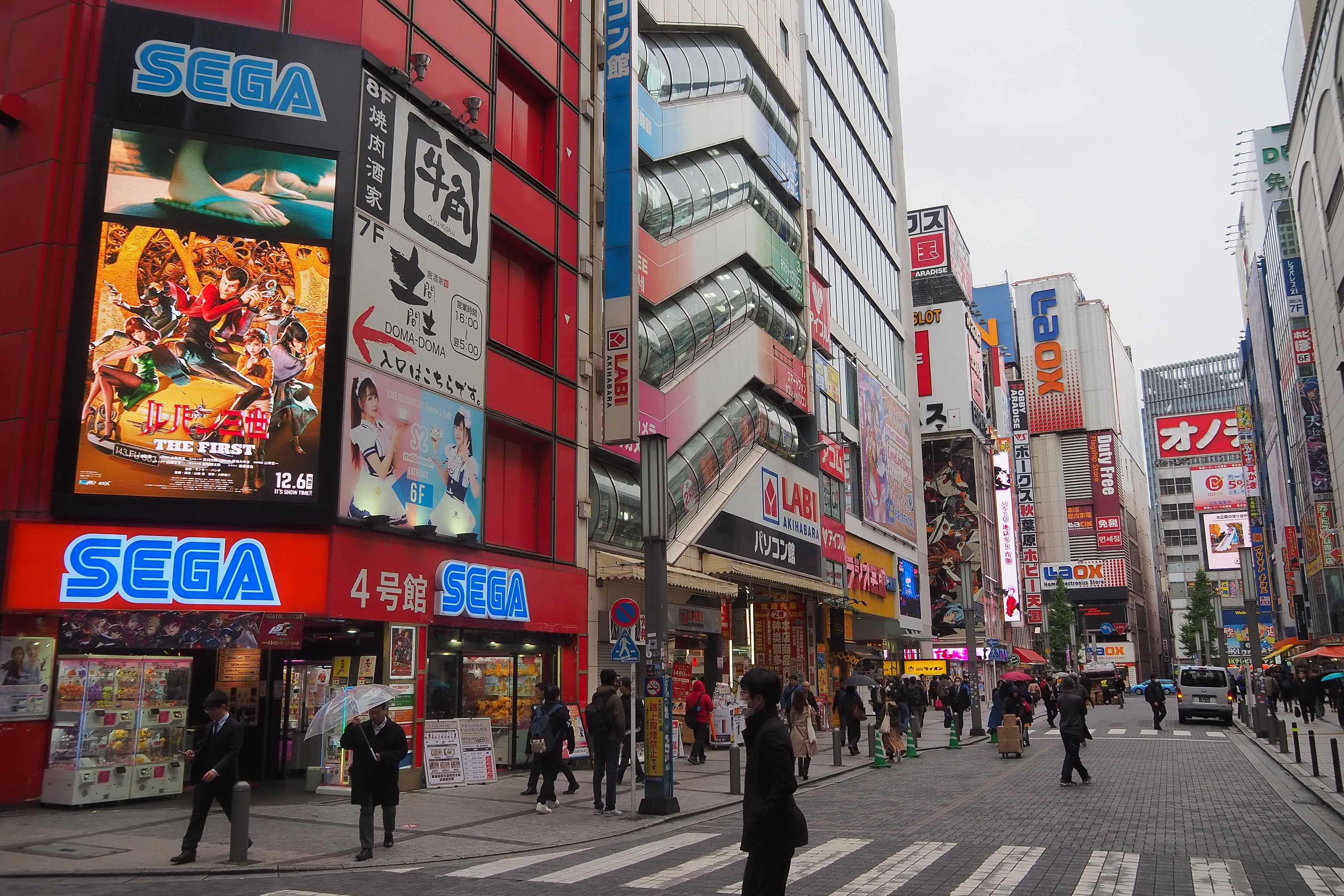


The manga Love Live! School Idol Project.




A manga in flesh and blood? Well no, this "hostess" is not a manga by state contrary to appearances but a "Maid" distributing advertisements for "Maids Cafés".
"A maid café or maid kissa is a café where waitresses wear a maid uniform. These cafés are mainly found in the Akihabara district of Tokyo and are frequented by a predominantly otaku public. The basic services offered are the same as in traditional cafés, to which are added various interactions with the maids such as taking photos or participating in games and animations." © Wikipedia


Oops, small casting error for the neighborhood...
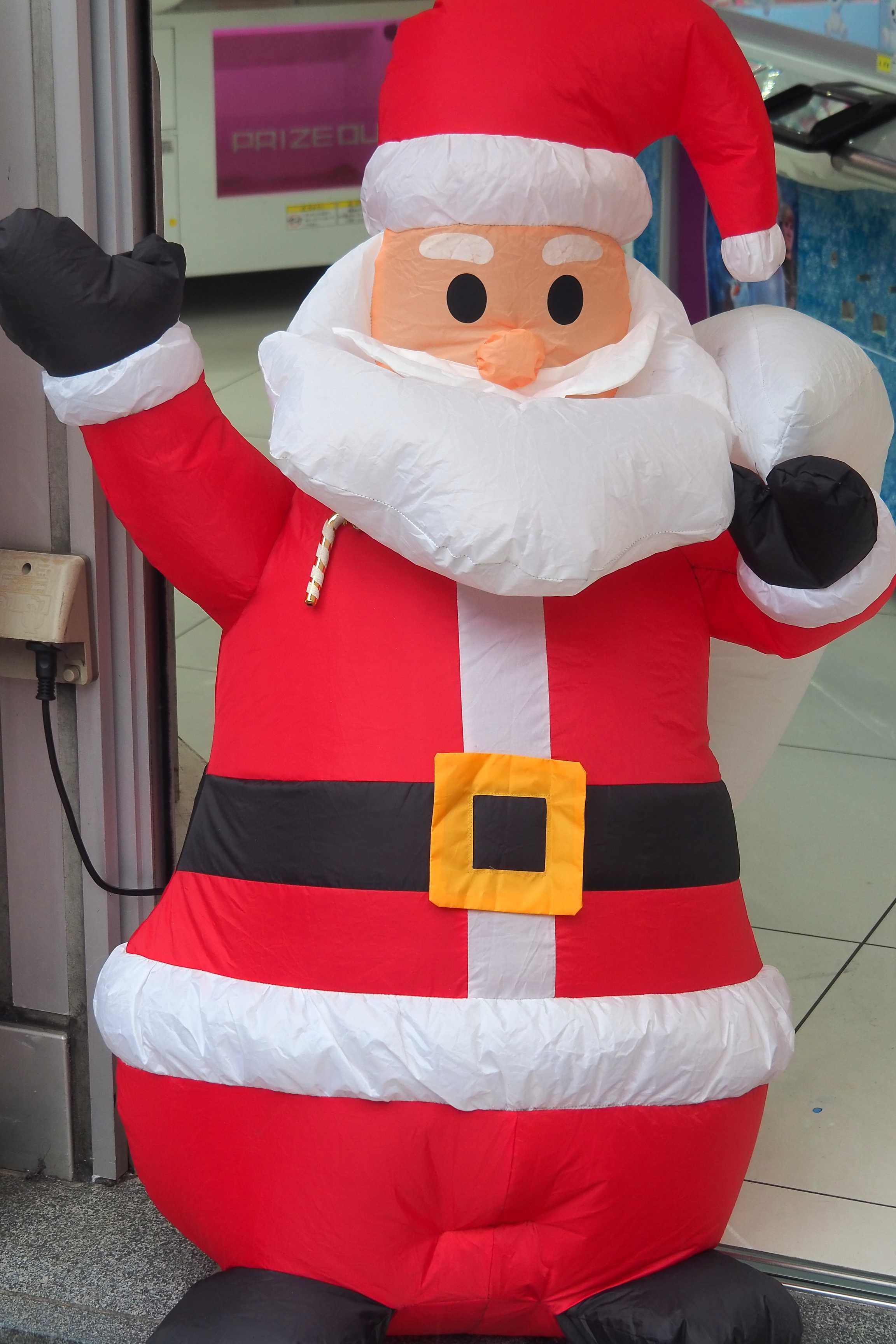
So real cakes or sampuru???


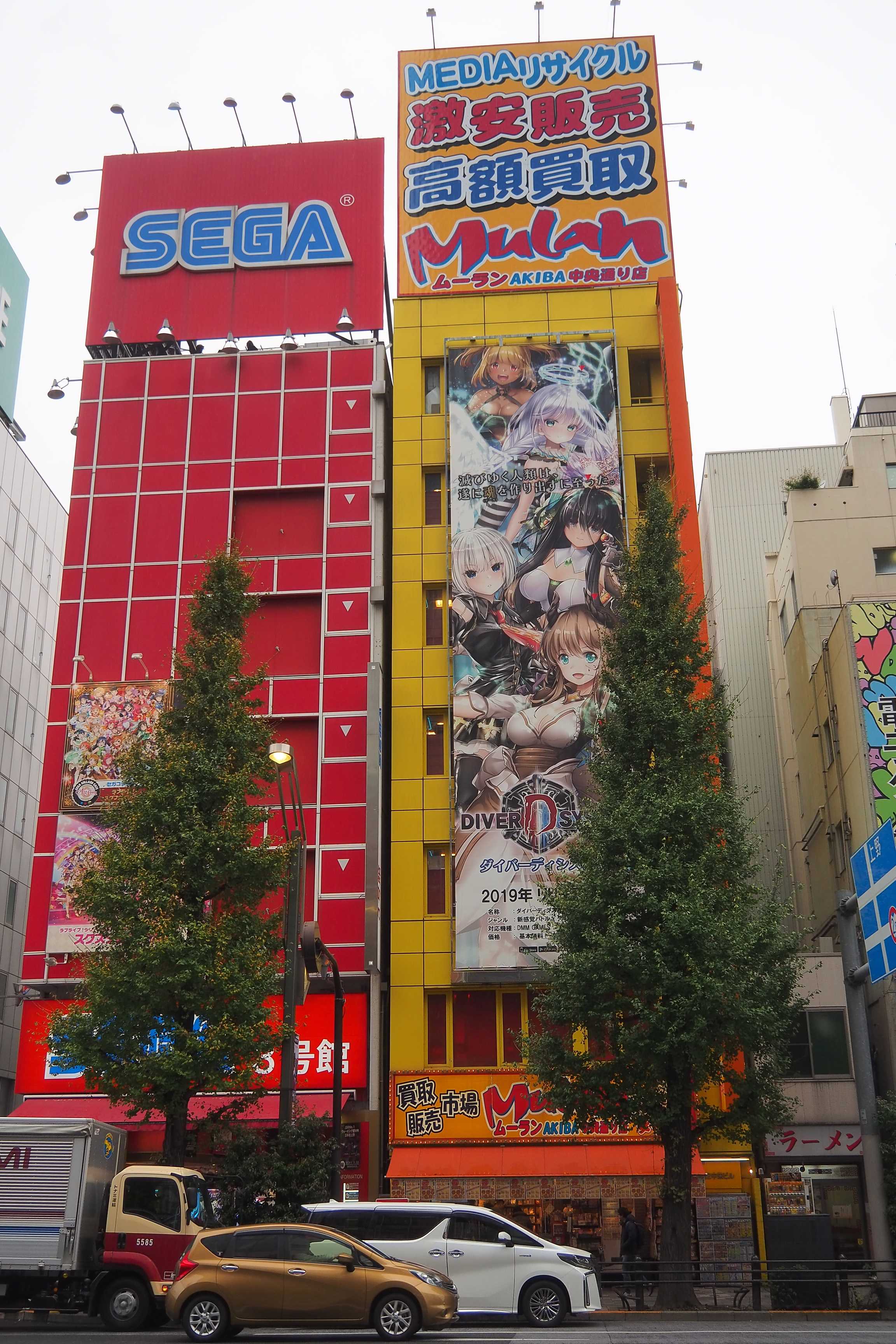
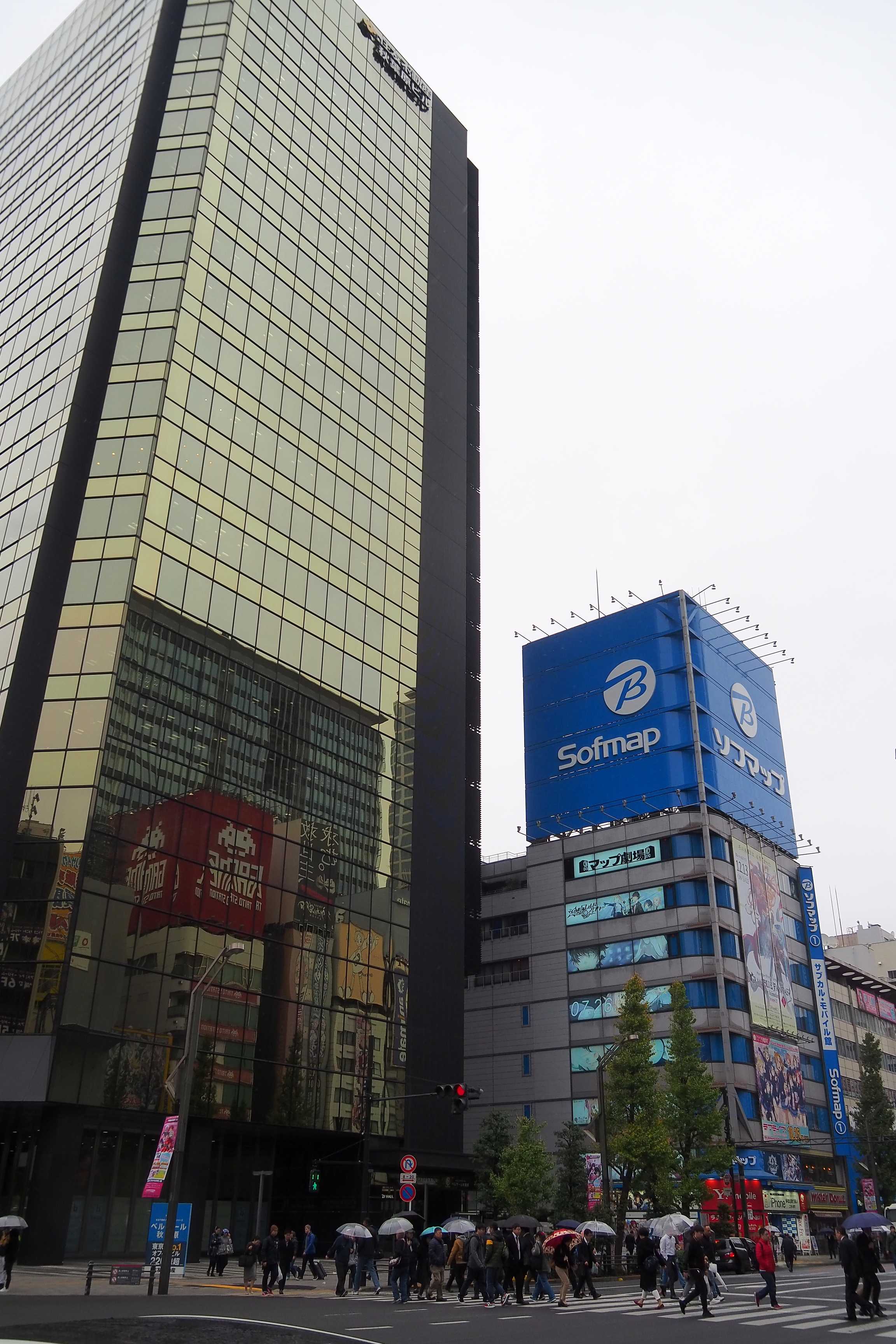
After capsule hotels, here are capsule toys! These toy dispensers, often related to the manga or technological world, can be found almost everywhere in large cities. These small machines are very successful in Japan, as they target both children, always attracted by small surprises, and adults, probably compulsive collectors of their childhood toys...


Called gashapon in Japanese: "It is a Japanese portmanteau word derived from the contraction of two onomatopoeias, each corresponding to a sound: "gasha" for the sound of turning the crank of a vending machine; "pon" for the sound of the capsule falling into the machine's receptacle." © Wikipedia
Little slow-motion of the subway train arrival at Akihabara station...
Tokyo Tower
What is the only place to position yourself to no longer see the Tokyo Tower? Well, in the Tokyo Tower itself, of course. It's a shame to want to no longer have it in your field of vision because it is splendid, especially illuminated, and we enjoyed it a lot last night! Here we are at the foot of the structure modeled by architect Tachū Naitō, an optimization, a little larger and lighter, of its big sister the Eiffel Tower. When it opened to the public in 1958, it became, with its 333 meters, the tallest tower in Japan. It would remain so until 2012 when the Skytree would surpass it by another 300 meters...

As with the Eiffel Tower, the different elements were assembled with rivets. The whole weighs 4000 tons, which is 6000 tons less than the Eiffel Tower.


4 elevators serve the 2 observatories, the first, square-shaped, is 145 meters from the ground, the other, circular, is at 250 meters.


Photo on the right, the small circular platform where we will be shortly.


Here we are at the first observatory amidst the tangle of red beams.

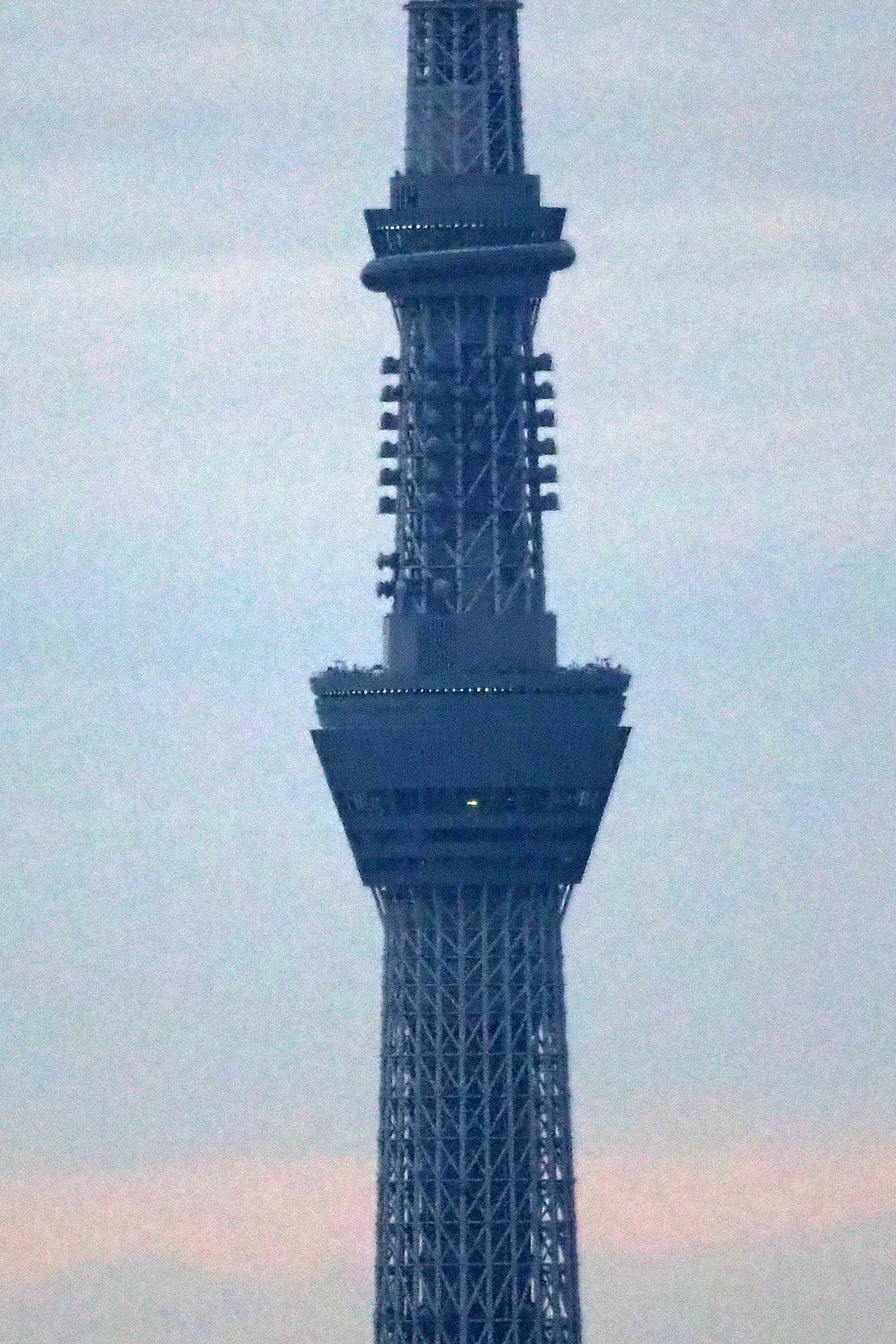
In the distance, we can see the slender Skytree tower, twice as tall as the tower we are in! Tonight, we will be 8 kilometers from here, on the small, slightly spiraled platform that can be distinguished under the slender antenna. 


In the distance, it is not the Pacific Ocean that we see but just Tokyo Bay, a large rectangle of 1300 km² connected to the ocean only by its southern base.


The Sumida River passes under Tsukiji Bridge to reach the bay.

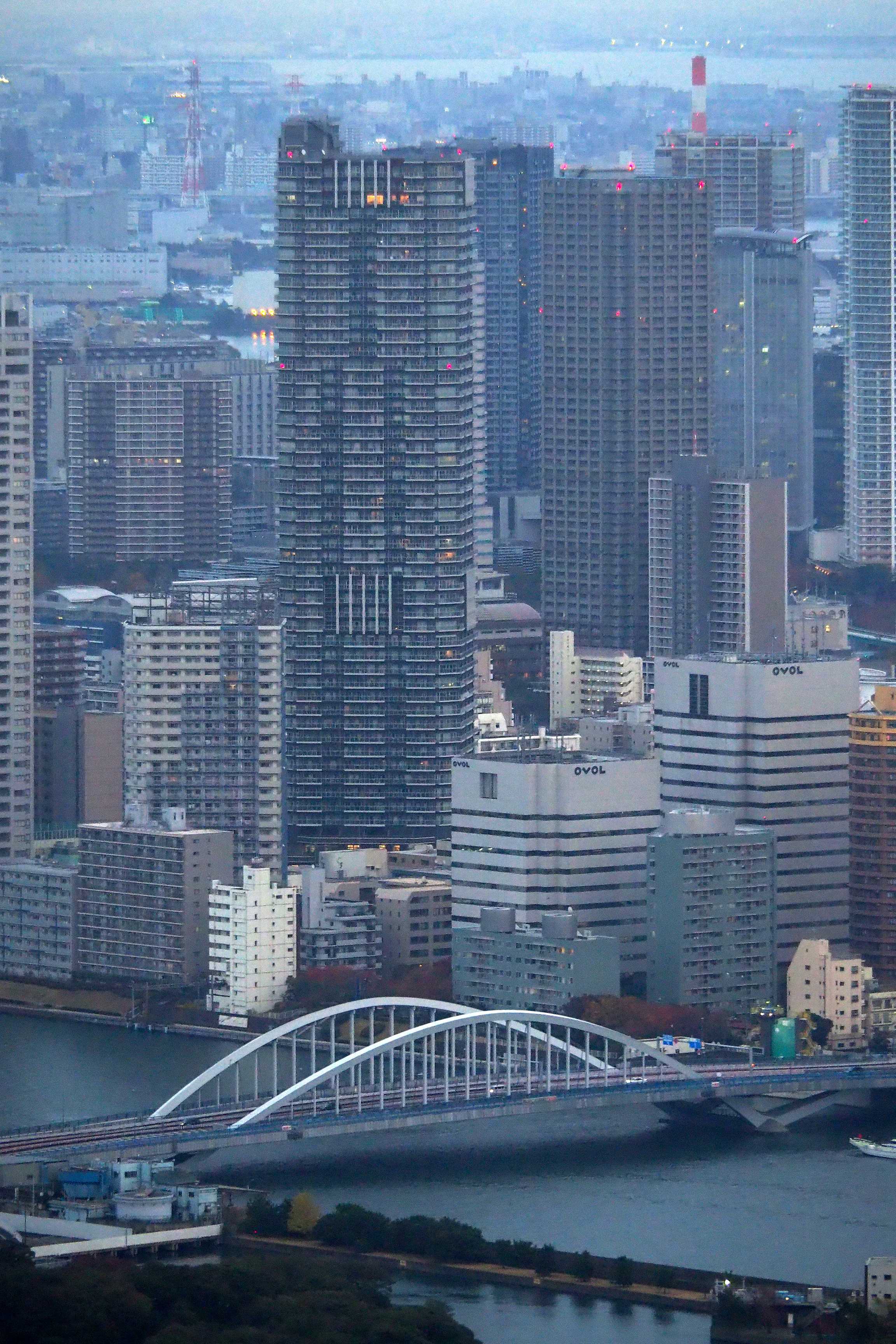
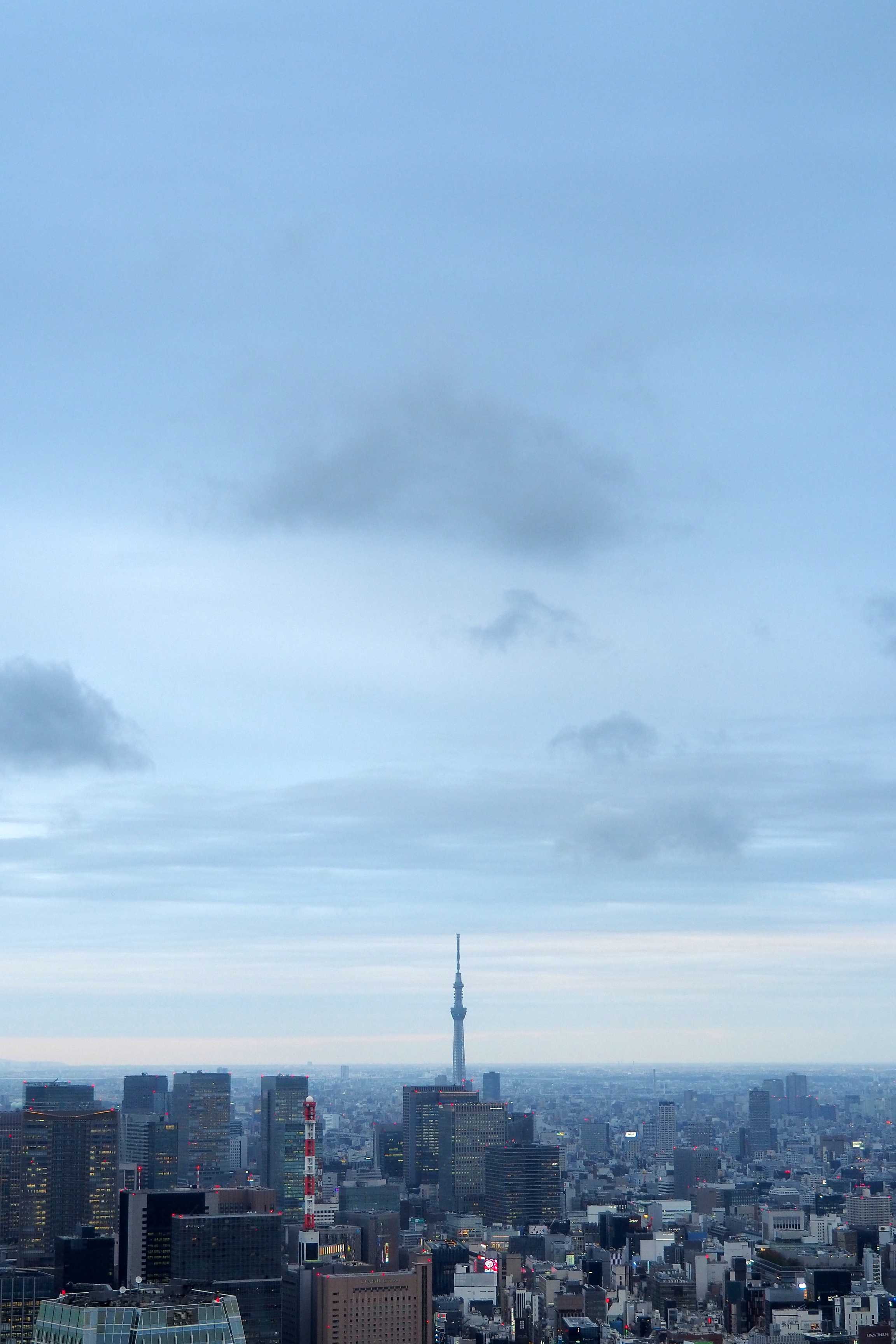
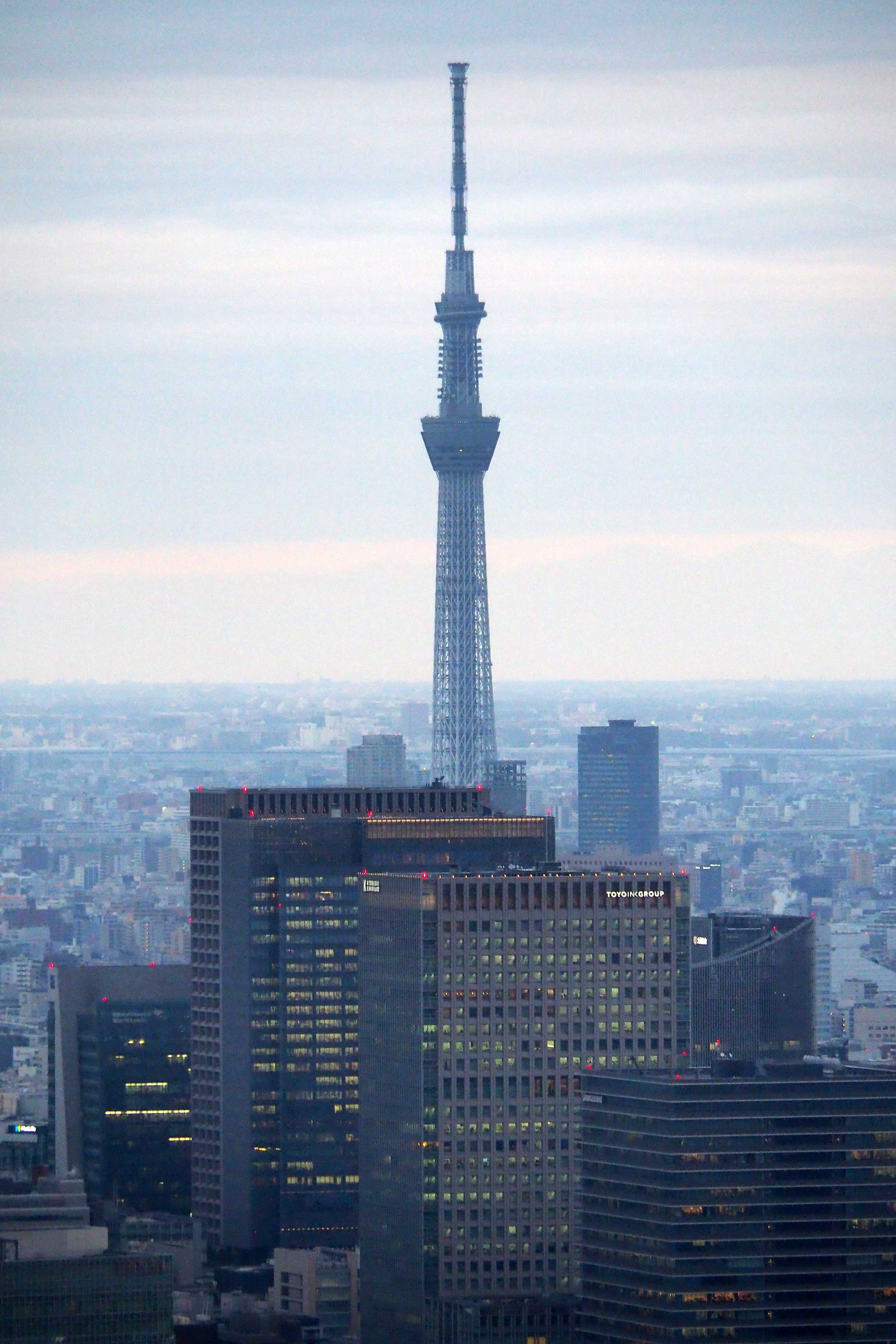
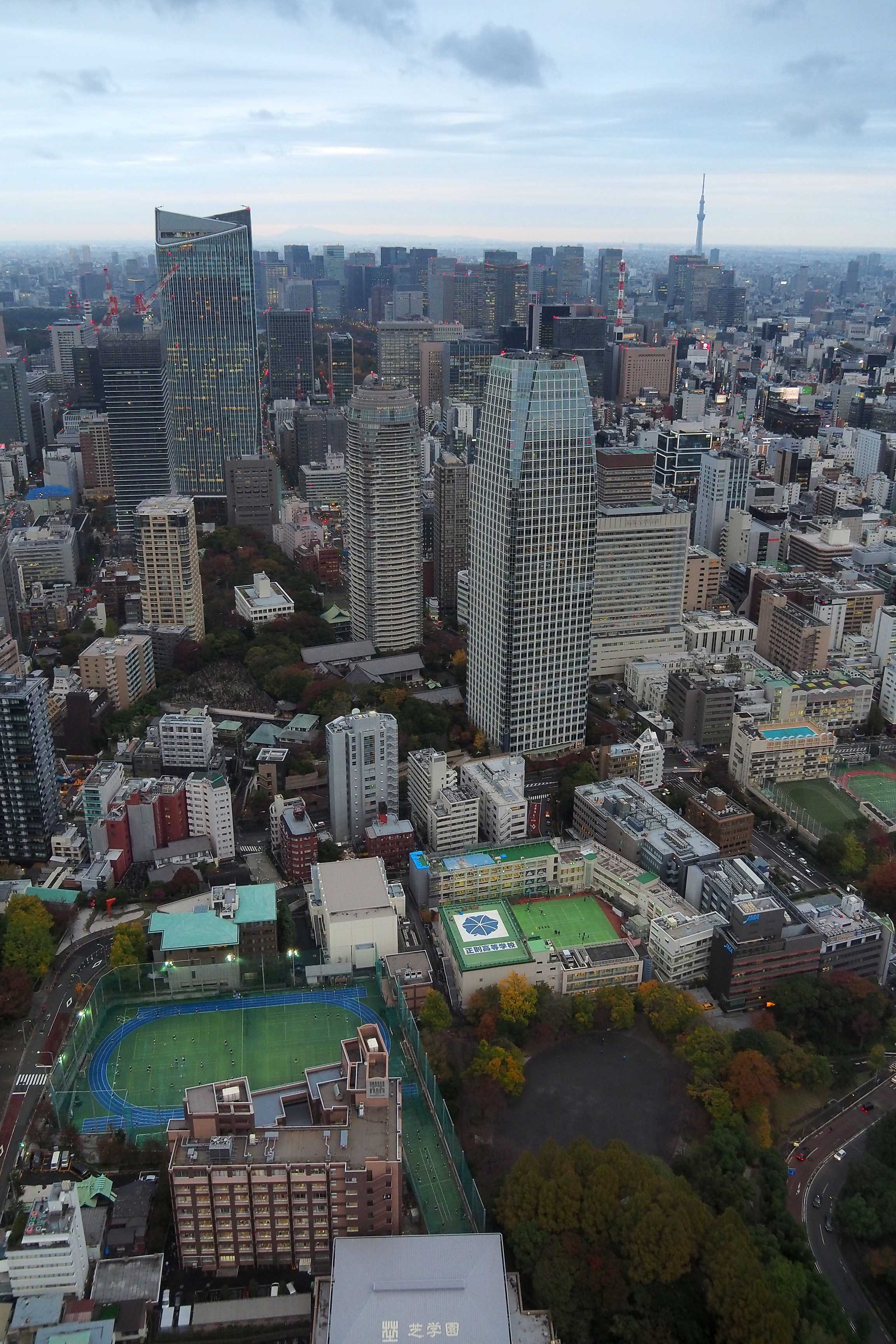

The entanglement is not only of steel in the tower, but also all around it in the anarchic assembly of towers and other skyscrapers...
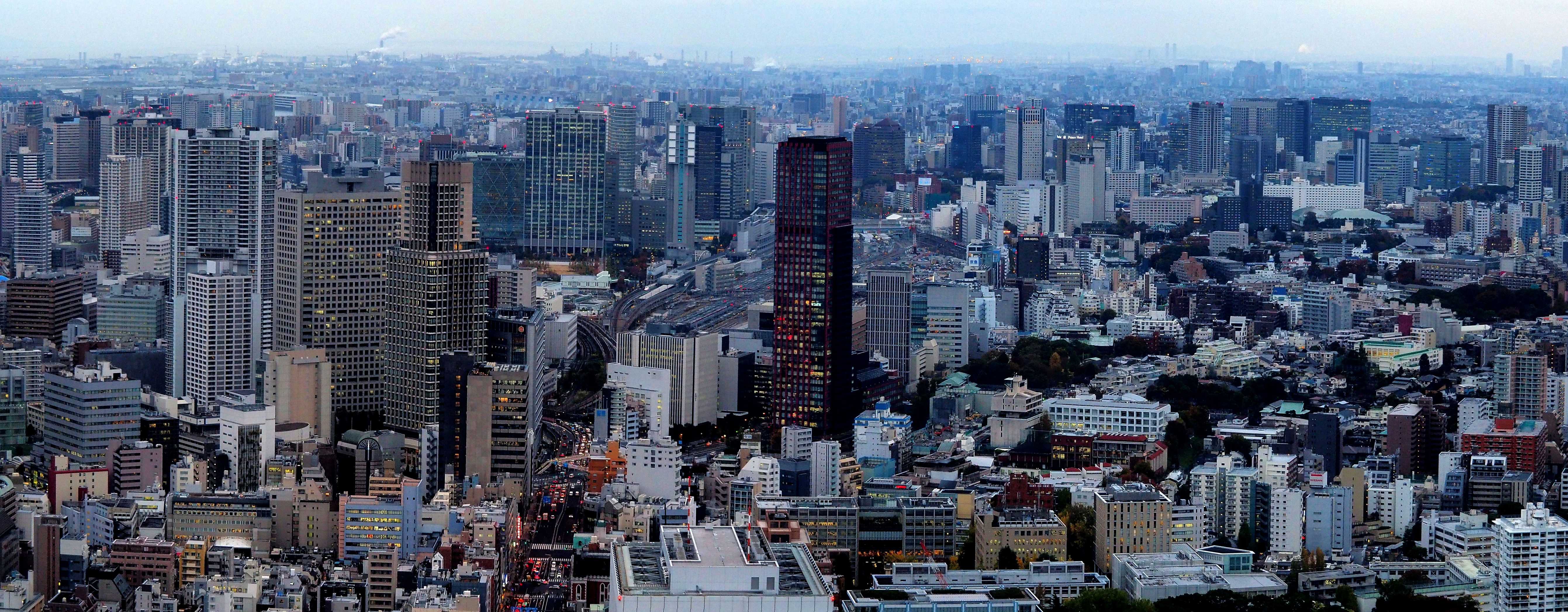
Apartment tower and office tower...

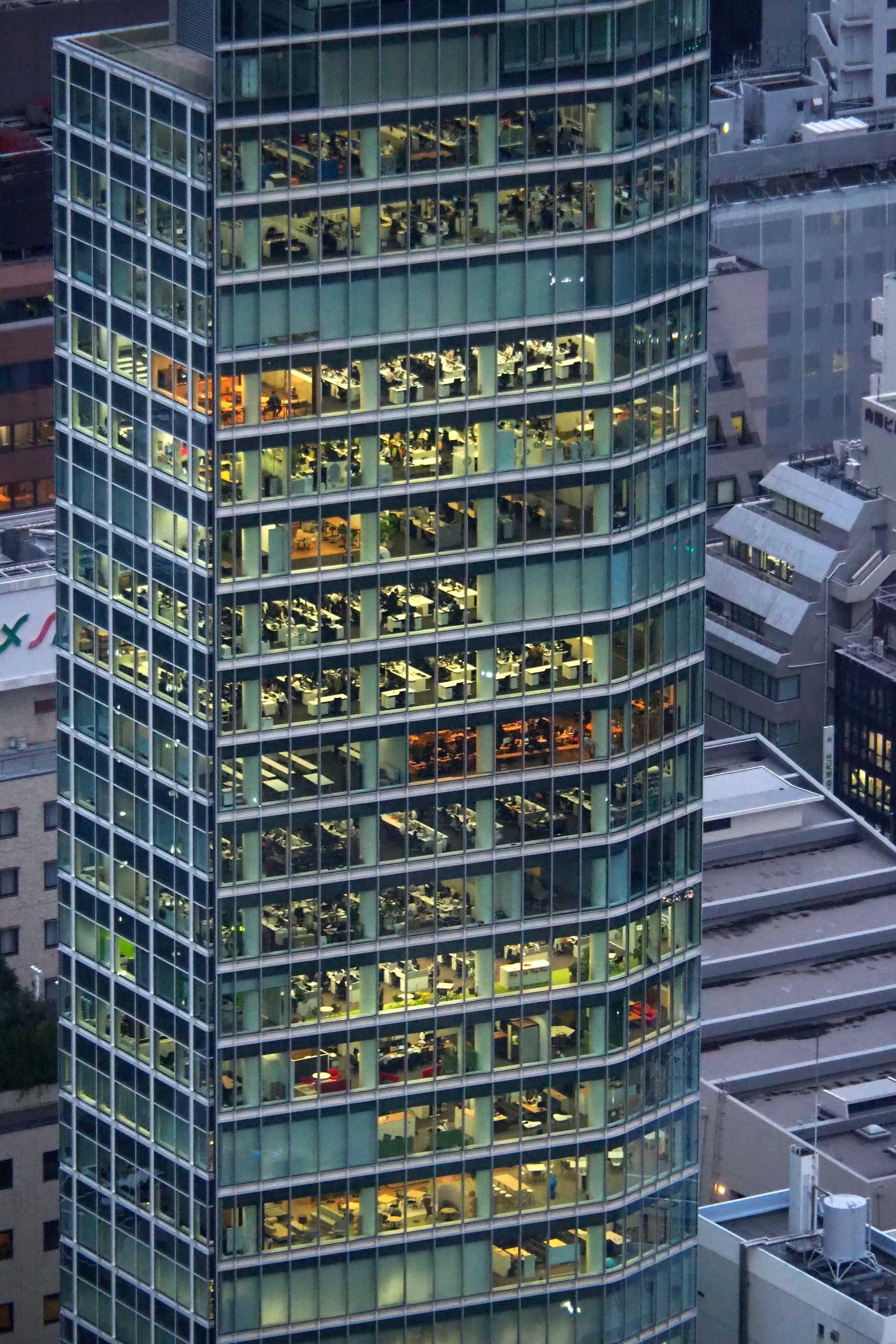
And offices, more offices, always offices.
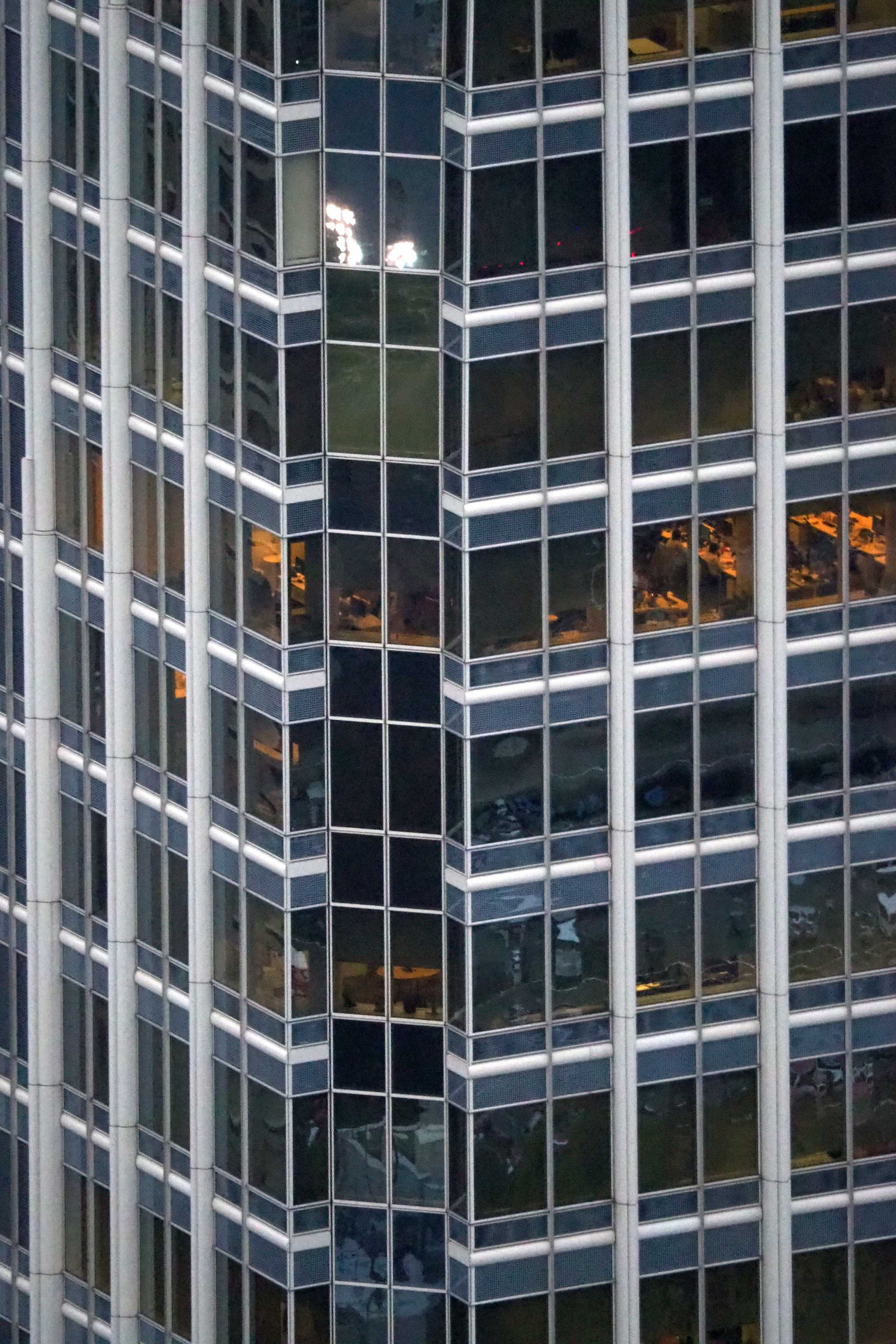


Here are the two platforms of the Skytree. 100 meters separate the two observatories... Tonight, when we are on the second platform, we will still have 180 meters of antenna above our heads...



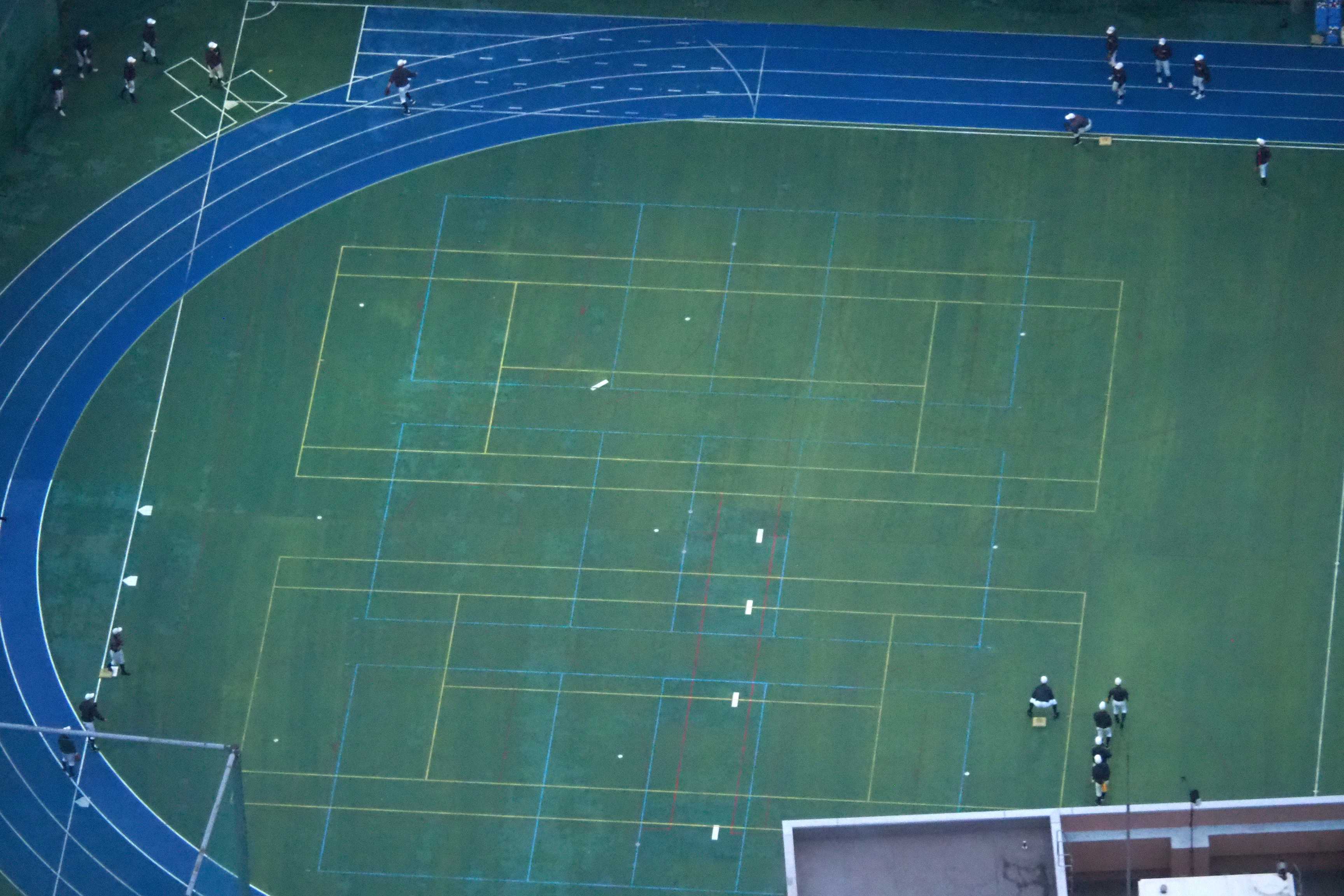
Some sports fields, including a baseball field, one of the first sports practiced in Japan.

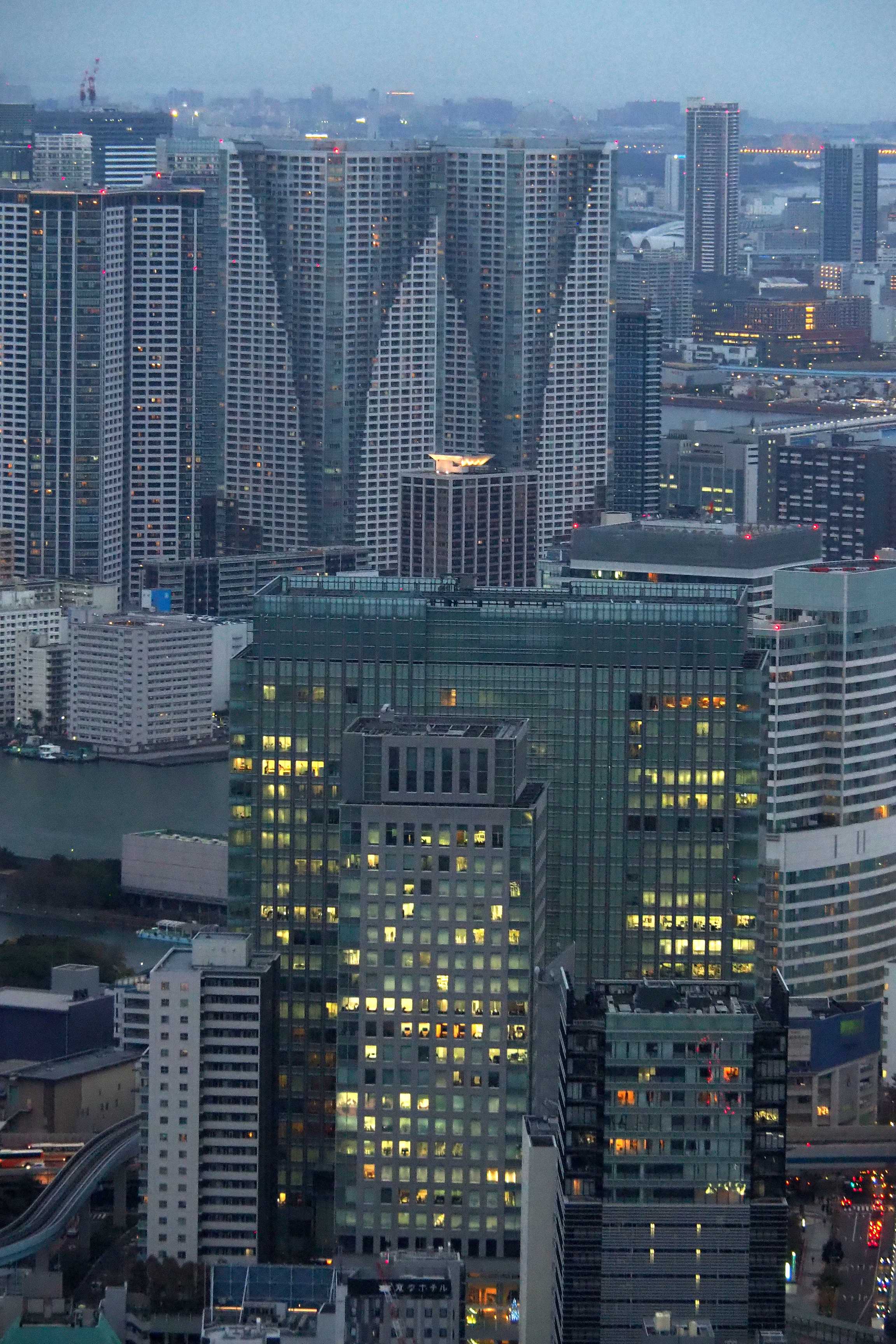
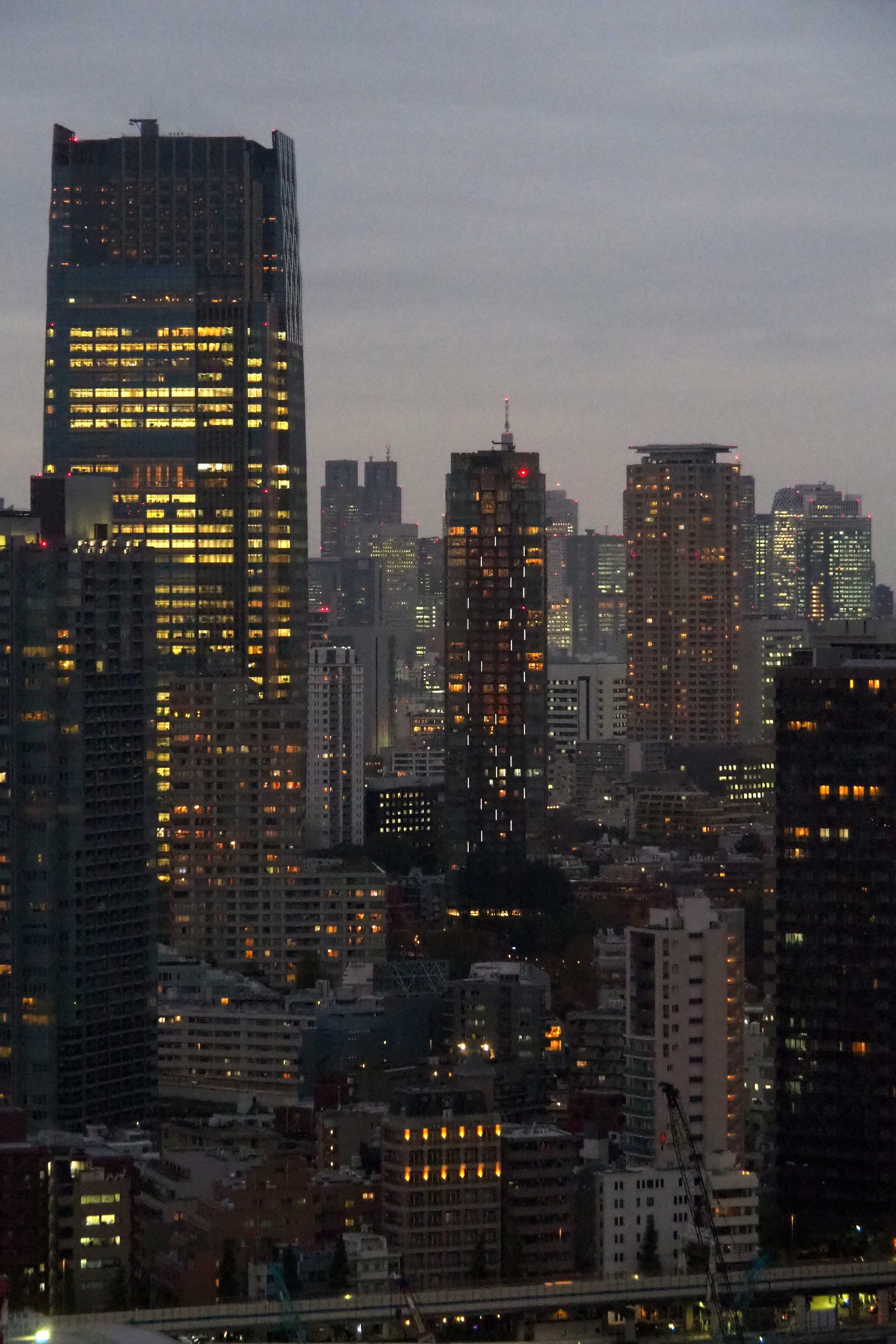
Night is falling, I'll be able to do my usual light trails.


The mosaic of illuminated windows begins to take shape as offices light up. The Skytree also switches to night mode.


We were there last night, the Daikanransha Ferris wheel and the Rainbow Bridge.


The lines of light in the sky are planes landing at Haneda International Airport.

Transparent bricks adorn the floor to enjoy the 145 meters that separate us from the ground.


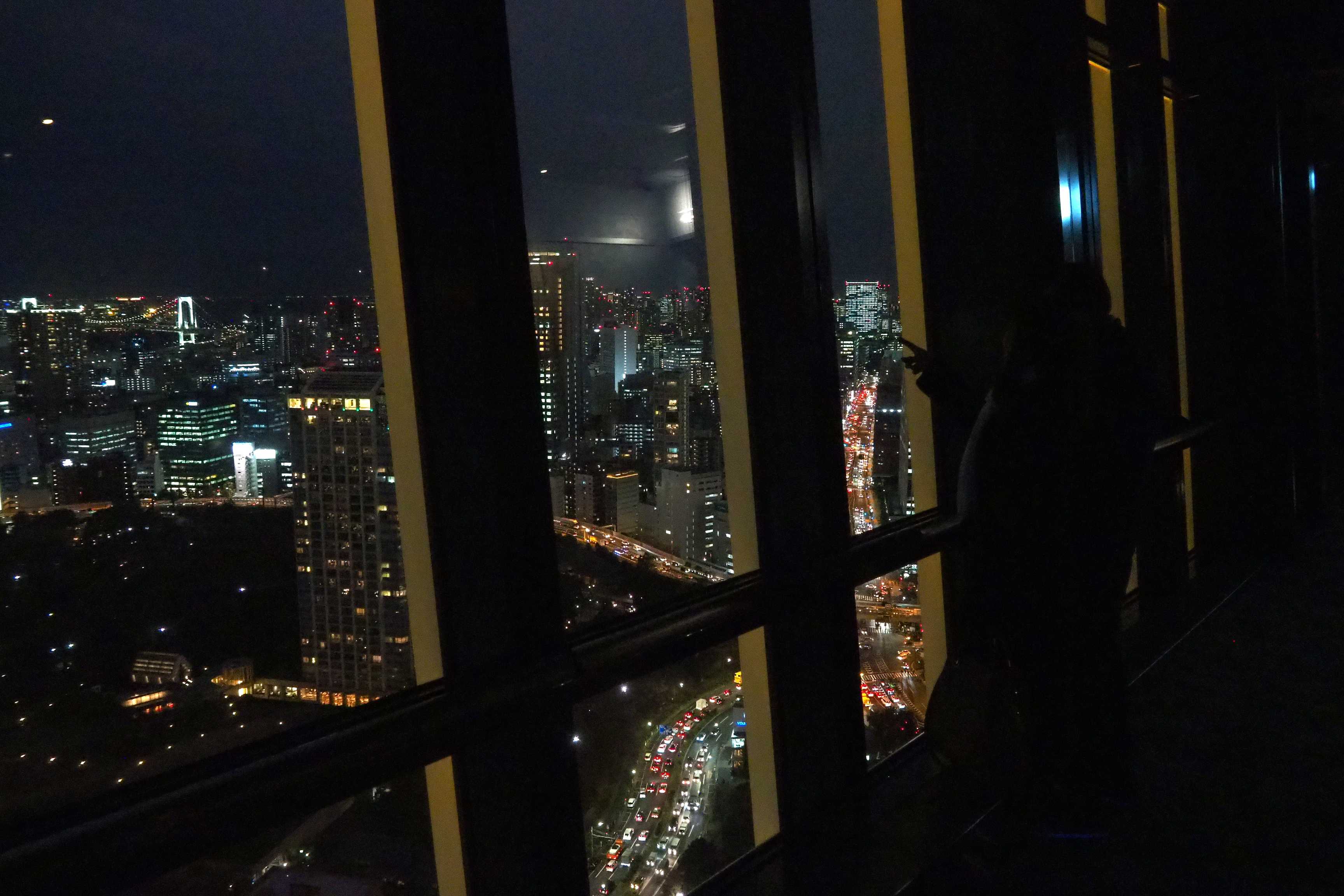
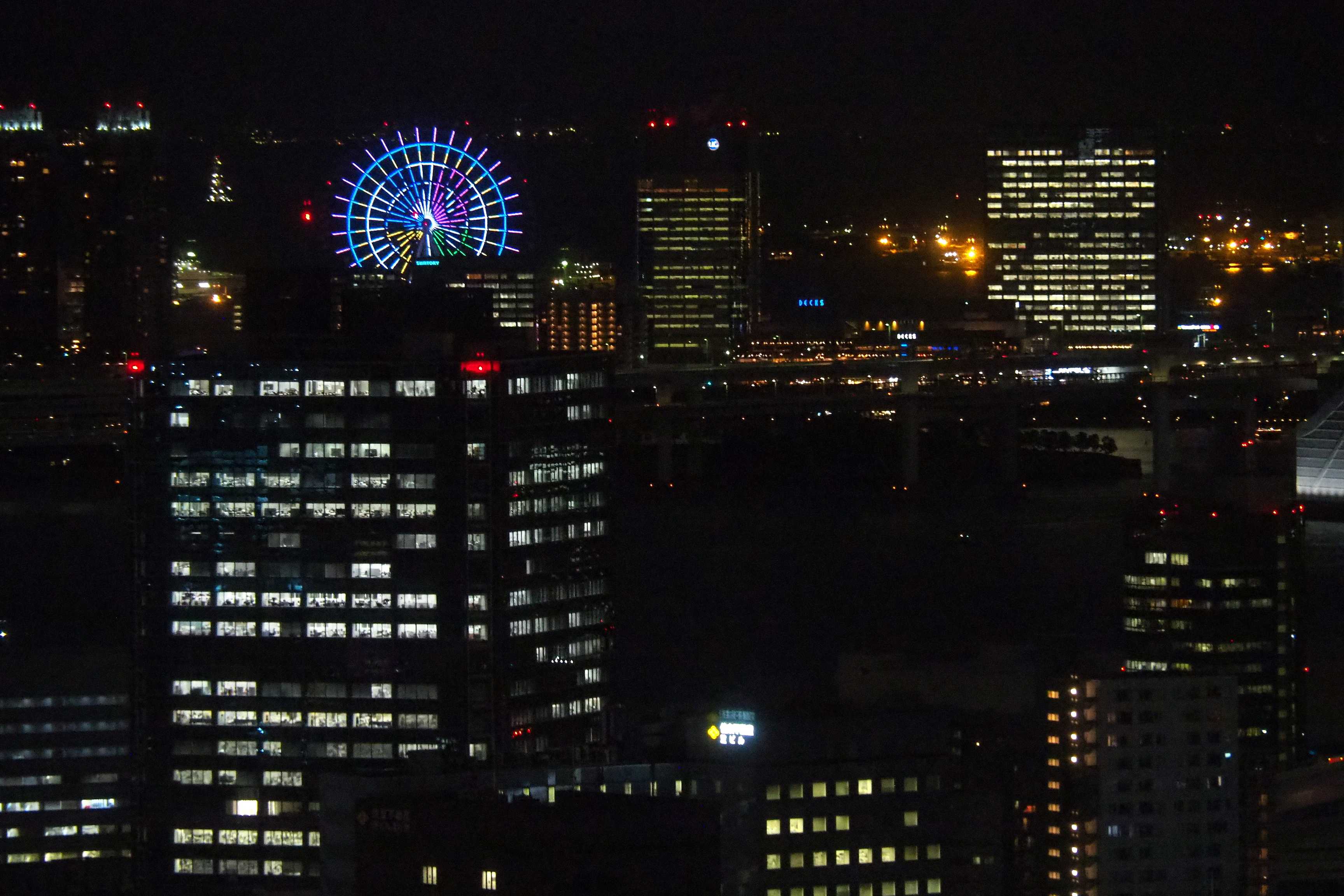

The Akabane Bridge spans Sakurada Dori Avenue.

And it is over. One of the 4 elevators takes us back to the foot of the tower's feet.


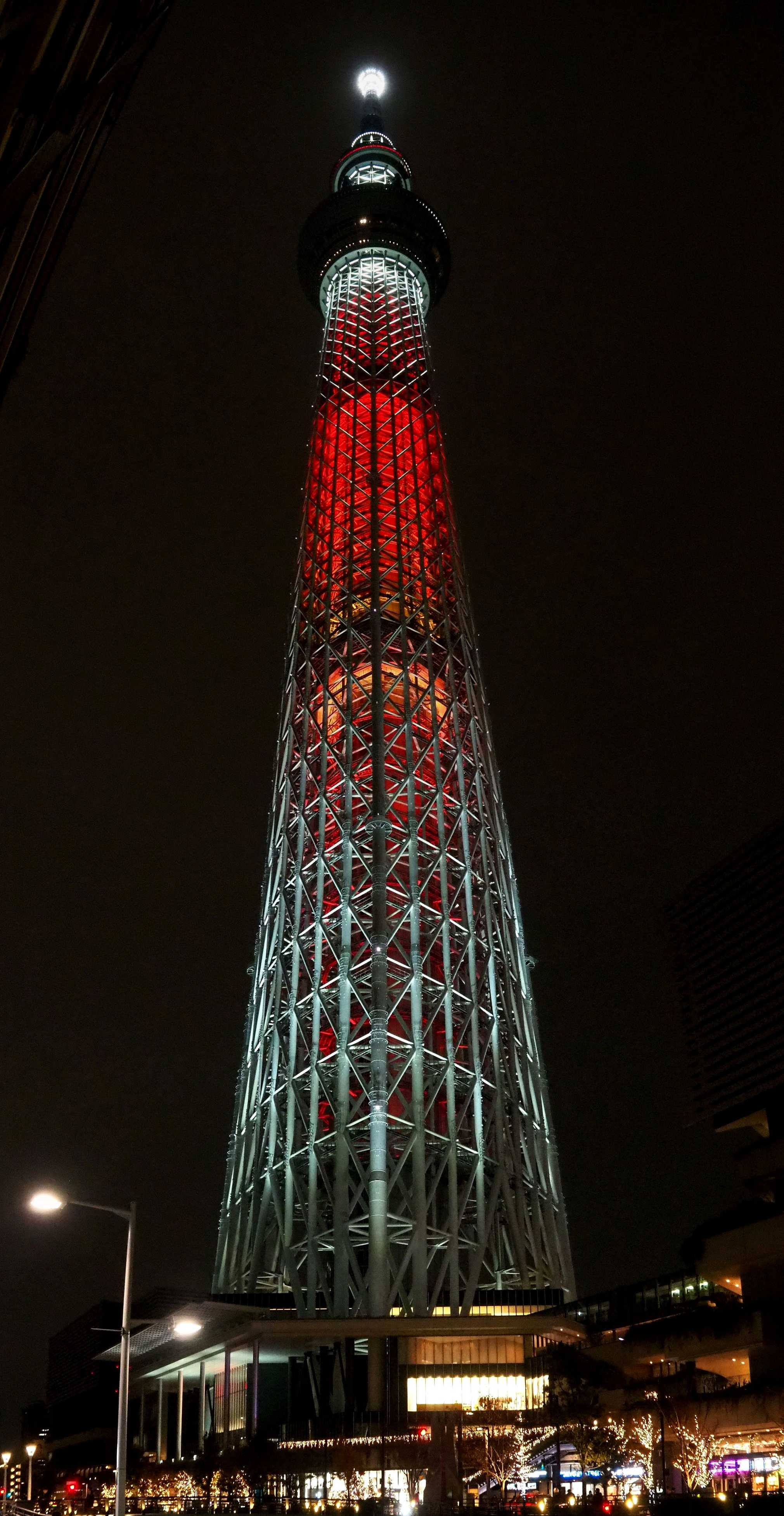
And again the plunging view under the tower's skirt, this time illuminated by its 176 projectors.


The Skytree
After the second tallest tower in Tokyo, here we are in front of the first one. It even prides itself on being the second tallest self-supporting tower in the world.
The light point is located 634 meters from us...

"A self-supporting tower or freestanding structure is an architectural structure whose stability is ensured solely by the rigidity of its form. The Skytree has three legs for maximum stability and better resistance to earthquakes. Its shape from mid-height is cylindrical for better wind resistance." © Wikipedia
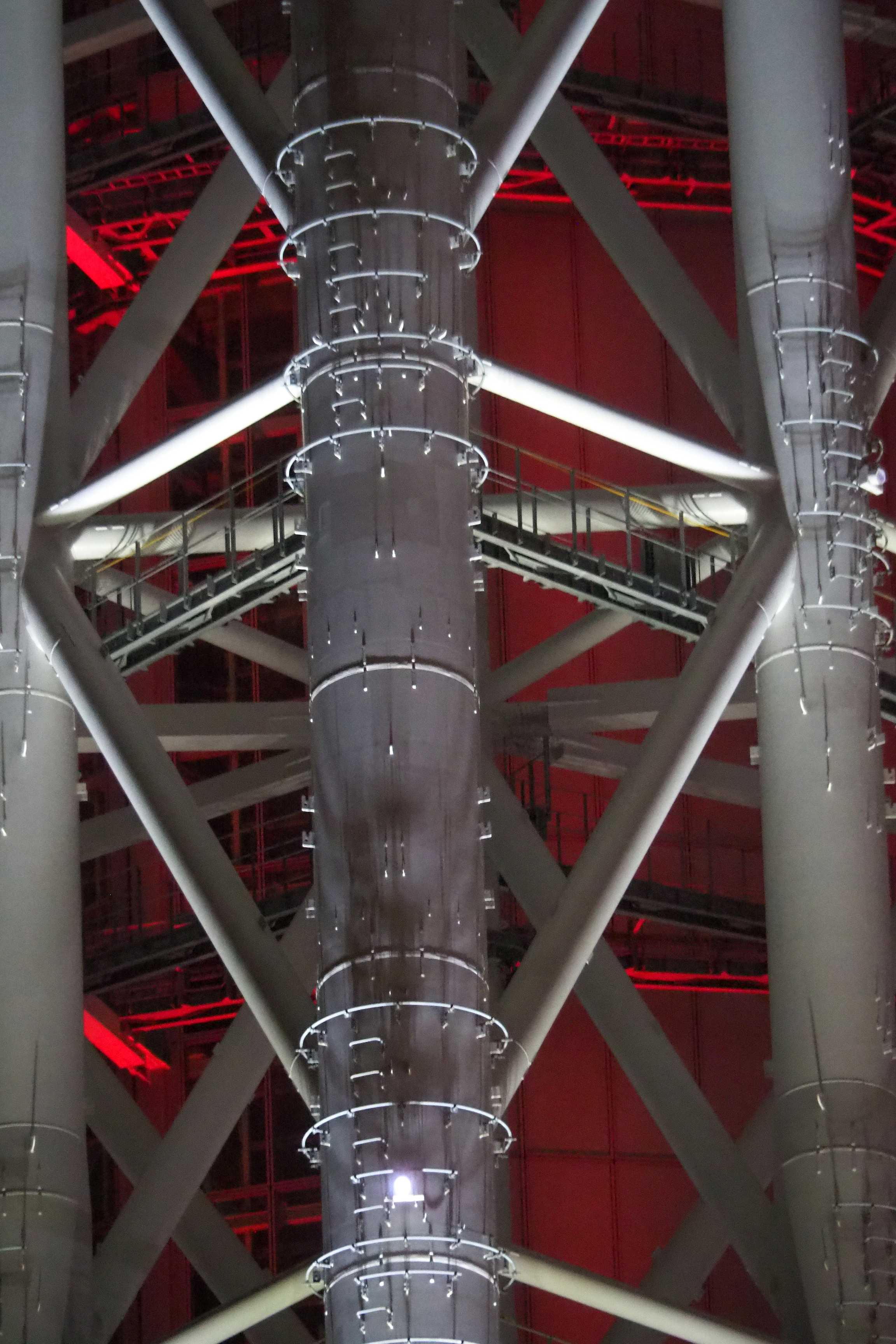


The tower is a broadcasting antenna.
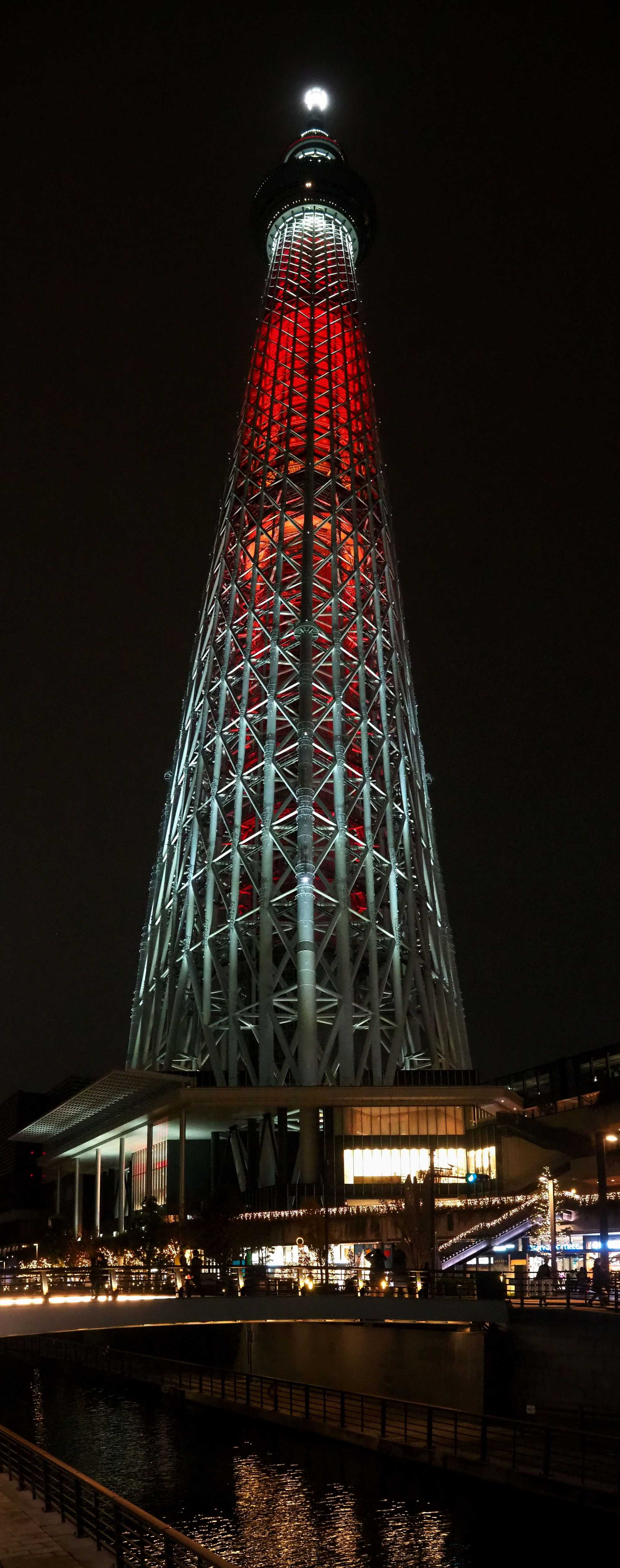


In the hall, some of the world's tallest towers are presented. The world's tallest tower, the Burj Khalifa in the United Arab Emirates with its 830 meters, is missing.

Here we are on the first platform at 350 meters, already well above our Eiffel Tower...

Everything has become tiny.

Thanks to its projectors, the Tokyo Tower remains the most reliable landmark in our panorama. Between the two towers, 8 kilometers of buildings.


Let's move on to the second platform now. The vertical transfer is done by the elevator whose transparent ceiling instantly projects us into a real science fiction movie.

We still have a few meters to climb to reach the 450 meters of the highest platform. We recognize its rising spiral shape that wraps around the antenna.

The platform is not that big. Let's remember that it is a disc of 70 meters in diameter "suspended" 450 meters above the ground...

The tower is at the foot of the Sumida River.


The tour will be quicker to take some photos of Tokyo, whose buildings no longer seem distinguishable to the naked eye...


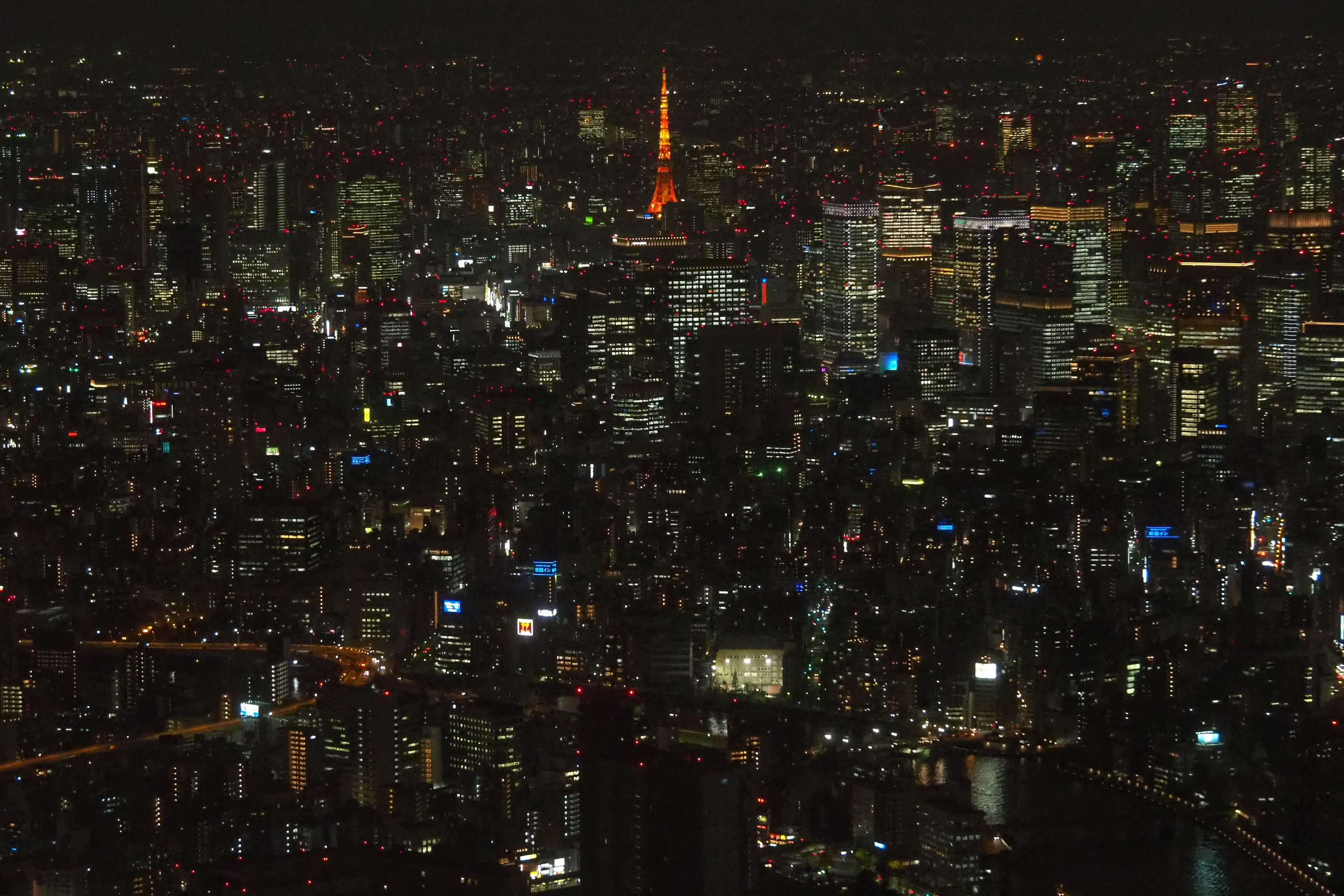
the Daikanransha Ferris wheel.


Return to 350 meters by the same elevator.

How about a small coffee in a bar located at 350 meters? Yes, of course!

In the distance, planes leave their headlights tracing lines of light on my camera's sensor.


As in the Tokyo Tower, a glass floor allows you to "levitate" above 350 meters of tubes...


Last look at the beautiful panorama before heading back to the hotel where our last Tokyo night awaits us! Tomorrow afternoon, we will take the shinkansen to Osaka!

Latest comments
On Guatemala 2018
Le 25 Novembre 2024
Significado de este mural
On Chile 2016
Le 15 Septembre 2024
Rrrrrr
On Egypt 2003
Le 1er Avril 2023
Et oui c'est bien nous aux pieds de ce Colosse !
Le 1er Avril 2023
Bien petits aux pieds de ce Colosse !
On Namibia 2014
Le 3 Août 2021
very good indeed