


 My blog
  Support me on Tipeee!


Thursday11November
Agrinio
Wake up at the Esperia hotel in Agrinio. Objective of the whole day: drive to reach Olympia. Yes, yesterday, we could not reach the island of Kefalonia due to lack of ferry, forcing us to drive a lot to resume the planned itinerary.


The Rio-Antirrio bridge
We pass onto the large Peloponnese peninsula, separated to the north by the Rio-Antirrio bridge.

"With a total length of 2,883 meters, the crossing consists of a multi-cable-stayed main bridge 2,252 meters long framed by two access viaducts. This 2004 structure held for four months the record for the longest cable-stayed deck with its 2,252 meters. This record held until December 16, 2004, date of the opening of the Millau Viaduct, whose cable-stayed deck length is 2,460 meters. Since 2013 and the construction of the Jia-Shao Bridge in China, it remains the third bridge with the longest cable-stayed deck in the world." © Wikipedia


Spiatza
After taking possession of our rental located in the town of Strefi, not far from Olympia, we go to enjoy the sunset on the beach of Spiatza.


Friday12November
Strefi
That's it, it's the day of our Olympics! Well, almost, we are going to visit the ancient site of Olympia. And instead of the athletes' village, we are staying comfortably in the whole house (and its floor) of our Airbnb hosts!


Olympia
Let's go for the visit of the archaeological site of Olympia where, right from the entrance, restoration is in full swing. With Delphi, these are the unmissable archaeological sites of Greece.


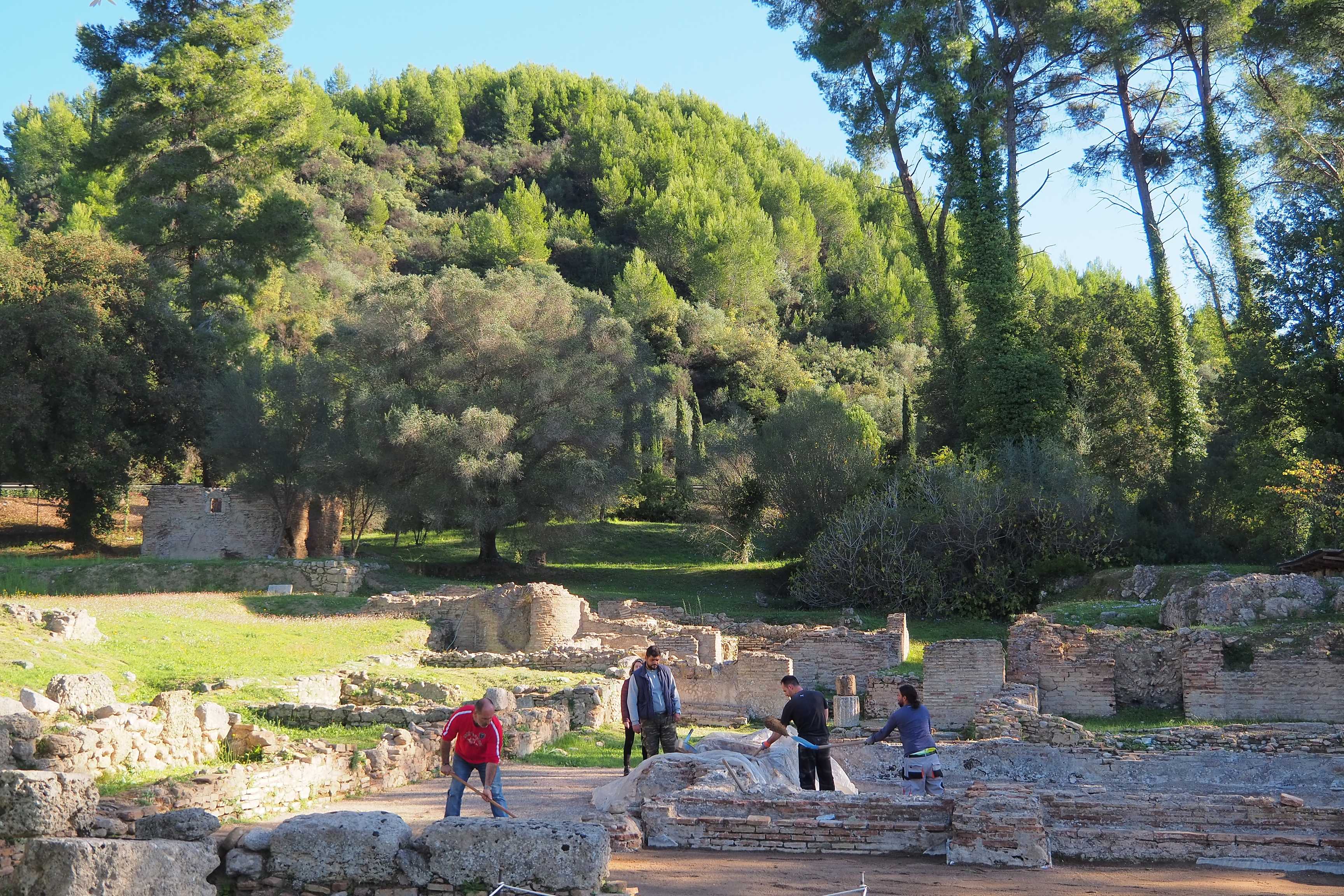
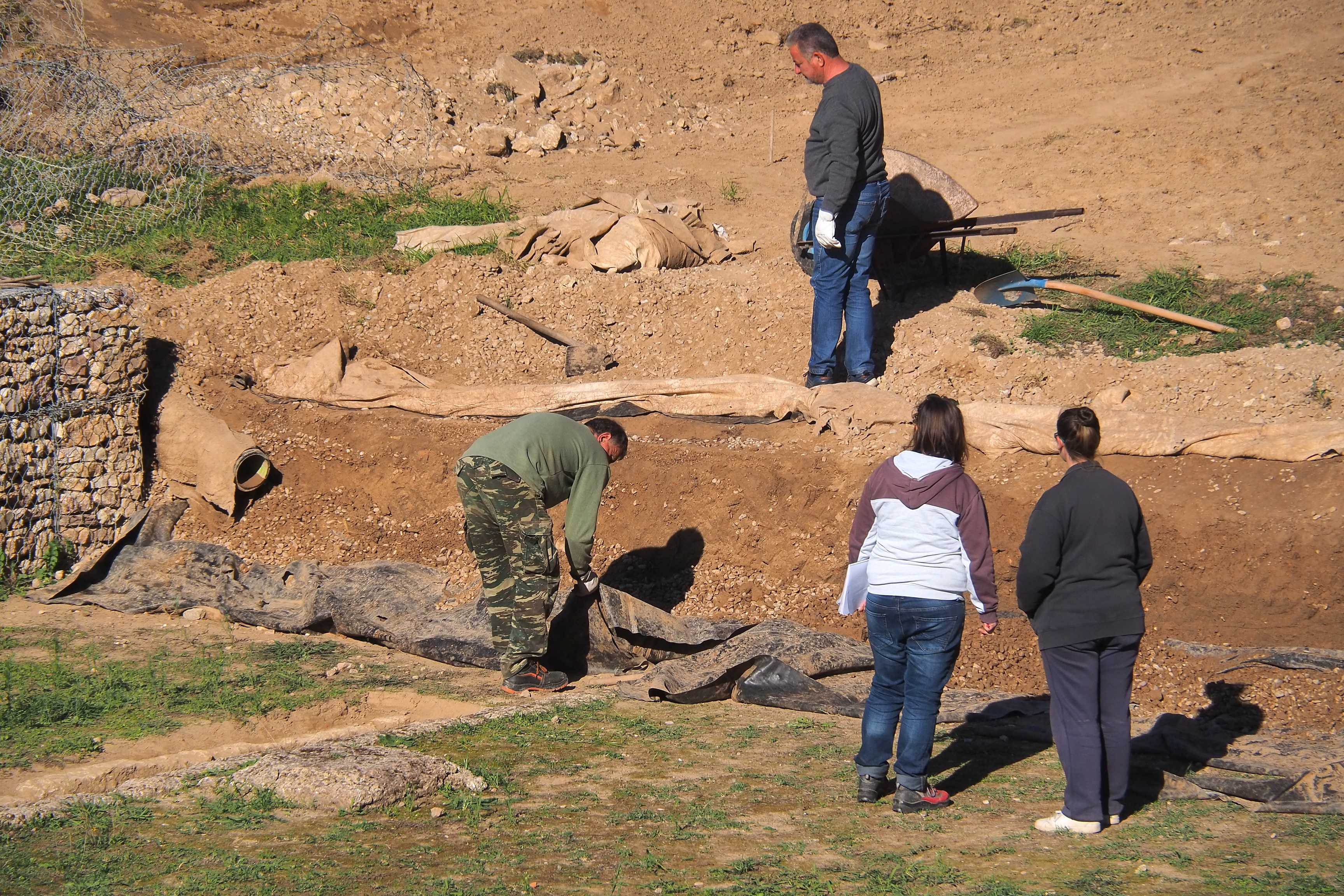
"Olympia was a sanctuary, and not a city, inhabited only by temple staff and cult priests. The sanctuary was dedicated to Zeus, under whose aegis Games were held, every four years, starting from 776 BC. At the time of these Games, it is estimated that more than 40,000 people were present on the site (athletes, spectators, merchants, artisans, poets, sculptors and architects)." © Wikipedia

The 192-meter gymnasion, used for running, javelin throwing and discus throwing.
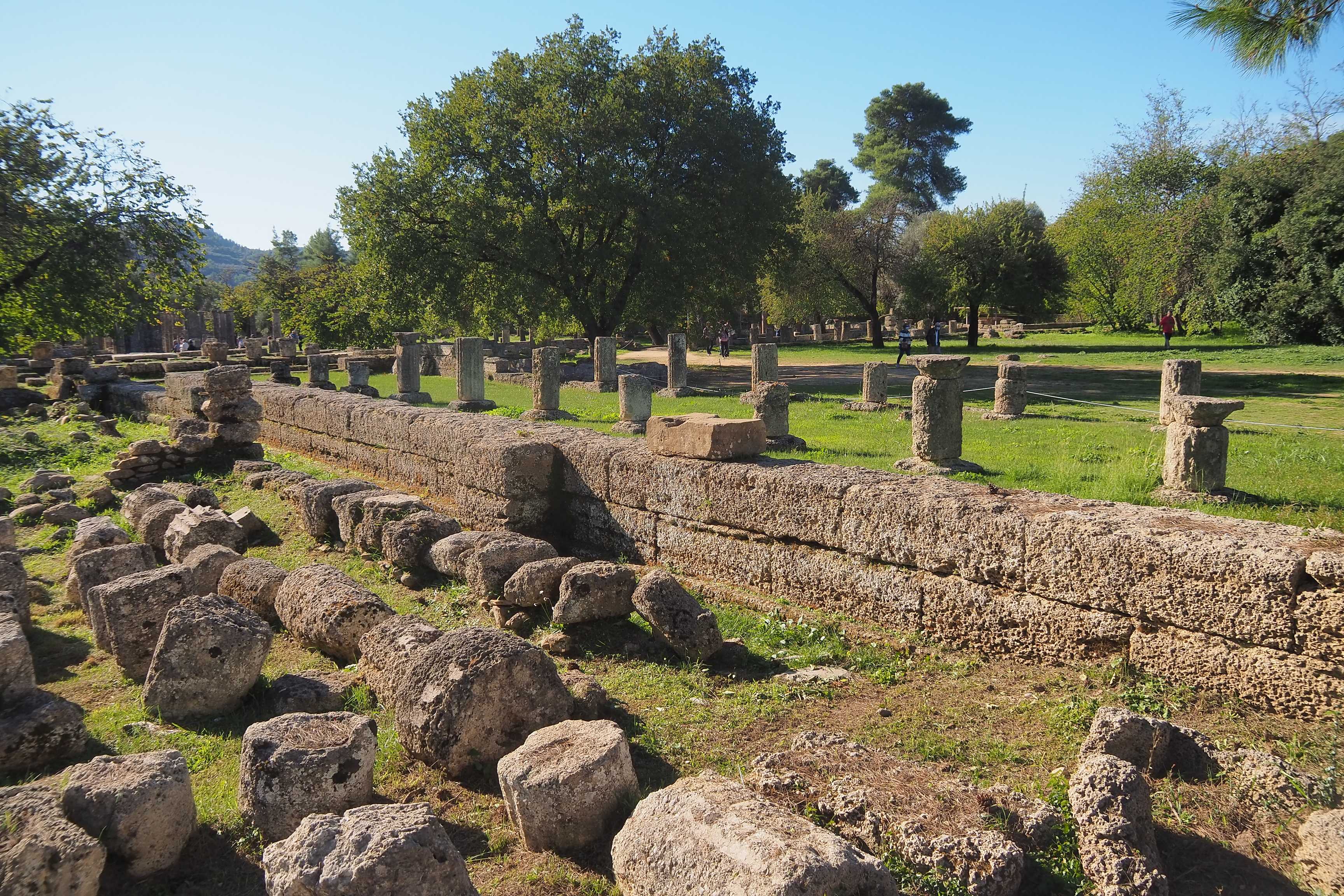

The Philippéion
In the 4th century BC, Philip II of Macedon commissioned the Philippeion, a round building (a tholos) encircled by 18 columns surrounding statues representing him and his family, including his son Alexander the Great.


The temple of Hera
The temple of Hera in Olympia dates approximately from 590 BC. It is generally here that the first lighting of the Olympic flame takes place before each game of modern times.


Steles with inscriptions that I let you translate... 


The Stadium
This arch which dates from the 1st century BC is what remains of the tunnel through which athletes had to pass before arriving at the great Stadium.


The stadium measures 192.35 meters (600 ancient feet...) by 30 meters. On each side and at the back, the sloping embankments could accommodate 45,000 spectators! Only men were admitted because the athletes ran completely naked...

The starting line of the time, all in marble and always ready to receive runners.


Obviously, many cannot resist reproducing the ancient races... 


The Echo Stoa
"Otherwise known as Stoa Poikile (meaning painted stoa) due to the paintings that once lined the hall, the stoa later became known as Echo Stoa due to the acoustics of its design. It is said that a spoken word would echo seven times. Nearly 100 meters long, it was probably started after the mid-4th century, but was not completed until long after." © Wikipedia
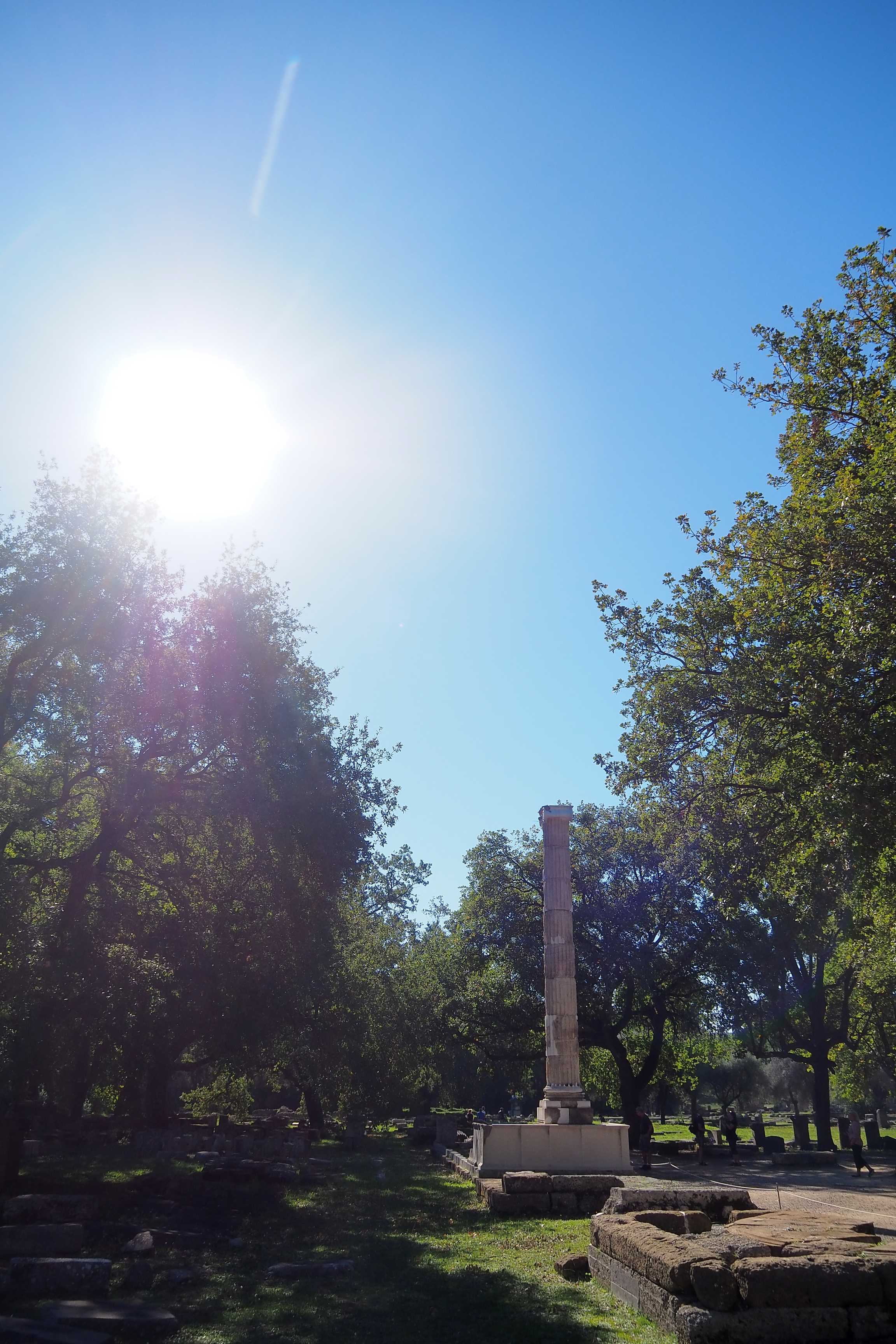


The Victory of Paionios
The column that supported the statue of the "Victory of Paionios" which we will see later in the museum.


The temple of Zeus
This 5th century temple was undoubtedly the most impressive on the site. Six columns on the facade by thirteen on the side (64 meters by 24 meters). The temple mainly housed what was considered the 3rd wonder of the world, the chryselephantine statue of Zeus. It was 12 meters high (including 3 meters for the pedestal) and was made of wood, gold and ivory (hence its name chryselephantine). The statue was moved to Constantinople and disappeared in a fire in 432 BC. Only one column has been restored and put back on its feet.

The other asset of the temple was its pediments, composed of dozens of statues in Parian marble (the name of the island where the marble was extracted) which we will also see at the museum...


The Palaestra
The Palaestra was the training hall for wrestlers and boxers. The building measured 66 meters on each side, consisting of a central courtyard covered with sand, surrounded by a double row of columns topped with a wooden roof.


The baths
The baths and thermals with their mosaic floors.


Phidias' workshop
"The statue of Zeus was sculpted by Phidias' workshop around -440 / -430. Out of veneration for the sculptor, the workshop was preserved until the 5th century. It was then transformed into a Christian basilica." © Wikipedia

The interior of the workshop with its brick walls.


The temples were built of shelly limestone, limestone rock consisting of remains of organisms whose mineral envelope is still visible.


The temple of Zeus.


Leonidaion
"The Leonidaion, is a building constructed in 330 BC. Its name comes from its donor and architect Leonidas of Naxos. It served as a hotel and welcomed official visitors and athletes." © Wikipedia


The Pyrsos Statue
We leave the archaeological site and pass right next door into the modern city of Olympia to reach the archaeological museum. The road passes by the Pyrsos statue inspired by a winged Nike.


The Archaeological Museum of Olympia
"The museum houses discoveries made on the Altis, the site of Olympia: objects ranging from prehistory to Roman times. The extent of its collection of ancient bronzes makes it the largest in the world." © Wikipedia


Zeus kidnapping Ganymede (5th century BC).

The Victory of Paionios (around 420 BC).


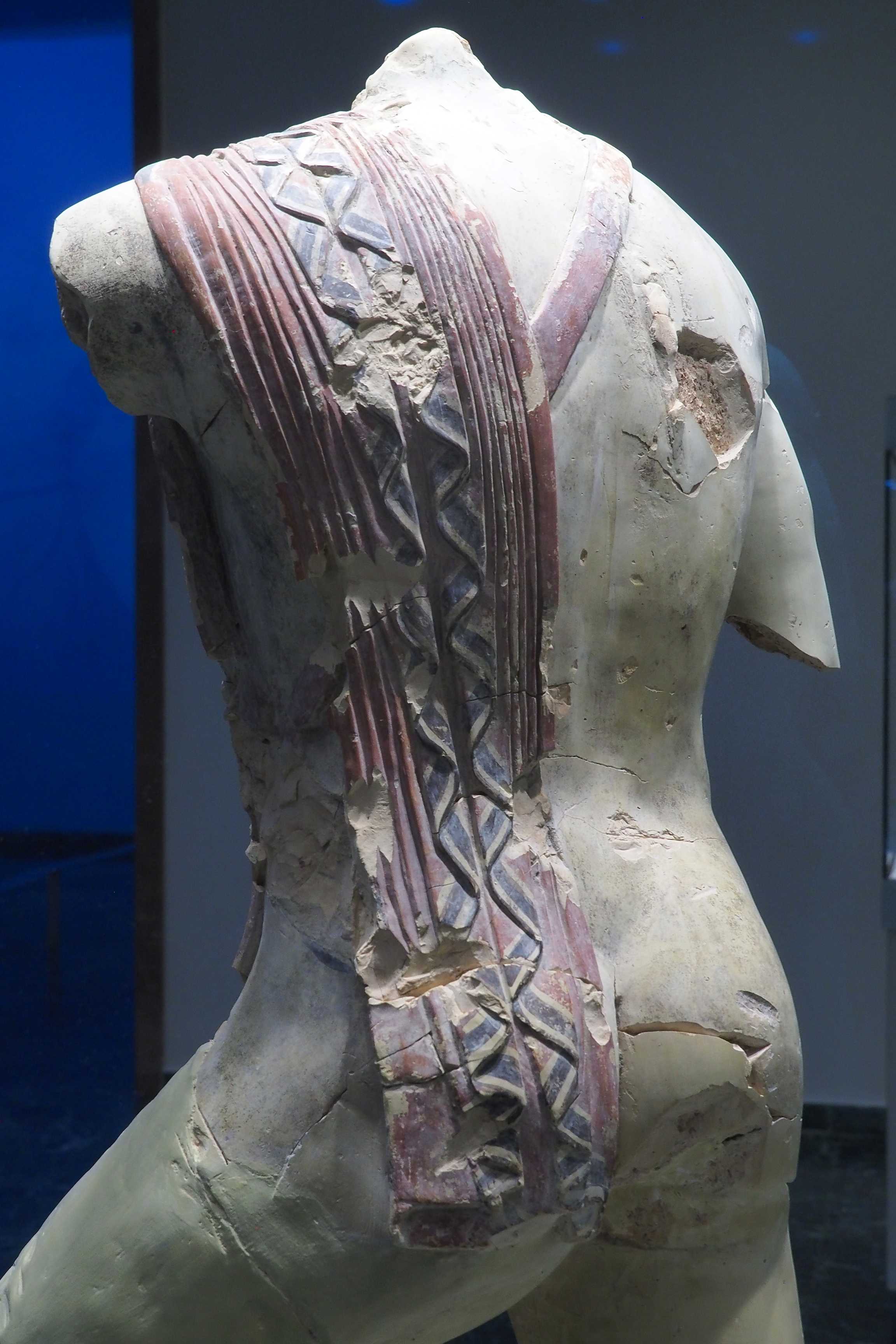
A nude warrior and his tunic with its original colors (around 490 BC).

Artist's view and model of the statue of Zeus in the temple of Zeus. Right photo: a model with a man at the entrance of the temple facing the huge statue.


Hermes carrying the infant Dionysus, or Hermes of Praxiteles (4th century BC).


Detail of the foot integral with the base.

"It seems probable that the group represents the mythological episode where Hermes carries to the nymphs of Mount Nysa the newborn Dionysus, so that they raise him in hiding from Hera. On the way, Hermes rests and takes the opportunity to distract the young child by shaking in his right hand an object that Dionysus tries to catch. It has therefore been assumed that the stone Hermes held in his right hand a musical instrument, like crotales — or even a thyrsus, or a drinking goblet. However, a fresco from the Casa del Naviglio in Pompeii pushes to prefer the hypothesis of a bunch of grapes." © Wikipedia


And details are also found behind... But not where you think, but rather in terms of finishes. Indeed, the back was not polished like the torso, one can roughly see the traces of tool passages.


Roman Emperor Hadrian (~160 AD).

On the left and right, Marcus Aurelius, at least what remains of him...


On the left, Poppaea Sabina, the second wife of Emperor Nero. On the right, Emperor Titus.


A model of the village of Olympia in its heyday.


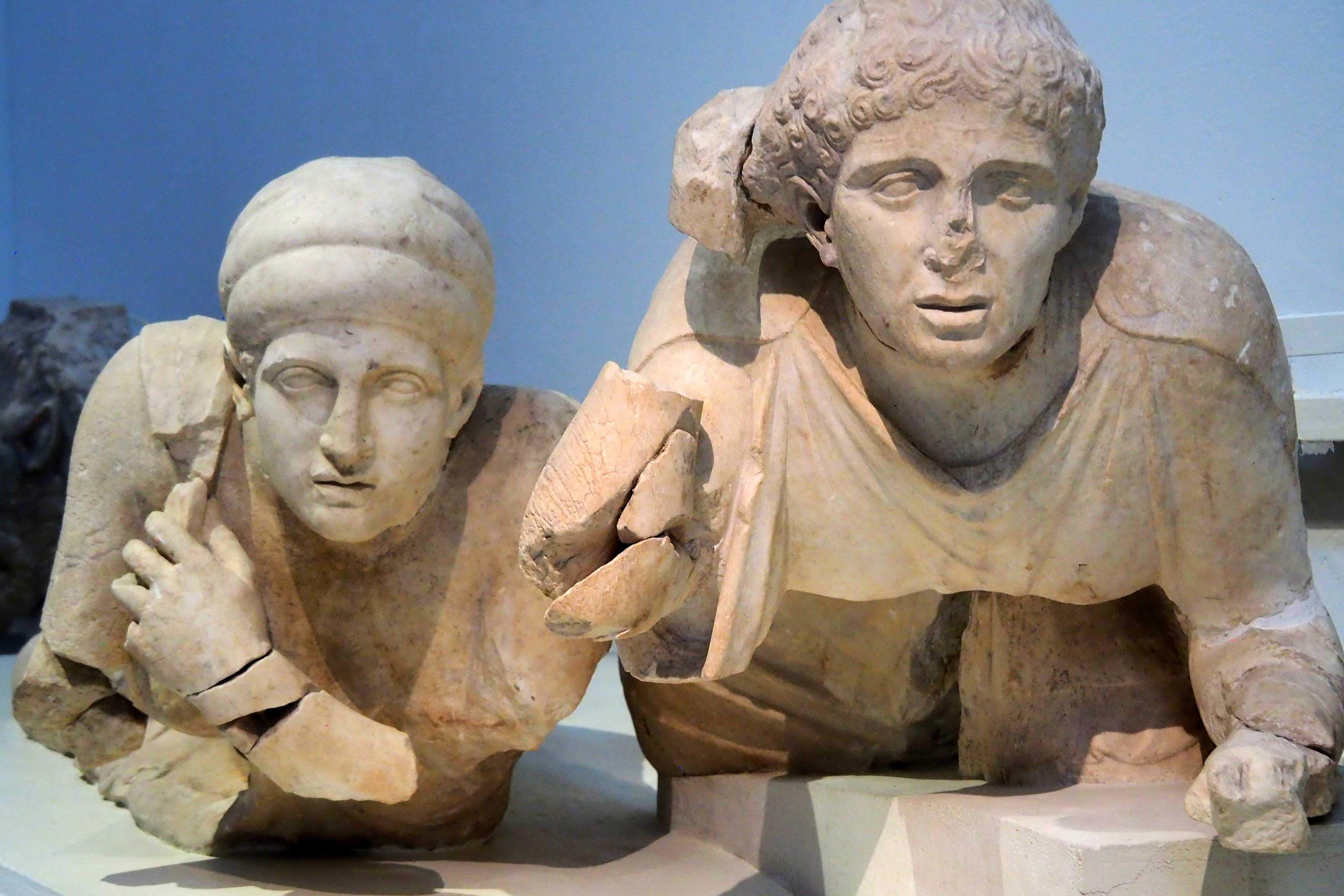
And here are still other treasures: the pediments of the temple of Zeus. "The statues are all in Parian marble, except on the west pediment two old women in the right corner, a young woman in the left corner and the arm of another young woman which are in Pentelic marble, sign of a restoration during antiquity. Traces of color show that the pediments were painted." © Wikipedia

The East pediment. "This pediment, with a width of 26.39 meters for a maximum height of 3.47 meters, represents with 21 statues, the preparations for the chariot race between Pelops and Oenomaus, one of the founding myths of the ancient Olympic Games. Pausanias attributes it to the sculptor Paionios. More recent versions speak of the "master of Olympia". The pediment would date from the middle of the 5th century BC." © Wikipedia

The statue of Zeus is obviously in the center. Pelops is located to his left. To his right, Oenomaus "the mature and thoughtful man".

Pelops and Oenomaus.


The statue of Zeus is obviously in the center. Pelops is located to his left. To his right, Oenomaus "the mature and thoughtful man".

"The Seer" (Clytius, Iamus or Amythaon) and a man playing with his toe.


At the interior ends of the temple, 12 "metopes" (large panels with high reliefs). They represented the 12 labors of Heracles. This one is part of the panel of Heracles and Cerberus.


The west pediment. "The west pediment, attributed to Alcamenes, represents the combat between the Lapiths and the Centaurs during the wedding of Pirithous. None of the statues are complete here either. The central one representing Apollo is the best preserved" © Wikipedia

Apollo, the Centaur and a Lapith.

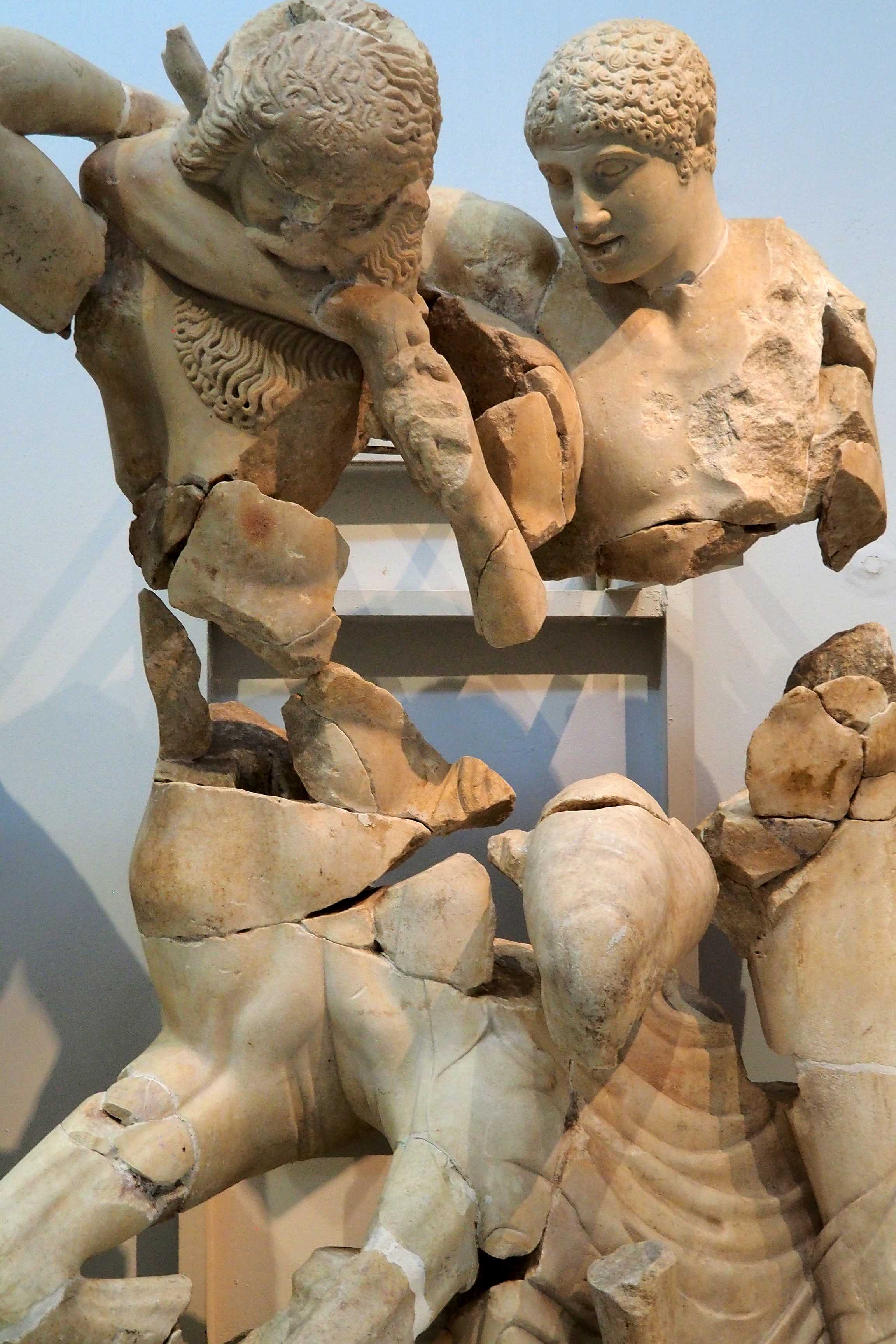
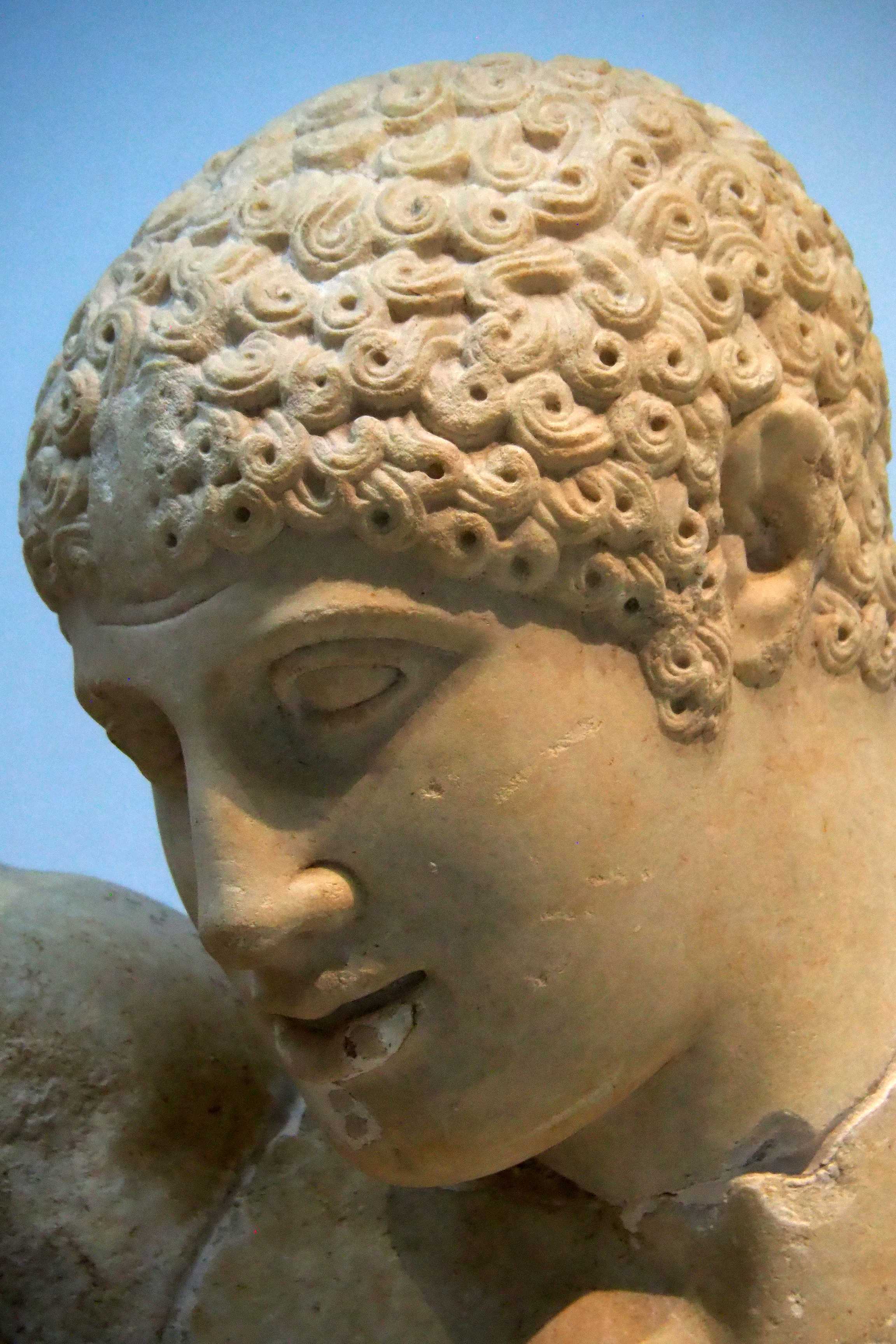
Apollo.

Hippodamia (wife of Pirithous) and two Lapiths.

A metope of Heracles with here the Cretan Bull.

Museum of the History of the Olympic Games
Another museum, entirely devoted to the Olympic Games of the ancient era. It was created in 2004.


Marble funerary stele representing a nude athlete holding a strigil (a scraper for cleaning and rubbing the body) in his right hand and perhaps a bird (350-340 BC).

Mosaics on athletes and games.


"The Discobolus (literally, "the discus thrower") is one of the most famous statues of Antiquity. Generally attributed to Myron, Athenian sculptor of the 5th century BC.;;


Strefi
Back to our Airbnb located in Strefi. From the small balcony of my room, I can leave my camera on pause and thus capture the Olympian star trails! 


Latest comments
On Guatemala 2018
Le 25 Novembre 2024
Significado de este mural
On Chile 2016
Le 15 Septembre 2024
Rrrrrr
On Egypt 2003
Le 1er Avril 2023
Et oui c'est bien nous aux pieds de ce Colosse !
Le 1er Avril 2023
Bien petits aux pieds de ce Colosse !
On Namibia 2014
Le 3 Août 2021
very good indeed